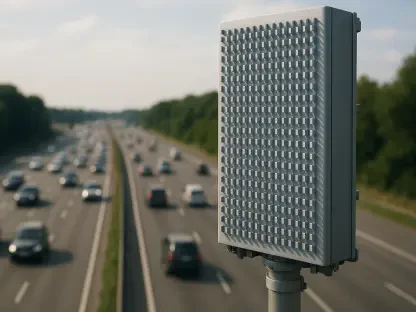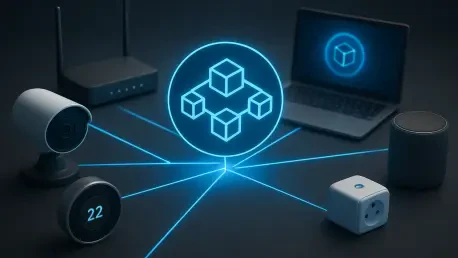

Connected vehicles use blockchain to create trusted maintenance logs and usage-based insurance models that remain with the car throughout its entire lifecycle. This development signals a broader transformation in the Internet of Things (IoT), where the focus has shifted from mere connectivity to the establishment of verifiable trust. As billions of sensors, cameras, and wearable devices form a digital nervous system for the physical world, the traditional reliance on centralized cloud servers has become a critical point of failure. These centralized architectures create fragile trust assumptions, where a single entity possesses the power to modify or delete data, leaving the system vulnerable to both malicious attacks and internal manipulation. By integrating blockchain technology, these networks can transition toward a decentralized model where data integrity is mathematically guaranteed. This convergence allows for the creation of a permanent, immutable ledger that records the physical world’s telemetry without the need for a central intermediary. In this framework, the IoT provides the raw sensory data, while the blockchain serves as the foundational trust layer, ensuring that every data point captured is authentic and tamper-proof from the moment of its creation. This shift is not merely a technical upgrade but a fundamental redesign of how we interact with the physical objects that populate our digital and physical lives, moving toward a scenario where data provides absolute certainty.
Establishing Identity and Ensuring Data Integrity
The pervasive issue of weak security in traditional IoT ecosystems often stems from the use of static, easily compromised passwords or centralized credential management systems. Blockchain technology fundamentally changes this dynamic by introducing decentralized identity frameworks based on cryptographic keys and verifiable credentials. In this model, every sensor and gateway is assigned a unique digital identity that allows it to participate in a multi-party ecosystem without relying on a proprietary database. For instance, in global logistics, a shipping container can prove its identity to diverse stakeholders—including manufacturers, port authorities, and insurance providers—using a standardized cryptographic handshake. This approach eliminates the risk of device spoofing, where a malicious actor mimics a legitimate sensor to feed false data into the network. By shifting identity management to a distributed ledger, organizations can maintain a high level of security that scales across thousands of devices, ensuring that only authorized hardware can contribute to the shared record. This robust identity layer is the first line of defense in creating a network that is resistant to the unauthorized access attempts that plagued earlier generations of connected hardware.
It is a common misconception that anchoring IoT data to a blockchain somehow ensures the physical accuracy of the sensor readings themselves. If a temperature sensor is improperly calibrated or physically damaged, it will still record inaccurate information; in technical circles, this is known as the “garbage in, permanent garbage out” dilemma. However, the true value of blockchain lies in its ability to detect any modification of that data once it has been recorded on the ledger. Once a sensor’s output is hashed and stored, it becomes impossible for a malicious actor or a system administrator to alter that record after the fact. This provides an exhaustive and transparent audit trail that is essential for regulatory compliance and dispute resolution. In sectors like pharmaceutical manufacturing, where maintaining a specific environmental range is legally required, the blockchain serves as an indisputable witness. It proves that the data seen by the auditor is exactly what was recorded by the machine at the time of production, providing a level of accountability that traditional databases cannot match. The combination of high-fidelity sensors and a tamper-proof record ensures that the entire lifecycle of a product is visible and verifiable by all authorized parties.
Automating Industrial Logic with Smart Contracts
The integration of smart contracts provides a mechanism for automating business processes that were previously bogged down by manual verification and administrative overhead. These self-executing programs exist on the blockchain and trigger specific actions only when the data from IoT sensors meets predefined conditions. In a modern logistics scenario, a smart contract can be programmed to monitor the temperature and humidity of a cold-storage shipment in real-time. If the sensors detect a breach in the required environmental conditions, the contract can automatically initiate an insurance claim, alert the logistics manager, and even invalidate the payment to the carrier. This level of automation removes the need for long-winded investigations into when and where a failure occurred, as the blockchain-anchored sensor data provides the necessary evidence instantly. By reducing the reliance on human intervention for routine verification, companies can drastically accelerate their response times and lower operational costs, making the entire supply chain more agile and resilient to disruptions. This shift toward programmed trust allows enterprises to focus on strategic growth rather than the granular details of transactional disputes.
Beyond logistics, the application of smart contracts extends into the burgeoning field of peer-to-peer energy markets, where smart meters function as both sensors and settlement agents. As neighborhoods increasingly adopt solar panels and battery storage, the need for a decentralized way to manage energy distribution has become paramount. Smart meters integrated with blockchain technology allow residents to sell excess power directly to their neighbors without the involvement of a traditional utility company. The contract automatically calculates the energy transfer and handles the financial settlement based on real-time meter readings. This creates a transparent and highly efficient market where energy is consumed close to where it is generated, reducing transmission losses and empowering local communities. This decentralized approach to utility management demonstrates how the combination of IoT and blockchain can disrupt long-standing monopolies, replacing them with equitable systems that are governed by code rather than corporate bureaucracy. By facilitating these direct exchanges, the technology enables a more sustainable and democratic energy infrastructure that can adapt to the changing needs of modern urban environments.
Optimizing Performance through Hybrid Architectures and Edge Computing
Designing a secure device network requires a delicate balance between the data density of the IoT and the throughput limitations of distributed ledgers. A common architectural pitfall is attempting to write every individual sensor reading directly to the blockchain, which quickly results in network congestion and astronomical transaction fees. To circumvent this, modern architects utilize a hybrid model where the vast majority of raw data is stored in decentralized file systems or local databases. Only the cryptographic hash—a unique digital fingerprint of the data—is recorded on the blockchain to serve as a permanent anchor. This ensures that while the heavy lifting of data storage occurs off-chain, the integrity of that data can be verified at any time by comparing its current state to the fingerprint stored on the ledger. This anchoring technique provides the security benefits of blockchain without compromising the performance of the underlying sensor network. This model is particularly effective in high-frequency environments like industrial manufacturing, where machines generate gigabytes of telemetry data every hour that would otherwise overwhelm a standard blockchain.
The role of edge gateways has become increasingly vital in managing the scalability paradox that often plagues high-frequency IoT applications. Since many individual sensors lack the computational power necessary to perform complex cryptographic functions or interact directly with a blockchain, edge gateways act as the primary interface between the physical devices and the ledger. These gateways are responsible for aggregating hundreds of sensor readings, batching them into single transactions, and executing the necessary encryption protocols before transmission. By processing data closer to the source, edge computing reduces latency and prevents the blockchain from becoming a bottleneck. This architecture allows for massive scalability, enabling networks of millions of devices to function harmoniously across disparate geographic locations. Furthermore, this localized processing adds an extra layer of security, as sensitive data can be filtered or anonymized at the edge before any information is ever transmitted to the broader network or recorded on a public ledger. This hierarchical approach ensures that the network remains fast enough for real-time operations while maintaining the rigorous security standards required for industrial applications.
Enhancing Privacy and Compliance in Consumer Networks
In an era of stringent data protection regulations, the integration of blockchain into consumer IoT devices must prioritize privacy by design. A significant challenge arises because the immutable nature of blockchain seems to conflict with a user’s right to be forgotten. To resolve this tension, developers have shifted toward architectures that store no personal identifiable information on the ledger itself. Instead, the blockchain stores only proofs of consent or encrypted metadata that does not reveal the identity of the individual. For instance, a wearable health monitor can record that a patient has granted a specific researcher access to their fitness data without the data itself being visible on the blockchain. If the patient later withdraws that consent, the underlying data remains protected because the cryptographic key to access it is no longer valid or recognized by the decentralized identity system. This approach ensures that transparency and privacy are not mutually exclusive, allowing for the ethical use of consumer data in research and development. By building these protections into the foundational layer, organizations can navigate complex regulatory landscapes while still leveraging the power of decentralized data.
This focus on privacy is equally critical for the long-term viability of smart home ecosystems and connected consumer electronics. As devices like smart cameras and voice assistants become more prevalent, the risk of centralized data breaches becomes a significant concern for the average user. By utilizing decentralized identifiers and local data storage, manufacturers can ensure that a breach of a single central server does not compromise the privacy of millions of households. In this decentralized model, the user remains the sole owner of their data, granting temporary access to service providers only when necessary. This shift in the power dynamic from corporations to individuals is fundamental to building trust in the next generation of consumer technology. When users are confident that their private lives are not being monitored without their explicit, blockchain-verified consent, the adoption rate of advanced IoT solutions will likely continue to accelerate across the broader market. This evolution turns privacy into a competitive advantage, encouraging manufacturers to adopt more transparent data practices that prioritize the interests of the end-user over the accumulation of massive, centralized data silos.
Navigating the Triple Threat: IoT, Blockchain, and Artificial Intelligence
The most transformative developments in the current tech landscape are found at the intersection of IoT, blockchain, and Artificial Intelligence (AI), often referred to as the triple threat of the digital age. In this sophisticated framework, IoT sensors act as the collectors of raw physical data, which is then fed into AI algorithms that analyze patterns and make autonomous decisions. Blockchain provides the critical black box audit trail that records every action taken by the AI and the specific data that influenced that decision. This is particularly valuable in high-stakes environments like predictive maintenance for heavy machinery or autonomous transportation. For example, if an AI system decides to pull a manufacturing robot offline for unscheduled repairs, the blockchain provides an immutable record of the sensor readings that triggered that decision. This transparency is essential for safety audits, warranty claims, and insurance investigations, as it prevents the AI from becoming an opaque system where decisions are made without accountability. This synergistic relationship ensures that as systems become more autonomous, they also become more transparent and easier to audit for human supervisors.
Furthermore, this integration enables machines to operate with a degree of economic autonomy that was previously impossible. Through the use of blockchain-based digital wallets, an industrial machine can independently order its own replacement parts or pay for its own electricity based on data-driven triggers. The AI manages the operational logic, while the blockchain handles the financial settlement and records the transaction. This level of machine-to-machine interaction reduces the need for constant human oversight and allows for the creation of truly autonomous supply chains. However, for this vision to be fully realized, the integrity of the data being fed into the AI must be beyond reproach. If the data is manipulated, the AI will make flawed decisions that could lead to catastrophic physical failures. By ensuring that every data point is anchored to a blockchain from the point of origin, engineers can create a root of trust that allows AI systems to function safely and predictably in real-world environments. This integration represents the next frontier of industrial efficiency, where the collaboration between these three technologies creates a more resilient and self-sustaining economic infrastructure.
Overcoming Technical Barriers and Governance Challenges
Despite the immense potential of merging these technologies, several technical and organizational barriers must be addressed to achieve mass adoption. Interoperability remains one of the most significant hurdles, as the lack of standardized communication protocols between different blockchain platforms and IoT hardware creates fragmented ecosystems. Companies often find themselves locked into specific vendor solutions that cannot communicate with other parts of their supply chain. To overcome this, industry consortia are increasingly working toward open standards that allow for seamless data exchange across diverse networks. Additionally, the cost and latency associated with public blockchains continue to be a concern for industrial applications that require millisecond response times. While layer-two scaling solutions and sidechains have provided some relief, selecting the right network architecture remains a complex decision that requires a deep understanding of both hardware limitations and blockchain economics. Navigating these technical complexities requires a disciplined approach to system design that prioritizes long-term flexibility over short-term ease of implementation.
Organizational and governance challenges often prove even more difficult to solve than the technical ones, as they involve complex legal and political negotiations. In a multi-party blockchain network, stakeholders must reach a consensus on who owns the infrastructure, who is responsible for maintaining the devices, and how liability is shared if a sensor fails or a security breach occurs. These questions are particularly sensitive in highly regulated industries like healthcare or energy, where the legal frameworks were designed for centralized systems. Success in this field requires more than just technical expertise; it demands a collaborative approach to governance that establishes clear rules of engagement early in the project lifecycle. Without these frameworks, even the most technologically advanced pilots are likely to fail when they attempt to scale into the broader market. As organizations gain more experience with decentralized systems, the development of standardized governance-as-a-service models will likely become a critical component of the digital ecosystem, providing a roadmap for future collaborations across competitive and regulatory boundaries.
Establishing a Resilient Framework for Future Connectivity
The journey toward secure device networks required a disciplined shift from experimental pilots to integrated, multi-layered architectures that prioritized interoperability over siloed innovation. Stakeholders discovered that the most successful implementations were those that focused on narrow, high-value use cases rather than attempting to decentralize entire infrastructure stacks simultaneously. This strategic focus allowed engineers to refine governance models and technical protocols in controlled environments before expanding to larger ecosystems. By the time these systems reached maturity, organizations had established clear frameworks for data ownership and liability, which effectively bridged the gap between physical hardware and digital ledgers. This progression was not without its difficulties, but the lessons learned during this period of transition paved the way for a more stable and trustworthy digital world. The successful fusion of these technologies ultimately replaced outdated security paradigms with a resilient, transparent framework that protected both industrial interests and consumer privacy, ensuring that connectivity no longer came at the cost of security.
Professionals who adopted these standards early were better positioned to navigate the complexities of a hyper-connected world, ensuring that the digital reflections of our physical reality remained accurate and beyond the control of any single centralized authority. To replicate this success, organizations should prioritize the development of cross-functional teams that understand both the nuances of hardware engineering and the logic of decentralized software. Future efforts must focus on refining the efficiency of edge gateways and pushing for the adoption of universal device identity standards to ensure that different networks can communicate without friction. As the digital and physical worlds continue to merge, the ability to prove the origin and integrity of data will become the most valuable asset in any technological portfolio. By building on the foundations of cryptographic identity and decentralized consensus, the industry has successfully moved past the vulnerabilities of the centralized era, creating a digital environment where trust is an inherent feature of the network rather than an optional add-on. This disciplined approach remains the most viable path toward a global ecosystem that is both highly efficient and fundamentally secure.