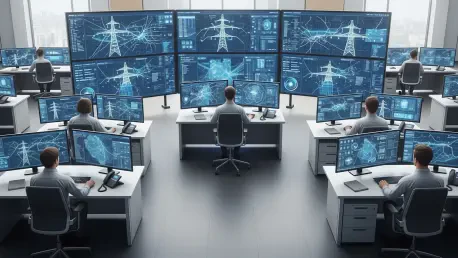

The distinction between a digital glitch and a physical catastrophe has effectively evaporated as modern society grapples with the fallout of an increasingly weaponized internet. While the early days of industrial automation promised a future of effortless efficiency, the reality of 2026 presents a much more sobering landscape where the very systems that keep the lights on are under constant, calculated bombardment. This roundup explores the consensus among security strategists, technical researchers, and policy experts who are navigating this high-stakes environment where a few lines of malicious code can trigger mechanical failures in the physical world.
From Air Gaps to Interconnectivity: The High-Stakes Evolution of Industrial Networks
The historical boundary between digital office environments and physical machinery has vanished, replaced by a seamless and often perilous integration known as IT/OT convergence. Security analysts point out that while this shift enables unprecedented operational efficiency and remote oversight, it has simultaneously dismantled the “air gap” that once protected critical utilities from remote interference. In the current climate, industrial systems are more accessible than ever, and the potential for digital conflict to manifest as physical devastation has moved from theoretical risk to a daily reality.
The evolution of these networks has created a landscape where the stakes are no longer just about data privacy, but about public safety. Strategic thinkers in the field observe that as industrial entities become more connected, they inherit the vulnerabilities of the internet without necessarily possessing the robust defenses of modern enterprise environments. This transition defines the 2026 threat landscape, forcing a re-evaluation of how we protect the hardware that governs the most essential functions of our civilization.
Assessing the Structural Fragility of Modern Industrial Ecosystems
The Vulnerability of Connectivity: Why Industrial Protocols Are the New Front Line
Recent data indicates a dramatic surge in attacks targeting specialized industrial protocols like Modbus and Ethernet/IP, which were often designed for reliability rather than security. Experts in operational technology emphasize that because industrial entities have a low downtime tolerance, they have become primary targets for extortion, with ransomware frequency nearly doubling recently. The challenge lies in lateral movement, where breaches in standard enterprise email or accounting systems provide a bridge for attackers to seize control of the machinery governing power grids and water supplies.
This connectivity creates a domino effect that is difficult to contain once a breach occurs. Analysts argue that the inherent lack of encryption in older industrial protocols makes them an easy target for anyone who manages to bypass the initial perimeter. Consequently, a single compromised laptop in a corporate office can lead to the manual override of a water treatment facility, illustrating why these specialized languages of machinery have become the newest and most dangerous front line in cyber conflict.
Beyond Data Theft: The Rise of Destructive Wiper Malware and Geopolitical Sabotage
A chilling transition is occurring as nation-state actors move away from traditional espionage toward pure destruction, utilizing wiper malware such as the Lotus Wiper. These tools are designed to delete critical files and disable defenses, often using living-off-the-land techniques that weaponize a system’s own administrative tools against itself. Security researchers note that this shift indicates cyber warfare is increasingly a primary instrument of geopolitical pressure, specifically targeting the essential services that sustain civilian populations during times of international tension.
The use of such destructive tools suggests that the goal of modern attackers is no longer just to stay quiet and gather intelligence, but to cause visible, disruptive chaos. By using the internal logic of a system to destroy its own data, attackers make recovery incredibly difficult and time-consuming. This methodology serves as a psychological weapon, signaling to a population that their core infrastructure is no longer under the reliable control of their own government or utility providers.
Invisible Entry Points: Exploiting Firmware and the Sub-Operating System Layer
Emerging threats have found a new frontier beneath the reach of traditional security software: the firmware of hardware components like Direct Current (DC) power regulators. As these stabilizing components become smart and interconnected, they offer a stealthy vector for attackers to trigger hardware failures or permanent equipment damage. Because these disruptions often mimic random mechanical malfunctions, they allow malicious actors to remain persistent within a network for months, bypassing conventional detection methods that only monitor operating systems and network traffic.
This sub-operating system layer represents a blind spot for many traditional IT security teams. Hardware experts warn that as we digitize even the smallest electrical components, we provide more “quiet” corners for malware to reside. When an attacker manipulates the firmware of a power regulator, the resulting hardware burnout looks like a simple end-of-life failure, masking a coordinated effort to sabotage manufacturing lines or energy distribution hubs without leaving a digital trail in the standard logs.
The Fragility of the Supply Chain: Lessons from Manufacturing and Utility Vulnerabilities
The manufacturing sector now accounts for a quarter of all global cyberattacks, largely due to security debt caused by aging legacy equipment and limited budgets. Furthermore, the utility sector faces catastrophic upstream risks, where a single breach of a hardware or software vendor can compromise thousands of providers simultaneously. This interconnectedness means that a vulnerability in a smart meter supplier or a component manufacturer is no longer a localized issue, but a systemic threat to the stability of the entire global energy and water infrastructure.
Supply chain experts emphasize that no organization is an island in the modern industrial economy. A failure in a secondary or tertiary supplier can have a massive cascading effect on the primary service provider. This reality has forced a shift in how companies vet their partners, as the focus moves from cost and delivery speed toward the digital integrity of the components themselves. The lessons learned from recent disruptions suggest that the weakest link in the chain often lies far outside the target’s own network perimeter.
Engineering Resilience: Strategic Frameworks for a Hardened Infrastructure
To counter these multifaceted threats, the global consensus has shifted toward a Zero Trust architecture, predicated on the idea that no user or device should be trusted by default. Organizations are being urged to prioritize aggressive network segmentation to prevent attackers from moving between office computers and critical industrial controllers. Additionally, the adoption of Software Bills of Materials (SBOM) is essential for supply chain transparency, allowing operators to identify and patch vulnerabilities before they are exploited. Implementing immutable backups and multi-factor authentication, even on legacy systems, remains the most effective practical defense against the rising tide of wiper malware and ransomware.
This transition toward a more skeptical security posture requires a total overhaul of traditional operational philosophies. Strategic advisors recommend that companies move away from the “set it and forget it” mentality that often characterizes industrial equipment lifecycles. By requiring continuous verification for every action within a network, organizations can significantly reduce the window of opportunity for an intruder to escalate their privileges or execute destructive commands on critical machinery.
The Path Forward: Securing the Physical World in a Digital Age
The convergence of the digital and physical realms was ultimately irreversible, making the security of our global infrastructure a matter of urgent national importance rather than a niche technical concern. True resilience required more than just updated software; it demanded a cultural transformation where IT security experts and physical plant operators collaborated to ensure safety under a state of constant digital siege. This era of cyber war forced a transition from a reactive posture to a fundamentally resilient and proactive defense strategy.
As we move toward a more stable future, the focus must shift toward creating “self-healing” systems that can withstand a breach without losing core functionality. Investing in local, autonomous control units that can operate independently if the main network is compromised would provide a vital safety net for electricity and water distribution. Furthermore, establishing international norms for “off-limits” civilian infrastructure could help de-escalate the use of destructive wipers. The long-term security of the physical world now rests on our ability to design systems that assume an attack is already in progress, shifting the goal from absolute prevention to guaranteed survival.