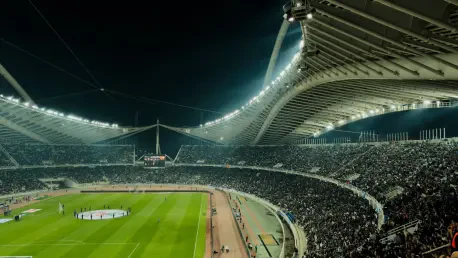

During a three-month trial at a baseball stadium in Gyeonggi Province, KT reported that traffic imbalance between base stations improved by up to 34 percent. This significant development occurred at the KT Wiz Park in Suwon, where the telecommunications giant partnered with Samsung Electronics to deploy an advanced autonomous wireless network operation technology. The initiative centers on a digital twin platform known as AI Cell Twin, which creates a virtual mirror of the physical network to optimize performance in real-time. Throughout the testing period, which began in July and spanned several home games, the system successfully addressed the massive spikes in data demand that typically paralyze standard infrastructure during sporting events. Beyond balancing the traffic, the technology managed to reduce the load on the most heavily utilized base stations by up to 16 percent, demonstrating a level of efficiency that traditional manual tuning simply cannot achieve. By utilizing a virtual environment to simulate complex scenarios, the companies have established a safer and more reliable method for managing wireless resources under extreme conditions without risking immediate service outages for fans in the stands.
1. Operational Process: The Three-Part Cycle of Autonomous Management
The autonomous management system functions through a cyclical three-part procedure designed to maintain high performance regardless of crowd fluctuations. This method allows the network to adapt to sudden surges in data demand—such as those seen in a crowded stadium—without risking service interruptions for users. In the initial stage, the artificial intelligence evaluates the current state of the network by examining several critical variables simultaneously. These include the physical location of users within the seating areas, their specific data consumption habits like high-definition video streaming, the general health of the network hardware, and the actual quality of service experienced by the customers. Based on these complex insights, the system generates a variety of possible management strategies, effectively brainstorming multiple ways to reroute traffic and adjust antenna parameters to meet the anticipated demand before it overwhelms the hardware.
Before any changes are implemented on the live network, every candidate strategy is run through a virtual replica known as a digital twin. This software model mimics the stadium’s wireless environment using historical data and real-time statistics to predict how each change will affect overall connectivity. By simulating the outcome in this sandbox first, engineers ensure that a new setting won’t accidentally cause dropped connections or buffering for fans. Once the digital twin identifies the most effective strategy, that plan is pushed to the active wireless infrastructure. The system specifically modifies the width and orientation of antenna beams to redirect coverage toward the busiest sections of the crowd, shifting the burden away from overwhelmed base stations and distributing it to those with more available capacity. The complete workflow follows a precise sequence: gathering real-time data, replicating the environment, producing operational alternatives, ranking them through simulation, applying the best plan, and feeding the new results back into the cycle.
2. Dynamic Environments: Overcoming the Stadium Connectivity Paradox
Stadiums present one of the most difficult challenges for modern telecommunications because of the extreme density of users in a confined geographic footprint. Unlike residential neighborhoods where data usage is relatively predictable and spread out, a sports arena experiences massive surges that coincide with specific events on the field. When a home run occurs or a key play is reviewed, thousands of fans simultaneously attempt to upload high-resolution video or check live statistics, creating a localized data tsunami. This creates a paradox where a network that performs perfectly during a weekday morning becomes completely congested during a weekend game. The trial at KT Wiz Park proved that an AI-driven approach can anticipate these micro-events by recognizing patterns in user behavior and adjusting the radio frequency environment in seconds rather than the hours or days required for human manual intervention.
Furthermore, the physical structure of a stadium, with its concrete tiers and metal supports, creates a complex landscape of signal reflections and interference. A static network configuration often fails to account for how a full stadium of people actually changes the way radio waves move through the space. The human body itself can absorb and block signals, meaning a configuration that works in an empty stadium will not perform the same way when thirty thousand fans are present. By using the AI Cell Twin to model these physical and digital variables, KT and Samsung have developed a way to steer antenna beams with surgical precision. Instead of blasting a wide signal that might get lost in interference, the system tightens and directs the beams to specific high-density zones. This proactive adjustment ensures that even when the stadium reaches peak capacity, the underlying infrastructure remains resilient and responsive to the fluctuating needs of the spectators.
3. Virtual Prototyping: The Role of Digital Twin Technology in Infrastructure
Digital twin technology serves as the backbone of this innovation, acting as a bridge between speculative AI suggestions and real-world implementation. This virtual environment is not merely a static map but a dynamic, high-fidelity model that incorporates every cell site, frequency band, and potential source of interference within the Suwon stadium. By training the AI on vast amounts of historical wireless data collected from previous seasons, the companies created a simulation engine capable of predicting network behavior with remarkable accuracy. This allows for a zero-risk testing ground where engineers can experiment with aggressive optimization techniques that would be too dangerous to try on a live system without verification. The ability to fail in a virtual space is what ultimately leads to success in the physical one, as only the most robust and verified configurations ever reach the actual base stations.
The sophistication of the twin also allows it to account for the quality of experience from the perspective of the end-user, rather than just looking at technical hardware metrics. While a traditional management system might report that a base station is functioning within normal parameters, a digital twin can identify if a specific group of users is experiencing high latency or packet loss due to local congestion. By integrating these perception-based metrics into the simulation, the AI Cell Twin can prioritize fixes that have the most direct impact on customer satisfaction. This transition from reactive hardware monitoring to proactive user-experience modeling represents a fundamental shift in how mobile networks are managed. As the trial progressed through the 2026 season, the twin continued to learn from each game, refining its predictive capabilities and ensuring that the virtual model remained perfectly synchronized with the evolving conditions of the physical stadium.
4. Resource Optimization: Quantifying the Efficiency of Dynamic Allocation
The metrics reported from the KT and Samsung trial offer a compelling look at the practical benefits of AI-driven resource management. The 34 percent improvement in traffic balance is particularly noteworthy because it indicates that the network is using its existing hardware much more effectively. In many traditional setups, one base station might be at 95 percent capacity while another just fifty yards away sits at 40 percent. This imbalance leads to a poor experience for users connected to the overloaded station even though the total network capacity is sufficient. By redistributing that load, the AI Cell Twin ensures that no single point of failure emerges due to simple overcrowding. This effectively expands the usable capacity of the stadium without requiring the expensive installation of additional physical antennas or wiring, which is a massive win for operational efficiency.
The secondary metric—a 16 percent reduction in peak load on the most stressed stations—further illustrates the system’s ability to protect infrastructure from burnout and failure. High-load situations generate heat and increase the likelihood of hardware errors or software crashes. By shaving off the top end of that demand and moving it to underutilized sections of the network, the autonomous system extends the lifespan of the equipment and reduces the need for emergency maintenance. This approach to dynamic allocation is far more sophisticated than simple load balancing used in previous years; it is a granular, beam-by-beam adjustment that responds to the movement of the crowd. As spectators move toward the exits or concentrate in concourse areas during intermissions, the network follows them, ensuring that the highest concentrations of data demand are always met with the most robust signal resources available at that moment.
5. Technical Evolution: Advancing Beyond Conventional Rule-Based Automation
To understand the magnitude of this advancement, it is necessary to compare it to the rule-based automation that has governed mobile networks for the past decade. Traditional systems rely on fixed “if/then” logic, where a certain threshold of traffic triggers a predetermined response. While this works for simple, predictable patterns, it lacks the flexibility to handle the chaotic nature of a live sporting event where thousands of variables change every minute. Rule-based systems are also limited by human foresight; they can only respond to problems that engineers have already anticipated and coded into the system. In contrast, the AI Cell Twin uses deep learning to identify novel patterns and create unique solutions that might not follow traditional logic but are mathematically optimized for the current situation. This allows the network to stay ahead of the curve rather than constantly playing catch-up with surging data demands.
Moreover, the move away from manual tuning represents a major leap in telecommunications engineering. In the past, optimizing a stadium network required teams of technicians to spend weeks conducting drive tests and manually adjusting antenna tilts and power levels. This was a labor-intensive process that produced a static configuration which was often obsolete by the time the next season started. By automating this entire pipeline, KT and Samsung have reduced the time required for network optimization from weeks to seconds. The AI doesn’t just respond to current conditions; it develops a predictive understanding of how the network will behave in the future based on the data it has processed. This evolution toward a self-driving network allows human engineers to focus on high-level strategy and architectural improvements while the AI handles the grueling task of second-by-second traffic management and signal steering.
6. Connectivity Benefits: Implications for Mobile Gaming and Streaming
For the fans at KT Wiz Park, the primary benefit of this technology is a seamless digital experience that remains stable even when the venue is at full capacity. High-bandwidth applications like live 4K streaming and social media video uploads are the first to suffer when a network is unbalanced. By ensuring a 34 percent better distribution of traffic, the AI Cell Twin significantly reduces the instances of buffering and failed uploads that have long plagued large-scale public events. This is especially important in 2026, where the expectation for constant, high-speed connectivity is no longer a luxury but a baseline requirement for attendees. When the network can successfully steer capacity to where it is needed most, the overall throughput for every user in the stadium increases, creating a more reliable environment for sharing the excitement of the game in real-time.
Mobile gaming also stands to gain immensely from these improvements in network stability and latency management. Gamers are uniquely sensitive to fluctuations in ping and packet loss, which can make competitive play impossible in a congested environment. As cloud gaming and mobile esports continue to grow in popularity, the ability of a network to provide a consistent, low-latency connection in a crowded stadium becomes a key differentiator for carriers. The trial’s success in reducing peak load by 16 percent directly translates to fewer bottlenecks that cause the sudden lag spikes so often seen in high-density areas. By creating a more balanced and predictable radio environment, KT is setting a new standard for how venues can support the next generation of interactive entertainment. This ensures that whether a fan is watching the live action or engaging in a multiplayer game during a break, the connection remains robust and responsive.
7. Global Standards: Establishing a New Benchmark for Telecommunications
The partnership between KT and Samsung in this trial is a clear signal to the global telecommunications market that autonomous operations are no longer a theoretical concept but a practical reality. As mobile carriers around the world look for ways to manage the increasing complexity of 5G and early 6G deployments, the results from Suwon provide a credible roadmap for implementation. The use of a digital twin as a safety buffer addresses one of the primary concerns of network operators: the fear that an autonomous AI might make an unverified change that causes a massive service outage. By demonstrating that the AI Cell Twin can accurately predict outcomes and improve performance by double digits, Samsung and KT have created a powerful argument for the widespread adoption of digital twin-based management systems across the industry.
Furthermore, this trial highlights the growing importance of software-defined networking and AI-driven radio access networks (AI-RAN). The ability to adjust antenna beams and traffic flows through software rather than physical hardware changes is a cornerstone of modern infrastructure. This flexibility allows operators to maximize their return on investment in existing spectrum and hardware, a critical factor in an era where data consumption continues to skyrocket but available frequency bands are limited. The success of the KT Wiz Park project will likely influence future international standards for network automation, pushing the industry toward a more integrated approach where AI and simulation are core components of the network architecture. As other global vendors and carriers observe these results, the push for standardized autonomous network protocols will likely accelerate, leading to a more unified and efficient global mobile ecosystem.
8. Strategic Expansion: Future Roadmap for Self-Driving Wireless Networks
Looking ahead from the successful trial in Suwon, the focus now shifts to how this technology can be scaled beyond the confines of a baseball stadium. While stadiums offer a perfect laboratory for testing extreme density, the principles of AI-driven traffic balancing and digital twin verification are equally applicable to other complex environments like international airports, busy shopping malls, and dense city centers. KT has already indicated that they are considering expanding the use of AI Cell Twin to a wider variety of scenarios where traffic patterns are less predictable than a scheduled sports game. In a metropolitan grid, the AI would need to account for a different set of variables, such as vehicular traffic flow, commuter schedules, and weather conditions, all of which impact how radio waves propagate through a concrete jungle.
The ultimate goal for these telecommunications leaders is the creation of a truly self-healing and self-optimizing network that requires minimal human intervention. This vision involves a nationwide web of digital twins constantly simulating and optimizing traffic in real-time, allowing the network to move resources around the country as demand shifts from business districts during the day to residential areas at night. The trial at KT Wiz Park was a critical first step in proving that the underlying logic and technology are sound. As the system continues to be refined during the fall season and into the coming years, the data gathered will form the foundation for a new era of wireless connectivity. By successfully bridging the gap between virtual simulation and physical performance, KT and Samsung have provided a glimpse into a future where the network is as dynamic and adaptable as the people who use it.
9. Actionable Insights: Lessons from the KT Wiz Park Implementation
The successful implementation of the AI Cell Twin at KT Wiz Park provided several critical takeaways for the telecommunications industry regarding the future of autonomous infrastructure. It was demonstrated that integrating a digital twin as a validation layer is essential for maintaining network stability while allowing AI to pursue aggressive optimization strategies. This layered approach mitigated the risks typically associated with machine learning in live environments, ensuring that only verified configurations were deployed. For operators looking to replicate this success, the primary focus should be on the quality of historical data used to train the twin, as the accuracy of the virtual model directly dictates the effectiveness of the AI’s suggestions. The 34 percent improvement in traffic balance proved that software-based beam steering is a viable alternative to costly hardware expansions in high-density venues.
Moving forward, stakeholders in the mobile ecosystem should prioritize the development of standardized interfaces that allow digital twins to communicate seamlessly with multi-vendor hardware environments. The trial in Suwon benefited from the close partnership between a single carrier and a single vendor, but the real-world challenge will be applying these autonomous cycles across mixed networks. Companies should also begin exploring the integration of more diverse data sets, such as real-time event schedules and weather patterns, into their simulation models to further enhance predictive accuracy. By moving beyond reactive troubleshooting and toward the proactive, simulation-verified management showcased by KT and Samsung, the industry can finally solve the long-standing problem of stadium congestion. This shift will not only improve user experience but also significantly lower operational costs by maximizing the efficiency of every watt of power and every megahertz of spectrum currently in use.