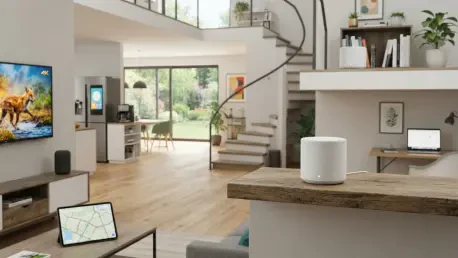

Mesh technology mirrors the way cellular phones transition between towers to ensure that mobile devices maintain uninterrupted service throughout a large residence. This shift in residential dynamics has transformed high-speed internet access from a peripheral convenience into a vital utility, standing alongside electricity and water in terms of daily necessity. Modern households have rapidly evolved into sophisticated digital ecosystems where a single router often becomes overwhelmed by the sheer volume of smartphones, tablets, and smart appliances. As high-bandwidth activities such as 4K streaming and high-definition video conferencing become standard daily habits, the limitations of traditional networking hardware have become a primary bottleneck for many families. This digital saturation requires a fundamental rethink of how data is distributed across a living space. By moving away from a centralized model, homeowners can ensure that every square inch of their property remains connected, regardless of the physical obstacles or the distance from the main entry point.
The Engineering Behind Seamless Coverage
Innovative Architecture: Eliminating The Dead Zone
Unlike a standard router that broadcasts a signal from a single fixed point, Mesh WiFi utilizes a distributed network of coordinated units to eliminate frustrating dead zones that plague larger properties. This system consists of a primary router connected directly to the modem and several satellite nodes placed strategically throughout the residence to bridge the gaps in coverage. These components work together to form a unified blanket of connectivity, ensuring that the signal remains consistently strong whether a user is in a deep basement or a distant attic bedroom. This architectural shift solves the problem of signal degradation over distance, which is a common failure point in traditional setups where the signal must fight through multiple walls and floors. By placing nodes in areas that traditionally struggle with reception, the system effectively leapfrogs physical barriers. This modular approach allows for customization based on the unique geometry of any building, from sprawling ranch homes to narrow multi-story townhouses.
Signal Persistence: Intelligent Connectivity And Mobility
One of the most significant advantages of mesh technology is its ability to handle mobile devices through a process known as seamless roaming. As a person moves through their home, the system automatically transitions their device to the closest node with the strongest available signal without dropping the connection or requiring manual intervention. This functionality provides an uninterrupted experience that prevents the lag and disconnects common with older, single-router setups where a device might cling to a weak signal from a distant source. By managing the handoff between nodes intelligently, the mesh network ensures that bandwidth-intensive tasks like live video calls or cloud-based gaming remain stable during movement. This intelligent orchestration of data traffic allows for a truly mobile lifestyle within the home, where the digital experience is no longer tethered to a specific room or a short radius around a central hub. It represents a transition toward a more fluid and reliable interaction with the digital world, where the infrastructure remains invisible.
Optimizing Professional And Personal Environments
Remote Work: Empowering The Distributed Workforce
For the modern professional, the home office is only as reliable as its wireless connection, making network stability a direct factor in career performance. Mesh systems have become essential for the office-free lifestyle by providing the high-grade stability required for high-stakes video meetings and massive file transfers that traditional routers often struggle to support. By placing a node near a workspace, remote workers can overcome physical barriers like thick brick walls or significant distance that typically cause pixelated video, audio delays, and slow upload speeds. This effectively turns any corner of the house, including detached garages or outdoor patios, into a fully productive hub. Furthermore, the ability to prioritize traffic for specific work devices ensures that professional responsibilities are not compromised by other high-bandwidth activities occurring elsewhere in the house. This capacity for dedicated resource allocation allows for a peaceful coexistence between professional demands and household entertainment, ensuring that productivity remains high throughout the day.
Strategic Implementation: Tailoring Hardware To The Layout
Choosing the right mesh setup requires a thoughtful assessment of a home’s physical layout and the specific needs of its inhabitants to ensure peak performance. Factors such as building materials—like reinforced concrete, brick, or steel framing—can dictate the number of nodes necessary to maintain a consistent signal across all levels. Additionally, users should look for systems that support the latest wireless standards to take full advantage of current device capabilities and future software advancements. Implementing a wired backhaul option, which uses physical Ethernet cables to connect the nodes, can further maximize data speeds and overall network stability by reducing the reliance on wireless communication between units. This hybrid approach combines the flexibility of wireless distribution with the raw power of a wired foundation, creating a robust infrastructure that can handle the growing data demands of modern applications. Planning the placement of nodes with a focus on line-of-sight or minimal obstruction can significantly enhance the efficiency of the entire network, leading to a much smoother user experience.
Long-Term Management And Security
Digital Fortresses: Protecting The Smart Home Ecosystem
As more Internet of Things (IoT) devices enter the home, from smart thermostats and lighting systems to security cameras and appliances, the demand for sophisticated network management increases proportionally. Mesh systems often include user-friendly applications that allow homeowners to monitor network health, set granular parental controls, and manage guest access through isolated sub-networks. Furthermore, these systems provide critical security updates and automated patches that protect the entire household from emerging vulnerabilities, ensuring that the convenience of a connected lifestyle does not come at the expense of digital safety. By centralizing the management of dozens of disparate devices into a single interface, users can gain better visibility into their data usage and identify potential security threats before they escalate. This level of oversight is crucial in an era where the home network serves as the gateway to personal data and privacy. Maintaining a secure perimeter through regular software maintenance and robust encryption protocols has become a foundational aspect of modern home ownership and digital responsibility.
Evolving Infrastructure: The Future Of Connected Living
The evolution of residential networking moved toward a model where connectivity followed the individual rather than the individual seeking out a signal. Homeowners who invested in distributed network architectures discovered that the geographical constraints of the traditional router were effectively eliminated, allowing for a more integrated and flexible way of living. This transition required a proactive approach to infrastructure management, where the focus shifted toward scalability and long-term reliability. Those who prioritized hardware with high-capacity backhauls and advanced security protocols found themselves better prepared for the continued expansion of high-bandwidth digital services. Moving forward, the most effective strategy involved treating the home network as a living system that required periodic evaluation to match the increasing demands of new technologies. Ultimately, the adoption of mesh technology allowed for a seamless blending of professional, educational, and recreational pursuits within a single space. It proved that a robust digital foundation was the most critical component for maintaining a high quality of life in an increasingly interconnected and data-driven society.