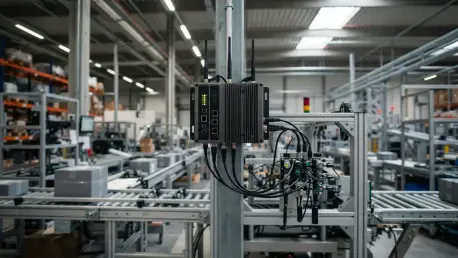

Predictive maintenance in industrial manufacturing now relies on AI to monitor environmental data like vibration and temperature to flag potential failures before they occur. This shift toward localized intelligence represents a massive pivot in how global industries approach digital transformation. As of 2026, the reliance on distant cloud servers is diminishing in favor of immediate, on-device processing that ensures zero-latency responses for critical infrastructure. However, this transition introduces a significant layer of technical friction, as integrating sophisticated machine learning models into compact hardware remains a daunting task for many organizations. The current market environment demands that products not only function with high intelligence but also reach consumers within increasingly narrow windows of opportunity. Consequently, the struggle to balance cutting-edge functionality with the logistical realities of hardware engineering has become the defining challenge for modern IoT development across the globe.
The Evolution: From Cloud Centers to Local Intelligence
The movement toward Edge AI has fundamentally altered the profile of the typical technology developer, moving beyond the traditional silicon-focused engineer. Today, specialized professionals in fields like medicine and agriculture are the primary drivers of innovation, conceptualizing handheld ultrasound devices or autonomous irrigation systems that require deep domain expertise rather than just coding skills. This democratization of technology means that the vision for a product often originates from someone who understands the problem but lacks the technical background to design a complex multiprocessor architecture. As these industry specialists attempt to bring their ideas to life, they often encounter a steep learning curve regarding power management, thermal constraints, and signal integrity. The gap between a brilliant conceptual application and a functioning electronic prototype has widened as the underlying technology has become more intricate, necessitating a new approach to product design.
Beyond the developer profile, the shift is driven by the technical necessity for real-time decision-making in environments where even a millisecond of latency is unacceptable. In modern transportation, advanced driver-assistance systems utilize localized AI to interpret massive streams of data from lidar and radar sensors to trigger emergency braking in a fraction of a second. Similarly, smart city infrastructure now employs intelligent cameras that process traffic patterns locally to adjust signal timings dynamically, reducing urban congestion without overloading municipal networks. These applications highlight why cloud-based processing is no longer sufficient for high-stakes environments. While the cloud offers vast storage, the edge offers the immediate action required for safety and efficiency. This technical reality forces designers to pack more processing power into smaller, more efficient packages, further complicating the internal layout of next-generation connected devices.
Design Obstacles: Complexity and Regulatory Barriers
The technical landscape of modern hardware design is characterized by a series of interconnected layers that must work in perfect harmony to achieve reliable performance. Integrating a high-performance AI core with various communication protocols, such as Wi-Fi 6 or 5G, requires a deep understanding of radio frequency interference and complex printed circuit board layouts. For a company attempting to build a custom solution from the ground up, each design iteration represents a significant expenditure of time and financial resources. Often, several rounds of prototyping are required just to ensure that the multimedia components and sensors can communicate without data loss. This iterative process can extend development cycles by months, frequently causing a product to miss its ideal market entry point. As the complexity of these systems grows, the probability of encountering unforeseen hardware bugs increases, further complicating the path from a successful proof of concept to a mass-produced device.
Furthermore, the hurdle of regulatory certification adds another layer of difficulty that often overwhelms smaller firms or nontraditional tech companies. Any device that utilizes wireless connectivity must undergo rigorous testing to comply with international standards, a process that is both expensive and time-consuming. When developers attempt to integrate separate modules for processing, connectivity, and artificial intelligence, the complexity of certifying the combined system increases exponentially. Failure to meet these stringent requirements on the first attempt can lead to costly redesigns and further delays. In an era where market windows are shorter than ever, these regulatory bottlenecks act as a filter that prevents many innovative ideas from reaching the production line. Navigating the maze of electromagnetic compatibility and safety standards requires specialized knowledge that many modern startups simply do not possess in-house, making the traditional build-from-scratch model increasingly unviable.
Modular Integration: A Path Toward Efficient Innovation
To address the growing friction in the development process, the industry has turned toward highly integrated smart modules that consolidate multiple functions into a single footprint. Solutions like the SIM8666 and SIM8668 platforms demonstrate this shift by housing an AI core, a powerful microcontroller, and comprehensive wireless connectivity within a compact physical space. These all-in-one modules are designed to be ready-to-use, allowing developers to treat the complex underlying electronics as a black box and focus entirely on their specific software logic. By utilizing a platform that has already been optimized for thermal performance and signal integrity, engineering teams can bypass the most grueling stages of the hardware design cycle. This modular approach significantly lowers the barrier to entry for industry specialists, enabling a medical professional or an industrial manager to oversee the creation of a smart device without needing a team of high-level embedded systems engineers.
Ultimately, the transition toward modular hardware architectures provides a definitive solution to the dilemma of balancing technological sophistication with rapid deployment schedules. Organizations that adopt these integrated platforms effectively bypass the traditional bottlenecks of custom circuitry design and simplify the complex process of obtaining regulatory approvals. By focusing on application-specific value rather than fundamental electronic architecture, developers successfully accelerate the timeline from conceptualization to global market release. The industry has recognized that the key to scaling Edge AI lies in the democratization of high-performance hardware, ensuring that innovation remains driven by domain expertise rather than technical barriers. To maintain a competitive advantage, businesses are prioritizing the adoption of pre-certified smart modules in their long-term roadmaps. This strategic shift has already proved that simplifying the implementation of intelligence is the most effective way to foster a resilient ecosystem.