
Convincing voices and faces are no longer safe signals of identity, because cheap voice cloning and maturing video synthesis have turned routine calls and meetings into high-risk channels where confidence can be engineered on demand and then leveraged to rush employees past controls that once felt dependable. The game changed quietly but decisively: recognition cues that sustained security awareness programs—awkward phrasing, odd domains, tonal slips—no longer carry the same weight when an executive’s cadence, accent, and mannerisms can be copied in minutes. This shift has practical consequences. Finance and IT workflows that used to rely on a “trusted voice” now sit at the center of a growing fraud economy. Benchmarking data from SAS and the ACFE pointed to the momentum and the gap: 77% of fraud professionals reported rising deepfake activity, while only 7% felt more than moderately prepared to counter it with operational controls that hold under pressure.
The Problem Has Shifted
For decades, social engineers thrived by imitating authority just well enough to persuade a distracted recipient to click, forward, or approve. Traditional training met that challenge with pattern-spotting: check sender domains, slow down on strange requests, hover over links, call back to confirm. Deepfake tools dilute those guardrails by making the performance itself persuasive. A voicemail stitched from ten seconds of speech no longer betrays robotic edges. A live call can arrive with ambient room noise and a familiar laugh. Even short video clips can track eye lines and gestures convincingly enough to override a worker’s caution in the moment. When urgency hooks into fear of delaying a senior leader, the calculus tilts from skepticism to compliance, exactly as adversaries intend.
Numbers underscore the urgency without resorting to hype. The SAS/ACFE survey found most fraud teams recognized a rise in synthetic impersonation, yet readiness remained strikingly low. The mismatch signals that policy language had not been translated into concrete, enforced practice. The problem is not an absence of detection software; it is the persistence of workflows that equate a plausible interaction with adequate proof. Email security gateways, deepfake detectors, and anomaly scoring help, but they do not neutralize the pressure play of a credible voice instructing a one-time deviation “to meet a deadline.” In other words, the threat morphed from catching fakes in content to resisting fakes in context, and the latter calls for redesigned decision gates rather than sharper human intuition.
A Wake-Up Call
A widely reported incident at Arup, a global engineering firm, captured how quickly staged realism can dismantle routine checks. Attackers allegedly assembled a video meeting populated by lookalike executives and steered a finance employee toward a $25 million transfer. Even discounting details that remain under investigation, the lesson landed: polished impersonation removes friction from fraud. It also collapses informal verification, because the very act of seeing a “known” face or hearing a “known” voice has long been treated as the ultimate confirmation. That assumption breaks when synthetic media outperforms the human eye and ear under time pressure. A quick ping to a colleague or a nod from a screen can no longer close the loop on risk.
This episode also reframed how stakeholders interpret intent and authority. Attackers no longer need impeccable prose; they need plausible urgency delivered in an authentic-sounding channel, and they can generate that at scale. In response, organizations have begun mapping out where authority signals are currently embedded in single interactions—phone approvals for wire releases, verbal confirmations for password resets, impromptu requests to modify vendor banking details—and pulling those approvals into tamper-resistant steps. The point is not to chase every new cloning trick but to redesign the decision architecture so that no one call, clip, or chat can unlock money or access, regardless of who appears to be asking.
Design Principle: Separate Authority From Authentication
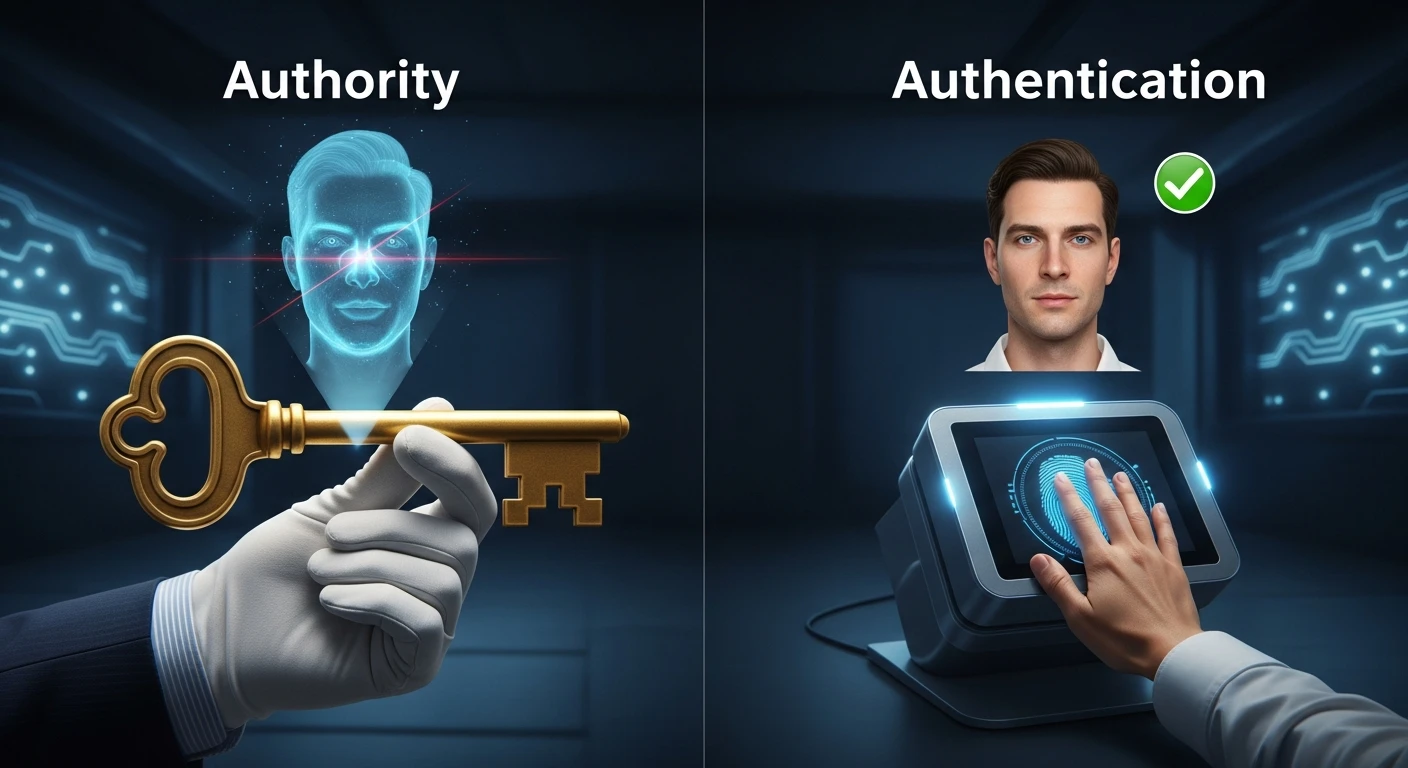
Experts converged on a clear doctrine: separate authority from authentication. Authority answers who can approve a sensitive action. Authentication answers how identity is proven. These are distinct, and they must not collapse into a single, smooth interaction that an attacker can fake. In practical terms, a high-risk transaction should be gated by independent proofs across pre-agreed channels, with the power to request decoupled from the power to release. A CFO’s voice on a call might initiate a process, but funds only move after a secondary approver validates details through a registered, out-of-band method the adversary cannot easily compromise in the same play.
This approach naturally leads to repeatable, auditable steps that are hard to spoof. The standard shifts from “does this feel right?” to “have the required verification steps been completed?” For example, financial operations teams can codify dual-control thresholds by amount, enforce registered callback numbers through a custody tool, and permit exceptions only through a documented escalation path visible to compliance. Identity teams can require non-voice second factors for all privileged resets, such as secure push approvals or hardware tokens linked to device posture. The narrative becomes procedural: complete the checklist, record the proofs, and only then execute. Culture must reinforce that sequence even when the requestor appears familiar and the deadline looms.
Proof-Based Controls and How to Make Them Stick
Concrete safeguards work when they refuse to lean on recognition. Out-of-band, two-factor verification for wires, vendor bank changes, and admin privilege grants establishes a baseline: two independent, pre-registered channels must confirm the same details, and voice or video alone never satisfy the second factor. “How I will contact you” protocols clarify that senior leaders only use sanctioned paths for sensitive asks—say, a ticket in the finance system plus a callback to a number on file—and anything outside that pattern triggers a hard stop. Confidential verification phrases can add friction where needed, especially for cross-border approvals, without pretending that a voiceprint is a biometric. Designated secondary approvers ensure that no single person can move funds or alter access unilaterally.
Execution, however, lives or dies by culture. Verification had to be treated as non-negotiable, with no discretionary bypasses, even when a caller appeared “in person” on a video meeting. Leadership endorsement mattered most before a crisis, not after. Executives needed to say, on record, that it was acceptable—preferred—to slow down, that adherence beat speed, and that anyone pressuring staff to skip steps was out of bounds. Continuous reinforcement kept habits durable: quarterly drills using realistic scenarios, brief reminders in workflow tools, and visible metrics like percentage of transactions completed with full proof steps. Detection technologies still helped—anomaly flags on vendor bank updates, voice-spoof hints—but policy grounded defense in layered confirmation, separation of duties, and immutable logs.
The Road Ahead for Risk Owners
Moving from intuition to proof required operational rewiring, not just memos. Finance leaders documented workflows for every high-risk action, from wire releases to bank detail changes, and tested them end to end with auditors present. Identity teams tied privileged resets to hardware-bound factors and device compliance, ensuring a cloned voice could not shortcut the gate. Security operations registered callback numbers, maintained a roster of designated approvers with backups, and monitored for deviations like late-night requests or channel switches mid-conversation. Clear escalation paths let staff pause fulfillment and route anomalies to named contacts in legal and security without fearing backlash for “slowing the business.”
The final mile was human. Organizations rewarded measured confirmation—public shout-outs for catching out-of-band requests, performance goals that favored complete verifications over volume, and leader briefs that normalized saying “Hold until the second factor clears.” Training shifted tone: less “spot the phish,” more “follow the proof.” Staff practiced rejecting pressure plays, including those that invoked hierarchy. Playbooks acknowledged limits, too. Verification channels can be compromised, and layered controls can still fail if culture invites exceptions. That is why plans emphasized independent confirmations, role separation, and robust audit trails that reconstruct decisions when something slips. The north star was not perfect detection but reliable execution under stress, built on a clear separation between who may approve and how identity is actually proven.