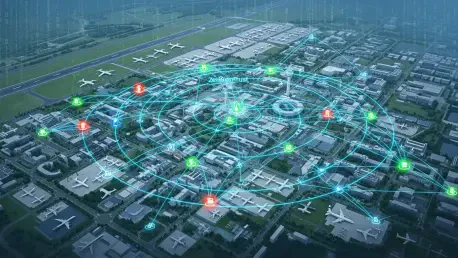

Runways move people and planes, but the unseen arteries that decide whether trips stay on time are the campus networks spread across terminals, gates, aprons, cargo bays, and back offices that must operate flawlessly even as passenger volumes surge, devices multiply, and services go digital across every touchpoint. As airports and airlines weigh expansion plans, sustainability goals, and tighter budgets, the operational backbone that ties together check-in kiosks, crew apps, baggage belts, and passenger Wi‑Fi has become a limiting factor and a strategic lever at the same time. That tension now meets a tangible response with SITA’s launch of a managed Campus Network built with HPE Aruba Networking, a service that unifies wired and wireless connectivity under a cloud-native, AI-assisted, zero-trust model. The result aims to consolidate tools and vendors, speed incident response, and create a standardized playbook that can stretch from a single concourse to a multi-airport portfolio without bespoke hardware at every site.
The Fragmentation Challenge in Aviation Networks
Airports evolved their networks terminal by terminal and project by project, layering on different vendors, management consoles, and local controllers to meet immediate needs under tight windows. The pattern made sense when each program—installing new CUTE/CUPPS infrastructure, extending passenger Wi‑Fi, adding baggage tracking—was funded and delivered in isolation, but the cumulative effect has been a patchwork that strains budgets and staff. Routine adjustments, like adding bandwith to a busy gate or tightening access rules for a contractor’s handhelds, often require manual change tickets on disparate systems. Outages travel through this complexity, too; a misconfiguration in a patch cabinet can ripple into a gate hold, while the root cause hides across multiple logs and dashboards that don’t correlate. As carriers add routes and airport operators open refurbished piers, the number of edge nodes and policies balloons, and every on-premises controller becomes another lifecycle clock counting down to a refresh.
This fragmentation carries real operational and financial weight that shows up in metrics every stakeholder tracks. Mean time to resolution drifts upward as teams try to reconcile alerts from incompatible tools. Capital commitments rise because controllers, licenses, and support contracts renew on different cycles, forcing purchases that don’t align with strategic timing. Performance also becomes uneven, which pilots and ground staff feel when flight-planning apps behave differently airport to airport, and passengers feel when check-in lines move in bursts rather than a steady flow. Security fends off the same sprawl: more unmanaged endpoints, more shared subnets, more one-off exceptions that creep into policies during major events or seasonal peaks. Regional airports face the same dynamics as global hubs, just with fewer engineers to handle them, making standardized, centrally administered infrastructure not a luxury but a necessity for stability and growth.
The Launch: A Unified, Cloud-Native Campus Network
SITA’s managed Campus Network consolidates wired and wireless operations into a single platform anchored by a cloud-based control plane and AI-driven monitoring, pairing aviation-specific service management with HPE Aruba Networking switches, access points, and policy enforcement. The service stands up as a managed layer across the airport estate, exposing centralized dashboards for visibility and control instead of forcing each site to maintain local controllers. That structure removes much of the hardware overhead traditionally tied to per-terminal management while giving administrators a network-wide lens on posture, performance, and policy drift. The focus is not only on new builds; the offer is designed to link into existing systems—passenger information displays, baggage PLC networks, turnaround tools—so operators can modernize without a disruptive rip-and-replace.
By moving the brain of the network to the cloud, the solution aims to lower CapEx and steady OpEx while introducing consistency into daily operations. Centralized orchestration brings templated configurations and reusable workflows to routine tasks like adding a gate podium SSID, onboarding a new concessionaire’s POS terminals, or expanding bandwidth for a seasonal charter corridor. AI-driven analytics, tuned for high-density public venues and mission-critical operational zones, watch for anomalies ranging from RF interference near boarding lanes to creeping latency in baggage sortation links. The architecture sets up a clear division of labor: edge hardware handles traffic, while policy, insights, and updates flow from the cloud, creating a common baseline that can be audited, tuned, and extended as business needs shift.
How It Works: Centralized Orchestration and AIOps
The operating model centers on one pane of glass for multi-site management, where network teams define intent—who should access what, at which times and locations, using which device classes—and let the platform translate that into configurations across switches and access points. Provisioning becomes repeatable: deploying a new lounge or temporary check-in island means applying approved templates that carry VLANs, QoS rules, and authentication methods already vetted for aviation use cases. Because the control plane is cloud-native, these changes propagate quickly without scheduling local maintenance windows to update controllers. Telemetry from every site streams back into the analytics layer, which baselines normal behavior for each zone, detects drift, and proposes remediations that operators can accept automatically or after review, depending on policy.
AI assistance extends beyond alerts to actionable guidance. When traffic patterns hint at an impending bottleneck—say, an influx of streaming from a sports broadcast in airside restaurants during a boarding wave—the system can recommend channel reassignments, airtime fairness adjustments, or AP power tweaks to preserve priority for operational SSIDs. If a switch exhibits early signs of port flapping, the diagnostics correlate event histories, suggest targeted tests, and, when approved, quarantine the affected segment with a predefined failover path to keep services running. Over time, this feedback loop turns reactive firefighting into proactive tuning. Crucially, the platform’s policy engine enforces consistency: a rule approved for staff tablets at one airport applies identically across the network, eliminating per-site deviations that complicate audits and degrade the user experience.
Security at the Core: Zero Trust for an IoT Campus
Zero trust underpins the design, taking the stance that location on a campus LAN or association to a familiar SSID confers no special privilege. Every entity—passenger device, handheld scanner, digital sign, baggage reader, or maintenance laptop—is authenticated and authorized based on identity and context before receiving the least access needed. Network access control ties into identity providers to map users and devices to roles; microsegmentation keeps operational technology from mingling with guest traffic; and end-to-end encryption protects data in motion, whether that’s a crew briefing update or a payment transaction in the retail arcade. Policy enforcement happens consistently across wired and wireless, reducing blind spots where legacy VLANs or flat subnets historically exposed more than intended.
The IoT reality of an airport makes this approach practical rather than theoretical. Environmental sensors that monitor air quality on jet bridges, IoT cameras that oversee apron safety zones, RFID readers that track baggage transfers, and self-service kiosks for biometrics each carry different risk profiles and lifecycles. The platform fingerprints devices at onboarding, segments them into appropriate trust zones, and monitors behavior continuously for anomalies such as unexpected lateral connections or unusual data bursts. Third-party tenants—airline stations, retail partners, ground handlers—benefit from role-based access that respects contractual boundaries while maintaining operational efficiency. Governance improves as policies are defined once and enforced everywhere, satisfying both cybersecurity best practices and the stringent demands that apply to mixed public and safety-critical environments.
Modernization Without Disruption: Integration and Rollout
Many airports cannot afford to pause operations for a grand overhaul, which is why the solution was built to coexist with legacy systems and phase in over time. Interfaces to passenger information systems, baggage handling PLCs, turnaround management software, and airline DCS environments allow the network to wrap around what already works. Hybrid states are supported: some services can run under centralized, cloud-based control while others remain on-premises until stakeholders validate new workflows. This approach shortens the path to early wins—like stabilizing guest Wi‑Fi and standardizing staff SSIDs—while more complex integrations progress behind the scenes, accompanied by testing plans that map to live operations.
Phased deployments typically begin in terminal areas where gains are highly visible and operational risk is manageable, then extend to apron, cargo, and maintenance zones. Each step includes knowledge transfer so local IT teams become fluent with dashboards, AI recommendations, and automated workflows before the next domain comes online. Shared templates reduce variance between sites, but the design still allows local tuning for regulatory or physical constraints. Over a few months, operators can retire redundant controllers, align support models to centralized SLAs, and standardize incident playbooks. Because the control plane is already global, airport groups and multinational airlines can extend consistent policies across borders without rebuilding architecture with every new site.
Outcomes and What’s Next for Aviation Networks
Operational outcomes tie directly to how the platform handles the routine and the rare. Predictive maintenance reduces unplanned downtime by surfacing early indicators—a spike in retransmissions on a concourse, temperature warnings in a closet, intermittent packet loss on a fiber run—and recommending targeted fixes before peak windows. When incidents happen, correlated diagnostics accelerate root-cause analysis, compressing mean time to resolution and containing blast radius. Standardized workflows trim manual effort on change management, freeing engineers to focus on capacity planning, security posture reviews, and service introductions. Financially, vendor rationalization and the removal of per-site controllers ease capital cycles and lower maintenance overhead, while centralized licensing and support tighten accountability.
Benefits accrue to distinct stakeholders in concrete ways. Airports gain total cost of ownership reductions alongside clearer visibility into bandwidth consumption and policy adherence—useful for capacity decisions and tenant agreements. Airlines see consistent connectivity for crew apps, flight planning, and passenger services, which supports on-time performance and predictable turnarounds regardless of station. Passengers experience more stable and faster Wi‑Fi, quicker check-in and gate processing, and more accurate displays and baggage updates. These visible improvements rest on the same foundation that enables less visible but vital shifts, such as cleaner audit trails for compliance, simpler onboarding for new digital services, and elastic scaling for special events that swing passenger flows well beyond typical patterns.
Deployment and Global Scale
Global availability matters because aviation rarely operates within a single geography, and the platform’s architecture was shaped for distributed estates. Central orchestration lets airport groups apply common baselines across regions while toggling features to satisfy local regulatory requirements or spectrum rules. Support models align to this reality, too, with centralized monitoring backed by regional response capabilities to handle site-specific constraints like after-hours access or union protocols. Rollouts can follow the same blueprint across continents—start at terminals, validate, expand to operational zones—so leaders get predictability in timelines and outcomes, not just in technology.
Scalability shows up not only in the number of sites but in how fast the network adapts to change. Seasonal peaks, weather disruptions that shift gate usage, and charter operations that materialize on short notice all stress traditional models that rely on hands-on configuration. With templated policies and automation, standing up temporary check-in islands or expanding a security screening area becomes an exercise in applying known patterns rather than designing from scratch. Airlines that add routes can request service profiles that snap into existing controls, ensuring crew and passenger apps behave the same way in a new station as they do at the hub. This elasticity supports growth without silently accruing the operational debt that usually trails behind rapid expansion.
Industry Direction and Next Moves
The launch tracks a broader shift toward cloud-native control planes, AI-assisted operations, and zero-trust frameworks as baseline expectations for complex, safety-critical networks. Airports moving pieces of their stacks to the cloud have learned that centralization improves resilience and transparency, provided integration paths remain open for legacy systems that cannot move yet. AIOps has matured from alert storms to contextual, prescriptive guidance that reduces toil, and in environments with dense public usage plus regulated operations, that guidance now separates convenience incidents from safety-impacting ones. Vendor rationalization further tightens the loop by reducing incompatibilities and shortening training cycles, which is especially valuable for operators managing multi-airport portfolios with lean teams.
For technology leaders evaluating next steps, the path is practical. Start with a candid inventory of on-premises controllers, tool overlap, and support contracts, mapping them to key passenger and operational services to pinpoint where centralized control will yield the fastest stability gains. Define role-based access and segmentation for IoT, tenants, and staff devices up front, then align identity sources so policies travel with users and endpoints. Pilot phased rollouts in terminal zones to build confidence, collect performance baselines, and tune AI recommendations before extending to apron and cargo. Establish a governance rhythm—monthly policy reviews, quarterly capacity planning, annual incident simulations—to keep the network aligned with business changes. Taken together, these moves position airports and airlines to capture near-term reliability and cost benefits while laying a durable, adaptable foundation for new digital services that demand consistent, secure connectivity across every corner of the campus.