
The rapid industrialization of artificial intelligence has pushed traditional digital architecture to a breaking point, forcing a total reimagining of how we house and power the modern global brain. While the previous decade focused on the virtualization of software and the flexibility of the cloud, the current landscape is defined by the raw, uncompromising physics of high-density hardware. This shift is not merely an incremental update to existing server rooms; it represents a fundamental departure from the modular, rack-by-rack growth of the past toward a model where the entire facility functions as a single, massive integrated machine.
Emerging from this necessity is a new breed of data center designed specifically to handle the “compute-heavy” nature of generative AI and large language models. In this context, the infrastructure is no longer just a passive shell for electronics but an active participant in the processing cycle. This evolution has been necessitated by the sheer intensity of modern GPU clusters, which demand levels of power and cooling that would have been unimaginable just five years ago. Consequently, the industry is witnessing a structural overhaul that prioritizes energy density and thermal management above all other design metrics.
Core Architectural Pillars of High-Density Compute
Large-Scale Integrated Facility Design
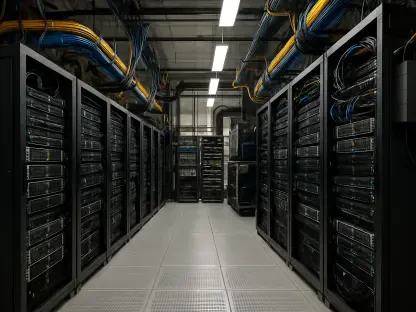
The transition toward massive scale is perhaps the most visible change in the current technological landscape. Modern facilities are now being planned with a “day-one” capacity that dwarfs previous generations, moving from an average of 32 MW to nearly 40 MW per site in a very short span. This shift suggests that operators are no longer content with building small and expanding as needed; instead, they are securing enormous amounts of power and physical space at the outset to accommodate the contiguous networking required for AI training.
This integrated approach matters because AI workloads cannot be easily distributed across fragmented environments. The low-latency requirements of cluster-based computing mean that thousands of processors must be physically close to one another, sharing a unified power and cooling backbone. By designing these facilities as giant, cohesive units from the ground up, developers avoid the performance bottlenecks and logistical nightmares associated with retrofitting older, lower-density spaces with modern hardware.
Advanced Thermal Management and Liquid Cooling
As hardware becomes more powerful, the traditional method of using fans to move cold air through a room has reached its physical limit. We are now seeing a decisive move toward liquid cooling, with over a third of the industry already deploying these systems. Whether through direct-to-chip plates or total immersion, liquid is far more efficient at capturing and transporting heat than air. This transition is critical because as densities exceed 30 kW per rack, air cooling simply cannot move heat away fast enough to prevent thermal throttling.
Moreover, the adoption of liquid cooling changes the very footprint of the data center. By removing the need for massive air-handling units and expansive cold aisles, operators can pack more compute power into smaller areas. This efficiency is what allows for the “step-function” increases in density we see today. However, this implementation requires a completely different plumbing infrastructure and a higher level of maintenance expertise, marking a clear divide between legacy operators and those prepared for the high-performance computing era.
High-Density Power Distribution and Rack Metrics
The metrics used to measure data center health have shifted from simple floor space to power density per rack. In a remarkably short period, average densities have skyrocketed toward 27 kW, a nearly fourfold increase from the standards held just a few years ago. This surge is driven by specialized GPUs that consume vast amounts of electricity to perform the complex matrix multiplications required for machine learning.
This evolution has forced a total redesign of electrical architectures. High-density environments now require specialized power distribution units and advanced battery backup systems that can handle sudden, massive spikes in demand. The move from low-kilowatt environments to high-density clusters is not just about bringing more electricity into the building; it is about managing the quality and stability of that power to ensure that a single fluctuation does not crash a multi-million-dollar training run.
Emerging Trends in the Data Center Industry
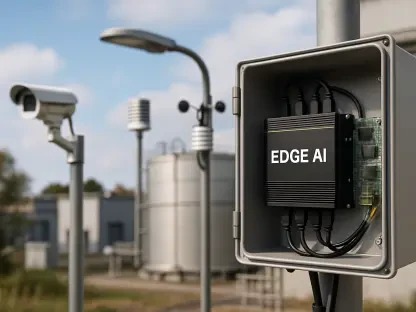
The industry is currently moving toward a “pod-based” deployment model where capacity is added in massive, pre-configured blocks rather than individual servers. This modularity at scale allows for faster deployment times, which is essential as the race for AI supremacy accelerates. Additionally, there is an increasing focus on edge AI, where high-density compute is placed closer to the end-user to reduce latency for real-time applications, creating a tiered hierarchy of infrastructure.
Another significant shift involves the integration of software-defined power management. These systems use AI to predict power loads and adjust cooling and distribution in real-time, optimizing energy use to a degree that human operators could not achieve. This trend highlights the irony of the modern data center: we are using AI to manage the very infrastructure that creates it, leading to a self-optimizing loop of digital growth.
Real-World Applications and Industrial Deployment
In the pharmaceutical sector, these high-density facilities are being used to accelerate drug discovery through complex molecular modeling that requires massive parallel processing. Similarly, the financial services industry has deployed these architectures to run real-time fraud detection and high-frequency trading algorithms that rely on the extreme low-latency environments provided by integrated facility designs.
Beyond specialized research, the broader enterprise sector is using this infrastructure to host “private AI” instances. Companies that handle sensitive data, such as healthcare providers or legal firms, are moving away from public clouds in favor of dedicated, high-density on-site or colocation spaces. This allows them to maintain total control over their data while still leveraging the massive compute power necessary to run modern analytical models.
Technical and Operational Challenges
Despite the rapid advancement, the industry faces a significant bottleneck in the form of power availability. In many regions, the local electrical grid cannot keep up with the demand of these massive new facilities, leading to years-long delays for interconnection. This regulatory and physical hurdle has forced many operators to look for alternative locations or invest heavily in their own energy infrastructure to bypass the grid altogether.
Furthermore, the talent gap remains a persistent obstacle. Operating a facility that uses liquid cooling and handles 50 kW racks requires a different skill set than managing a traditional server room. There is a critical shortage of technicians who understand both the mechanical complexities of fluid dynamics and the high-voltage electrical systems required for these sites. Without a concerted effort to train a new generation of data center engineers, the physical infrastructure may struggle to keep pace with software innovations.
Future Outlook and Energy Independence
The trajectory of the industry points toward a future where the data center functions as an independent microgrid. We are already seeing a rise in on-site power generation, utilizing everything from natural gas turbines to advanced battery arrays. This move toward energy autonomy is not just about reliability; it is a strategic necessity to ensure that the “compute engine” can continue to run regardless of the stresses placed on public utilities.
In the coming years, we should expect to see the integration of small modular reactors (SMRs) and advanced hydrogen fuel cells directly into data center campuses. This would represent the final step in the evolution of the facility—from a tenant of the grid to a self-sustaining powerhouse. Such a development would decouple digital growth from geographic energy constraints, allowing for the placement of massive compute clusters in locations previously considered unfeasible due to a lack of power infrastructure.
Assessment of the Modern Data Center Landscape
The transition toward high-density, AI-driven infrastructure represented a necessary response to the exhaustion of traditional computing models. The industry successfully pivoted from a focus on modular expansion to a philosophy of total system integration, prioritizing thermal efficiency and power density. This shift proved that the data center is no longer a peripheral utility but the core engine of modern industrial progress, capable of supporting workloads that were once deemed technically impossible.
Moving forward, the focus was redirected toward long-term sustainability and total energy independence. As operators move toward becoming their own utility providers, the emphasis should remain on refining liquid cooling standards and securing stable, carbon-neutral energy sources. The verdict on the current state of infrastructure was clear: those who failed to adapt to high-density requirements found themselves sidelined, while the leaders in the space established a new blueprint for the future of global computation. Potential investors and operators must now prioritize grid-independent power strategies to ensure that the next wave of technological growth is not stifled by the limitations of legacy electrical networks.