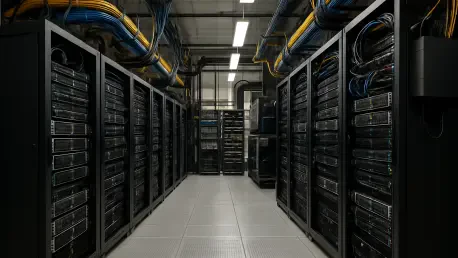

The massive computational engines that once hummed in isolated desert data centers to train the world’s most sophisticated neural networks have officially ceded their primary role to a far more demanding task: the instantaneous execution of intelligence at the edge of the network. While the previous half-decade focused on the brute-force “learning” phase of artificial intelligence, the current technological landscape is defined by inference. This shift represents the transition from academic development to a functional reality where AI is woven into the fabric of every digital interaction, transforming the global data center from a storage vault into a living, breathing processing plant.
This evolution signifies a fundamental change in how resources are allocated across the globe. Training was a predictable, centralized workload that prioritized raw GPU density. Inference, however, is volatile and geographically scattered, demanding a infrastructure that can respond to a user query in milliseconds. This paradigm shift has forced architects to reconsider the “connective tissue” of the internet, moving away from simple data delivery toward a highly integrated system where compute power and network capacity are inseparable components of a single execution engine.
Evolution of AI Infrastructure: From Training to Inference
The journey from model training to inference marks the maturation of the AI sector. Initially, infrastructure was designed to handle massive, static datasets used to “teach” models like large language patterns. This required enormous power and cooling within a single facility. Today, the focus has pivoted toward execution, where the trained model is called upon to make decisions or generate content in real-time. This execution phase is the true measure of a technology’s utility, as it directly impacts end-user experience and operational efficiency.
This transition has elevated the importance of the network layer. In the training era, internal data center speeds were the primary concern; in the inference era, the speed at which data travels from the user to the model and back is the defining metric. The emergence of “reasoning” capabilities, where a model thinks through several steps before answering, means that a single query now triggers a cascade of internal data movements. Consequently, the infrastructure must be resilient enough to handle these bursts of activity without latency spikes that would render the service unusable.
Architecting the AI-First Cloud
Distributed Data Center Models
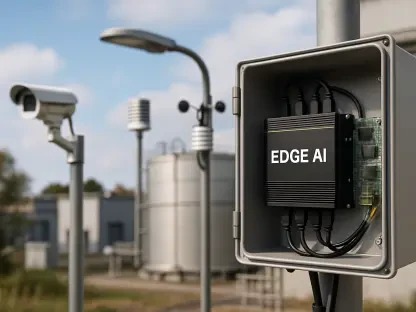
To meet the low-latency demands of modern applications, the industry is moving away from the “mega-hub” model in favor of a distributed architecture. This decentralized approach places inference capacity at the “edge” or in regional hubs, significantly shortening the physical distance data must travel. By distributing the load, providers can ensure that a user in Tokyo and a user in New York receive equally rapid responses. This isn’t just about speed; it is about the structural integrity of a global system that can no longer rely on a few centralized points of failure.
High-Capacity Optical Interconnects
The backbone of this distributed model is the Data Center Interconnect (DCI) layer, which utilizes advanced optical transport to synchronize data across vast distances. Modern optical networks are no longer passive pipes; they are intelligent systems capable of managing massive throughput with minimal power consumption. These interconnects allow regional nodes to pull fresh data from central repositories instantly, ensuring that even a distributed model has access to the most up-to-date information. This synchronization is critical for maintaining consistency across a global AI platform.
Current Trends in Multimodal and Reasoning Models
We are witnessing the rise of multimodal AI, where systems process text, audio, and high-definition video in a single stream. This complexity places a staggering strain on network infrastructure, as the “weight” of a single request has grown from a few kilobytes of text to several megabytes of rich media. Furthermore, reasoning models—which perform internal verification and data retrieval before responding—generate significant “background traffic.” This internal chatter between data centers often exceeds the external traffic visible to the user, requiring a massive overhead in bandwidth availability.
Real-World Applications and Sector Deployment
Inference infrastructure is now the engine behind enterprise productivity tools, sophisticated search engines, and social media algorithms. For instance, modern search engines no longer just provide links; they synthesize answers by running real-time inference across billions of data points. In the corporate sector, automated data retrieval systems use inference to scan internal documents and provide actionable insights in seconds. These applications demonstrate that AI is no longer a standalone product but a core feature of the digital economy, integrated into the platforms millions use daily.
Technical Obstacles and Market Challenges
Despite the rapid progress, the industry faces significant bottlenecks, particularly in optical connectivity and power efficiency. The sheer scale of mass adoption means that network providers are constantly racing to keep up with demand. Power consumption remains a primary constraint, as cooling systems and high-speed chips require enormous amounts of energy. Additionally, the transition to 800G and 1.6T optical speeds presents manufacturing and deployment challenges that require constant innovation in fiber throughput and automated network control to prevent regional outages.
Future Outlook and Infrastructure Trajectory
The trajectory of AI infrastructure points toward a future defined by autonomous bandwidth allocation and even deeper edge integration. We are moving toward a network that can predict traffic surges and reconfigure itself in real-time to prioritize critical inference tasks. This will likely lead to a “fluid” cloud environment where the distinction between the local device and the remote data center becomes almost invisible to the user. Breakthroughs in low-latency computing will eventually allow for complex AI reasoning to occur on smaller, more efficient hardware located in every neighborhood.
Summary and Final Assessment
The review of current AI inference infrastructure revealed that connectivity has become the ultimate currency of the digital age. While the industry spent years obsessing over GPU counts, the focus shifted toward the optical foundations that allow those chips to function at scale. The move toward a distributed, AI-first cloud was a necessary response to the explosive demand for multimodal and reasoning models. It was determined that the infrastructure successfully adapted to the initial surge, though power and connectivity bottlenecks remained persistent threats to long-term stability. Ultimately, the successful deployment of these systems proved that a holistic approach—balancing compute, storage, and networking—was the only viable path forward for a global economy increasingly dependent on real-time machine intelligence.