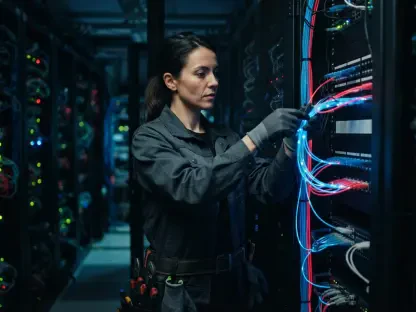

The digital backbone of global finance and logistics is no longer just surviving the cloud era; it is dominating the landscape through a sophisticated fusion of legacy reliability and cutting-edge artificial intelligence. For decades, the mainframe was often unfairly characterized as an aging relic of a bygone computing era, a “mammoth” destined for extinction in the face of more flexible cloud-native alternatives. However, the current landscape of 2026 tells a drastically different story, one where these central processing powerhouses have emerged as the primary engines for enterprise-grade generative AI. This resurgence is built upon the mainframe’s traditional pillars of unparalleled security and massive transactional throughput, which are now being leveraged to transform the platform from a passive data vault into an active, intelligent participant in real-time business logic. Organizations are finding that the most efficient way to scale AI is not by moving their data to the models, but by bringing the models directly to the data.
This strategic pivot allows the mainframe to address the most demanding generative AI applications without the inherent latency and security risks associated with external cloud environments. As businesses strive to implement high-speed inferencing, they are realizing that maintaining sensitive corporate data within the secure perimeter of a mainframe provides a significant competitive advantage. This evolution has effectively silenced the debate over mainframe decommissioning, replacing it with a focused effort to integrate machine learning directly into core transactional workflows. By doing so, enterprises can now execute complex AI queries at the exact moment a transaction occurs, ensuring that every piece of data is analyzed for risk, opportunity, or operational efficiency in a fraction of a second. The result is a modernized infrastructure that combines the proven stability of the past with the transformative potential of the next generation of computing.
Advancements in Processing Power
Hardware Innovations for the AI Age
The current standard for high-performance enterprise computing is defined by the IBM z17, a system meticulously engineered to handle the relentless demands of modern data science and deep learning. At its heart lies the 5-nanometer Telum II processor, a marvel of semiconductor engineering that integrates AI acceleration directly onto the silicon to minimize the physical distance data must travel. To further bolster these capabilities, the system utilizes dedicated Spyre AI accelerators, which provide the specialized compute clusters necessary for massive-scale model inferencing. Together, this hardware stack is capable of processing an astounding 450 billion inferencing operations every day, maintaining a consistent latency of just one millisecond. This level of speed is not merely a technical benchmark; it is a vital requirement for high-frequency trading platforms and real-time security operations where a delay of even a few microseconds can result in significant financial losses or security breaches.
Beyond raw speed, this hardware evolution serves as the foundation for a new era of “agentic” computing, where autonomous AI agents manage complex internal workflows with minimal human oversight. By moving away from traditional batch processing and toward an integrated AI model, the mainframe enables these agents to operate within a highly secure and isolated perimeter. This internal processing architecture eliminates the vulnerabilities typically found in distributed or multi-cloud environments, where data must often traverse multiple networks to reach an AI engine. Consequently, mission-critical business logic remains protected by the same world-class encryption and hardware security modules that have long defined the platform, even as it adopts the latest in machine learning and predictive analytics. This seamless integration of security and power ensures that the most sensitive institutional knowledge is never exposed to the risks of the public internet while being processed by AI.
Redefining Throughput with Integrated Accelerators
The shift toward on-chip AI acceleration marks a departure from the traditional approach of using external GPUs for enterprise-scale machine learning. In the current infrastructure landscape, the ability to perform inferencing directly on the same processor that handles the transaction avoids the “IO tax” that often plagues hybrid cloud configurations. This architectural choice is particularly beneficial for global banking networks that must process millions of credit card transactions per second. By embedding the Spyre accelerators into the system fabric, the z17 allows for the simultaneous execution of complex neural networks alongside standard transactional code. This means that a bank can verify a user’s identity, check for fraudulent patterns, and approve a purchase all within the same clock cycle, providing a level of responsiveness that was previously impossible.
Furthermore, the hardware design of the modern zSeries facilitates a level of horizontal scalability that mirrors the flexibility of the cloud while retaining the vertical power of a central hub. This is achieved through a high-bandwidth interconnect system that allows multiple AI accelerators to work in parallel on a single massive dataset. For industries like healthcare, this translates into the ability to run real-time diagnostic models on vast repositories of patient records without the need for data duplication or complex extraction processes. The hardware is no longer just a box for running code; it is a specialized environment where data and intelligence coexist in a state of high-speed synergy. This physical convergence of storage and compute power represents the ultimate solution to the bottleneck problems that have historically limited the practical application of large-scale AI in the enterprise sector.
Overcoming Operational Challenges
Bridging the Talent Gap Through Automation
As the cohort of veteran mainframe specialists enters retirement, the industry has turned to advanced AI-driven software tools to bridge the growing talent gap. A primary solution in this effort is the Watsonx Code Assistant for Z, a generative AI tool specifically designed to help modern developers interact with legacy systems. Many of the world’s most critical applications are still written in COBOL, a language that few recent university graduates have mastered. The AI assistant acts as a sophisticated translator and guide, allowing developers who are proficient in Java or Python to understand, refactor, and update legacy codebases with confidence. This technology does not just suggest code snippets; it provides deep insights into the logic of ancient systems, effectively preserving decades of institutional knowledge while making it accessible to a new generation of IT professionals.
In addition to code assistance, the z/OS 3.1 operating system has integrated AI System Services directly into its core to automate the complex task of performance tuning. Traditionally, optimizing a mainframe required an expert administrator with years of experience to manually adjust parameters based on workload fluctuations. Now, the operating system uses machine learning to observe system behavior in real-time and make autonomous adjustments to resource allocation. This proactive approach significantly reduces the need for manual intervention, allowing smaller teams to manage larger and more complex environments. By lowering the barrier to entry for system administration, these AI tools have transformed the mainframe from a specialized niche into a platform that can be managed using the same DevOps and site reliability engineering principles found in the broader tech industry.
Intelligent Observability and Proactive Management
Modern software innovation on the platform now extends to sophisticated observability tools that utilize machine learning to predict and prevent system failures. Rather than simply reacting to alerts, these tools correlate metrics across a vast array of system components, including CPUs, memory, and database subsystems, to identify subtle patterns that precede a bottleneck. This level of proactive anomaly detection is essential for maintaining the five-nines of availability that enterprises expect from their core infrastructure. When a potential issue is detected, the AI can either trigger an automated remediation script or provide the operations team with a detailed analysis of the root cause, drastically reducing the mean time to resolution. This shift from reactive to predictive maintenance ensures that the system remains stable even under the most unpredictable workload spikes.
This intelligent management layer also plays a crucial role in optimizing energy efficiency and cost-effectiveness within the data center. By accurately predicting workload demands, the AI-driven operating system can consolidate tasks onto fewer active cores during periods of low activity, reducing power consumption without sacrificing performance. This capability is increasingly important as organizations face mounting pressure to meet sustainability goals while simultaneously expanding their digital footprints. The integration of AI into the management layer effectively creates a self-healing and self-optimizing environment that requires far less specialized human labor than its predecessors. This evolution ensures that the platform remains a viable and attractive option for cost-conscious enterprises looking to maximize their return on investment in a rapidly changing technological landscape.
Strategic Market Advantages
Leveraging Data Gravity and Real-Time Scoring
The concept of “data gravity” has become a central theme in the argument for continued mainframe investment, as the majority of the world’s most valuable corporate data remains housed within these systems. For many Fortune 500 companies and global financial institutions, the sheer volume and sensitivity of their datasets make it impractical to move them to external cloud providers for AI analysis. By leveraging the mainframe’s high-speed processing, organizations can now apply real-time scoring to 100 percent of their transactions, rather than relying on the sampling methods of the past. In the banking sector, this allows for the analysis of up to 300 billion requests daily, enabling fraud detection systems to stop illicit activity before a transaction is even finalized. This “zero-latency” AI approach turns the mainframe into a powerful profit-generating engine that protects revenue in real-time.
In addition to fraud prevention, the ability to keep Large Language Models (LLMs) in close proximity to the actual data they analyze has opened new doors for highly regulated industries. In healthcare, for instance, secure enterprise generative AI can be used to analyze patient records and suggest treatment plans while ensuring that sensitive data never leaves the hospital’s private infrastructure. This proximity avoids the high costs and security risks of data egress, which are often the primary hurdles for cloud-based AI projects. As more organizations look to implement “sovereign AI” strategies, the mainframe provides a ready-made solution that combines the scale of a data center with the security of a private vault. This inherent advantage ensures that the platform remains the preferred choice for sectors where data privacy and processing speed are non-negotiable requirements.
Dominating the Financial and Healthcare Sectors
The strategic advantage of the mainframe is most visible in the financial services industry, where the platform’s ability to handle massive spikes in volume is legendary. During periods of extreme market volatility, the integrated AI accelerators can adjust risk models on the fly, providing traders and risk managers with up-to-the-second insights that would be delayed by minutes in a distributed environment. This capability has redefined the standard for operational resilience, as banks no longer have to choose between deep analytical insight and transactional speed. By embedding AI into the core banking loop, these institutions have created a feedback system that constantly improves its own predictive accuracy based on live data. This has led to a significant reduction in false positives for fraud, improving the customer experience while simultaneously lowering the cost of manual investigations.
Similarly, in the healthcare and insurance sectors, the mainframe’s role has expanded from a simple record-keeping system to a diagnostic and actuarial powerhouse. The ability to run complex simulations against decades of historical data allows insurance companies to price risk more accurately and identify emerging trends before they impact the bottom line. Because these systems are designed to handle massive I/O workloads, they can ingest and process unstructured data from a variety of sources, including clinical notes and medical imaging, without slowing down core administrative tasks. This multi-modal capability ensures that the mainframe remains at the center of the enterprise’s digital strategy, providing a single source of truth that is both highly secure and intelligently accessible. For the world’s largest organizations, the platform is no longer a legacy burden but a vital asset for long-term growth.
Financial Performance and Risk Management
Economic Growth and Long-Term Stability
The financial performance of the infrastructure sector has seen a significant boost in recent years, largely driven by the adoption of AI-capable hardware like the zSeries. Market data indicated that IBM’s infrastructure division achieved its highest revenues in two decades, a feat fueled by the urgent need for local AI processing. Industry surveys revealed that a vast majority of current mainframe users intended to maintain or expand their workloads on the platform through the end of the decade, identifying AI integration as the primary catalyst for their future hardware investments. Despite the occasional fluctuations in capital expenditure that characterize large-scale hardware cycles, the overall commitment to the platform remained remarkably steady. Companies recognized that the cost of maintaining a modernized mainframe was often lower than the unpredictable and escalating costs of a full-scale cloud migration.
To further solidify its market position, strategic alliances were forged with key industry players like Arm Technologies to ensure that cloud-native frameworks could run seamlessly on mainframe hardware. This collaborative approach allowed organizations to enjoy the best of both worlds: the flexibility of modern software development and the uncompromising reliability of the mainframe. Industry analysts consistently warned against “mainframe exit” strategies, citing the high risk of failure and the massive hidden costs associated with moving complex, interconnected systems to distributed platforms. Instead, the consensus among financial experts was that modernizing legacy code within the mainframe using AI-driven tools provided a significantly higher return on investment. This fiscal reality ensured that the platform stayed at the heart of the corporate world’s long-term technology roadmap.
Strategic Resilience and the Path Forward
The successful integration of AI into the mainframe ecosystem was achieved by prioritizing data security and operational continuity above all else. Organizations that embraced this transformation found themselves better equipped to handle the rapid shifts in the global economy, as their core systems were able to adapt to new requirements without undergoing a total overhaul. The decision to invest in on-platform AI rather than pursuing risky migrations proved to be a masterstroke for many CIOs, who were then able to redirect their budgets toward innovation rather than just “keeping the lights on.” Leaders focused on developing a hybrid cloud strategy that utilized the mainframe for high-value, high-security workloads while using the public cloud for less sensitive, elastic applications. This balanced approach maximized the strengths of each environment and created a more resilient IT architecture.
Moving forward, the primary objective for enterprise technology leaders was to continue the refinement of AI models to ensure they remained unbiased and transparent. The mainframe’s unique logging and auditing capabilities provided the perfect environment for “explainable AI,” allowing companies to track exactly how a model reached a specific decision—a requirement that became increasingly important under new regulatory frameworks. By maintaining a clear audit trail and leveraging the system’s inherent hardware protections, organizations were able to deploy AI with a level of confidence that was difficult to replicate elsewhere. The journey of the mainframe through this era of rapid change demonstrated that true innovation often comes from building upon a solid foundation rather than discarding it. The platform’s ability to reinvent itself once again secured its place as a permanent fixture in the high-stakes world of enterprise computing.