
Matilda Bailey is a leading specialist in infrastructure and next-generation networking, known for her deep understanding of how power reliability dictates the success of digital systems. As the demand for artificial intelligence pushes the limits of existing utilities, her work has become increasingly vital for organizations trying to balance massive processing needs with environmental and local community concerns. In this discussion, we explore the strategic shift toward microgrids as a primary defense against grid instability and cyber threats. We delve into how localized energy islands are being built by tech giants and military installations alike, the significant financial hurdles of achieving energy independence, and the transformative impact of these systems on remote populations.
The cyberattack in Foster City in March 2026 served as a massive wake-up call, cutting off connectivity for over 30,000 residents without even damaging the central power grid. How does an event like this redefine our understanding of energy resilience for data centers?
That specific incident in California really highlighted a terrifying reality: you can have all the power in the world, but if the regional connectivity infrastructure is vulnerable, your operations are effectively dead in the water. For data center operators, it shifted the conversation from simply having a backup plan to needing true energy and operational independence. When 30,000 people lose internet access for days because of a targeted strike on a localized hub, it proves that the central grid is no longer the only point of failure we have to worry about. Microgrids allow these centers to become self-contained islands that can ignore the chaos of the surrounding regional grid, maintaining uptime even when the external infrastructure is failing or under attack. It’s about moving away from being a passive consumer of utility power and becoming an active manager of your own destiny.
As AI workloads continue to expand at a rate that traditional utilities can hardly keep up with, how are microgrids helping data center operators manage the uncertainty of their future energy needs?
The reality is that no one truly knows exactly how much power AI processing will require three or five years from now, and regional power companies are notoriously slow to upgrade their facilities. We are seeing giants like Microsoft, Google, and Amazon incorporate microgrids into their core strategies because they cannot afford to wait for a utility company to catch up with their ambitions. By building these localized energy systems, they can scale their workloads on their own terms without being held back by a constrained city grid. Furthermore, it helps mitigate public backlash from communities that are worried about data centers hogging local resources and driving up costs for everyone else. By becoming self-sufficient, these massive AI hubs can operate “behind the meter,” reducing the strain on public infrastructure and providing a much-needed layer of political and operational security.
We’ve seen some very specific implementations lately, from Microsoft’s facility in San Jose to the military’s work in Miramar. What do these diverse projects tell us about the technical evolution of microgrid hardware?
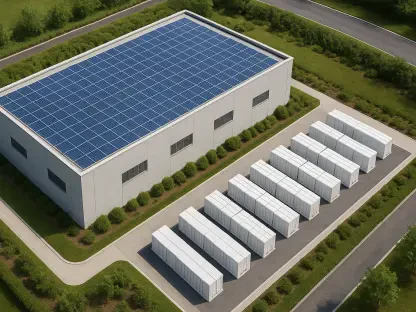
The diversity of the hardware being used is actually one of the most fascinating parts of this transition. For instance, the Microsoft data center in San Jose uses a natural gas-based microgrid as a primary alternative that can take over the moment the main grid experiences an outage. On the other end of the spectrum, you have the Raytheon project at the Marine Corps Air Station in Miramar, which is incredibly sophisticated. They are using a central controller paired with PV inverters and a specialized zinc bromide flow battery energy storage system to demonstrate true islanding capability. It’s not just about having a loud diesel generator in the back anymore; it’s about sophisticated metering, utility service entrance equipment, and complex battery storage that can manage building electrical loads with surgical precision.
While big tech and the military are early adopters, microgrids are also appearing in some of the most remote corners of the world. How is this technology changing the life of residents in places like Nepal or American Samoa?
In remote areas, a microgrid isn’t just a business strategy; it’s a fundamental life-changer that brings electricity to places that the central grid simply cannot reach. In Nepal, we’ve seen four isolated villages gain access to power for the very first time because of a microgrid that harnesses the water from nearby rivers. Similarly, on the island of Ta’u in American Samoa, which sits 4,000 miles away from the U.S. West Coast, they have successfully combined abundant solar power with diesel generators to create a reliable distribution system. These projects prove that microgrids are scalable and adaptable to the environment, whether that means using river water in the mountains or solar panels on a tropical island. It gives these communities a level of energy security and economic potential that was previously impossible due to their geographical isolation.
The financial barrier to entry for microgrids is notoriously high, with some estimates reaching into the millions. Can you break down why these systems are so expensive and how a CIO can justify that cost to their board?
The cost is certainly the biggest hurdle, as the Department of Energy estimates that microgrids can cost anywhere from $2 million to $5 million per megawatt as of 2024. Even for a smaller site, you are looking at a six-figure investment right out of the gate because you aren’t just buying a generator; you are buying a mini-power company. You have the expense of the off-grid sources like solar or wind, the battery storage units, the central control boards, and the specialized labor for installation and training. Then you have to navigate the local regulatory landscape, which includes permit fees and inspection costs that can vary wildly by location, not to mention the insurance and financing expenses. Ultimately, a CIO has to frame this not as a capital expense, but as an insurance policy against the catastrophic loss of revenue that occurs during a multi-day outage.
What is your forecast for the future of microgrid adoption in the data center industry?
I expect that within the next decade, the “energy island” model will become the standard for any Tier 4 data center, rather than an expensive exception. As AI demands continue to outpace grid modernization, we will see a shift where data center operators stop thinking of themselves as IT managers and start acting as energy providers who happen to run servers. We will likely see more specialized storage solutions beyond traditional lithium-ion, like the zinc bromide batteries used in military applications, becoming more mainstream to handle longer discharge cycles. The bottom line is that as regional grids become more volatile due to climate events and cyber threats, the only way to guarantee 100% uptime will be to own the entire energy chain from production to consumption.