
The global race to achieve artificial intelligence dominance has transformed electricity from a background utility into the most fiercely contested commodity on the planet. For decades, the primary hurdles for data center development were land acquisition and fiber connectivity. However, a new paradigm has emerged: “speed to power.” In this new era, electricity availability has become the ultimate bottleneck, dictating which companies can scale and which will be left behind. As hyperscalers race to deploy the next generation of Graphics Processing Units (GPUs) to fuel AI breakthroughs, they are encountering a formidable adversary—a national power grid that was never designed to handle such concentrated, high-density loads. This analysis explores the growing tension between exponential technological growth and the physical limitations of current energy infrastructure, examining the innovative strategies developers use to bridge this widening gap.
The Great Energy Standoff: AI Ambition Meets Physical Reality
The rapid ascent of artificial intelligence is fundamentally rewriting the playbook for digital infrastructure. Traditional facility planning once prioritized proximity to urban centers or tax incentives, but those metrics have been overshadowed by the raw capacity of the local electrical substation. Data center operators now find themselves in a high-stakes competition for every available megawatt, as the energy density required for large language model training surpasses anything seen in the history of the internet. This shift has forced a transition from a “scale-first” model to a strategy defined by energy scarcity.
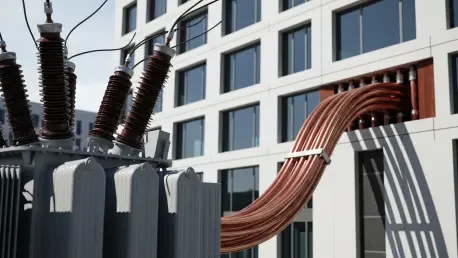
The industry history of gradual efficiency gains is now being eclipsed by a demand curve that is nearly vertical. While previous generations of hardware focused on minor incremental improvements in power usage effectiveness, the current surge in AI compute requirements demands a total reconsideration of how these “digital factories” interact with the power sources that sustain them. The physical reality of copper, transformers, and transmission lines is now the speed-limiting factor for the most advanced software in human history.
From Cloud Computing to AI: The Shift in Energy Architecture
To understand the current crisis, one must look at the historical evolution of data centers. Traditional cloud computing facilities were designed for steady, predictable workloads, drawing power that was manageable for most municipal utilities. These legacy systems operated on a model where the power draw per rack was relatively low, allowing for air-cooled designs and standard electrical distributions. The shift to generative AI has shattered this stability, introducing extreme fluctuations and unprecedented thermal challenges.
AI workloads require specialized accelerators that consume significantly more energy per rack than standard servers. This transition marks a departure toward a model where power density is the primary architectural driver. The resulting architecture necessitates specialized cooling and power management systems that can handle hundreds of kilowatts in a single rack space. This evolution is not merely a change in hardware; it is a fundamental restructuring of the relationship between the data center and the surrounding energy environment.
The Bottleneck of Grid Interconnection and Capacity
The Growing Mismatch: Demand versus Transmission
The most immediate challenge facing the industry is the staggering trajectory of energy consumption versus the stagnation of grid modernization. Current projections suggest that data center electricity demand could double or even triple by the end of the decade. This growth is colliding with an electrical grid that features components nearly a century old in many developed markets. The result is a massive backlog in interconnection queues; in many regions, developers are told they must wait several years just to receive a permit to connect to the grid.
This mismatch creates a critical delay for hyperscalers like Google, Microsoft, and Amazon, who are ready to deploy hardware today but are restricted by a transmission system that cannot keep pace with the speed of silicon. The inability to move power from where it is generated to where it is needed—the “transmission gap”—has become the single greatest threat to AI development. Without a radical overhaul of permitting and physical construction speeds, the software revolution risks being stalled by a hardware reality.
The Rise of Energy Autonomy: Behind-the-Meter Solutions
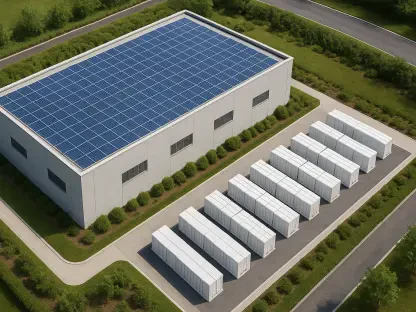
In response to grid delays, developers are pivoting toward “behind-the-meter” generation, effectively turning data centers into self-sustaining microgrids. By installing on-site natural gas turbines or large-scale battery storage systems, operators can bypass the traditional utility queue and bring facilities online faster. This shift toward energy autonomy represents a major industry trend where data centers function as independent power producers rather than passive consumers. It allows for a decoupling from the public grid during times of high demand or low reliability.
While this approach requires significant upfront capital and creates new regulatory hurdles regarding emissions, it offers a level of reliability and “speed to power” that the aging centralized grid currently cannot provide. Modern facilities are increasingly designed with integrated fuel cells and long-duration energy storage, enabling them to operate for extended periods without drawing from the municipal system. This move toward self-sufficiency is a defensive maneuver against a utility sector that is struggling to innovate at the pace of the technology industry.
Regional Disruptions: The Frontier of Nuclear Energy
The search for power is also redrawing the map of data center development, pushing companies away from traditional hubs toward regions with untapped energy potential. This geographic shift is accompanied by a renewed interest in Small Modular Reactors (SMRs) and next-generation nuclear energy. Hyperscalers are increasingly signing agreements with nuclear developers to co-locate data centers with carbon-free power plants. This provides a steady baseload of electricity that intermittent renewables like wind and solar cannot match for high-intensity AI training.
While these technologies are still scaling, they represent a strategic attempt to solve the “efficiency paradox”—the reality that while chips are becoming more efficient per watt, the sheer volume of compute required for AI makes new, massive power sources the only viable long-term solution. Areas with legacy nuclear assets or favorable conditions for new nuclear permits are becoming the new prime real estate for the tech sector. This migration is transforming rural landscapes into high-tech corridors, fundamentally altering local economies and infrastructure needs.
Emerging Trends: The Evolution of Active Grid Participation
The relationship between the tech industry and utilities is evolving from a simple transaction into a complex, symbiotic partnership. A future is approaching where data centers are no longer just massive loads but “active grid partners.” This trend involves facilities participating in demand response programs, where they can shed load or switch to on-site battery power during peak grid stress to help stabilize the broader network. Such participation provides a crucial service to utilities struggling with the variability of renewable energy.
Additionally, the integration of liquid cooling and high-density hardware architectures is becoming standard, allowing for more compute power within a smaller energy footprint. These technological shifts, combined with regulatory changes that favor fast-tracking energy projects, will likely define the landscape for the next few years. As AI chips become more specialized, the ability to fine-tune energy consumption in real-time based on grid conditions will become a standard feature of data center management software, creating a more resilient ecosystem.
Strategic Takeaways: Navigating the Power Crisis
For businesses and infrastructure professionals, the current environment demands a shift in strategy. It is no longer enough to be a real estate manager; one must become an energy strategist. Key recommendations include adopting “phased energization” models that allow segments of a facility to go live as power becomes available in increments. This modular approach reduces the initial capital at risk and allows for faster time-to-market in a competitive landscape where being first to train a model provides a significant advantage.
Furthermore, investing in hybrid energy models—combining grid power with on-site storage and renewables—is essential for mitigating the risks of a failing infrastructure. Developers who master the “speed to power” paradigm by navigating regulatory complexities and diversifying their energy sourcing will hold a significant competitive advantage. Success in this era requires a deep understanding of energy markets, utility regulation, and onsite generation technologies to ensure that the digital ambition is not constrained by physical scarcity.
Sustaining the AI Revolution: Infrastructure Innovation
The analysis of the energy landscape revealed that the physical limitations of the power grid acted as a primary constraint on the growth of the digital economy. While the software sector advanced at an exponential rate, the underlying electrical infrastructure remained tethered to legacy technologies and slow regulatory cycles. The transition toward microgrids and independent power generation became the standard response for companies seeking to maintain their competitive edge. It was observed that the most successful operators were those who integrated energy production directly into their business models.
The industry moved beyond a reliance on centralized utilities and embraced a more distributed, resilient architecture. Innovation in cooling and chip efficiency provided some relief, but the fundamental requirement for massive baseload power led to a resurgence in nuclear energy investment. This shift secured the necessary capacity for the next generation of AI development while providing a blueprint for more sustainable industrial growth. Ultimately, the integration of data centers as active participants in the energy market proved to be the most effective way to modernize the grid for the demands of the modern era.