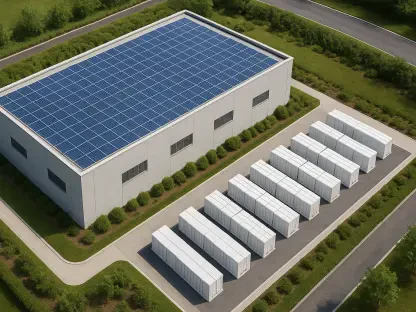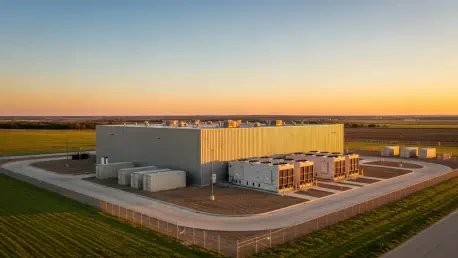

The relentless hum of spinning servers and cooling fans has become the new heartbeat of industrial expansion, yet this digital pulse is increasingly colliding with the physical realities of the American landscape. Across the country, the gold rush for artificial intelligence and cloud computing has hit an unexpected physical wall, with nearly $18 billion in data center projects grinding to a halt over the last twenty-four months. While the digital economy demands instantaneous expansion to support a world of generative AI and seamless connectivity, the physical infrastructure supporting it is increasingly entangled in a web of legislative moratoriums and community pushback. This tension is no longer a theoretical debate among urban planners; it is a high-stakes standoff that determines where the next generation of technological innovation will—and will not—be built.
This friction represents more than just a series of delayed construction starts; it is a fundamental recalibration of how society values its resources. As the demand for processing power grows exponentially, the traditional “build-it-and-they-will-come” mentality is being replaced by a complex negotiation over power, water, and land. Developers are finding that the “digital friction” slowing their projects carries a massive price tag, impacting everything from local tax revenues to global tech leadership. The central question of the current decade is whether the industry can innovate its way out of this regulatory squeeze or if the physical limits of the electrical grid will force a permanent slowdown in the digital revolution.
The $18 Billion Price Tag: The High Cost of Digital Friction
The financial repercussions of regulatory resistance are becoming impossible to ignore for institutional investors and tech giants alike. Market data indicates that the bottleneck created by local opposition and grid constraints has sidelined $18 billion in capital investment since early 2024. These are not merely administrative delays; they are complete work stoppages that ripple through the global supply chain. In regions that were once considered the undisputed capitals of data storage, such as Northern Virginia, the cost of land has skyrocketed while the availability of power has plummeted, creating a “perfect storm” of scarcity that makes new development prohibitively expensive and politically volatile.
This economic standoff has forced a reevaluation of the “compute farm” as a neighbor. Where local governments once saw data centers as silent cash cows that required few municipal services, they now see massive industrial consumers that compete with residents for essential resources. The financial burden of digital friction is also being felt by the end-users of technology. As the cost of building and operating these facilities rises due to regulatory hurdles, those expenses are inevitably passed down to the businesses and consumers relying on cloud services. This dynamic suggests that the regulatory environment is no longer a secondary concern for tech companies; it is a primary driver of their long-term financial viability.
From Unbridled Expansion: The Transition to Managed Growth
The recent legislative battle in Maine serves as a primary example of the shifting landscape for digital infrastructure. Governor Janet Mills’ decision to veto a statewide moratorium on data centers highlighted the desperation of local economies to replace lost industrial jobs, such as those at the shuttered Androscoggin Mill, with high-tech roles. The mill, which sat dormant as a reminder of a bygone manufacturing era, represented a potential $550 million investment that would have been lost under a blanket ban. However, the governor’s veto was not a blank check for the industry. Instead, it was accompanied by an executive order to study the sector’s long-term impacts, signaling that the era of the “free pass” for developers is ending.
The industry is entering a phase of “managed growth,” where jurisdictions are transitioning from welcoming any investment to scrutinizing the long-term impact on state resources. This shift is causing a “repricing of geography,” forcing capital away from traditional hubs and toward regions like Texas and Oklahoma that offer more flexible power grids and favorable regulatory climates. In these newer markets, the conversation is less about whether to build and more about how to integrate these facilities into the local ecosystem. Developers are learning that to secure a permit, they must offer more than just tax revenue; they must prove that their presence will not degrade the quality of life or the resource security of the surrounding community.
The Triple Threat: Energy, Water, and Local Sentiment
The resistance to large-scale compute farms is driven by three distinct but interconnected pressures that threaten local infrastructure and ignite political debate. First, the massive electricity requirements of AI-ready facilities raise legitimate fears about grid instability. In some jurisdictions, a single data center campus can consume as much power as a mid-sized city, leading to concerns that residential ratepayers will be forced to subsidize the infrastructure upgrades needed to support these digital titans. This pressure is compounded by the fact that many grids are already straining under the transition to renewable energy, making the addition of massive, steady-state loads a technical and political nightmare.
Second, the heavy water consumption required for cooling systems creates a direct conflict in regions already facing scarcity, pitting digital cooling against agricultural and domestic needs. While older data centers were seen as quiet, low-impact neighbors, the sheer scale of modern “compute farms” has galvanized community opposition. A significant perception gap has emerged; modern facilities are no longer viewed as sterile offices for servers, but as resource-intensive industrial plants. This has moved the discourse beyond simple “NIMBY” sentiment and into the realm of data-driven environmental advocacy, where local groups use utility usage data to argue that the digital economy is being built at the expense of local sustainability.
Federal Oversight: The Economic Toll of Legislative Delays
The debate has escalated from local town halls to the U.S. Congress, where federal leaders have proposed moratoriums to establish national safeguards for labor and environmental standards. Market analysts from firms like JLL and Cushman & Wakefield note that these regulatory pauses are not just administrative hurdles; they are substantial economic disruptions that affect the speed of innovation. With an additional $46 billion in projects currently facing significant delays across the United States, the industry is at a crossroads. Proponents of rapid expansion warn that overcorrection could sideline the very infrastructure necessary to maintain a competitive edge in the global artificial intelligence race.
Organizations like Opportunity Austin have argued that stifling data center growth is akin to blocking the highways of the twentieth century. They suggest that while environmental and social concerns are valid, the solution lies in better planning rather than outright bans. The economic toll of these delays is measured not just in lost construction wages, but in the migration of innovation to other countries that may have lower environmental or labor standards. This creates a paradox for regulators: how to protect local resources without driving the backbone of the modern economy into the arms of global competitors who offer a path of least resistance.
Strategies: Building a Sustainable Digital Future
To survive in an era of heightened scrutiny, developers must pivot from resource consumption to resource innovation. The most successful strategies for balancing growth with regulation involve moving toward onsite power generation, such as small modular reactors or dedicated renewable arrays. By generating their own electricity, data centers can decouple their facilities from the public grid, alleviating fears of residential outages and price hikes. This “self-islanding” approach not only secures the facility’s power supply but also positions the data center as a potential asset to the local grid during times of peak demand, transforming a perceived burden into a stabilizing force.
Furthermore, the adoption of advanced liquid cooling and even floating data center designs can drastically reduce the impact on local water supplies. These technological shifts allow facilities to operate in a closed-loop system, virtually eliminating the evaporation of millions of gallons of water. By prioritizing geographic diversification into underserved regions with excess power and implementing sophisticated load-management software, the industry can prove that the digital future is a net positive for the host communities. The path forward requires a shift in perspective: seeing the data center not as an isolated box of servers, but as a collaborative partner in the local infrastructure landscape.
The challenge of balancing growth with regulation reached a pivotal moment where silence was no longer an option for the industry. Developers recognized that their license to operate depended on transparency and the adoption of radical new efficiency standards. As the regulatory climate matured, the focus shifted from simple expansion toward the creation of facilities that added value back to the grid and the community. By investing in onsite power and water-saving technologies, the sector moved toward a more harmonious existence with its physical surroundings. This evolution ensured that the infrastructure for the next generation of artificial intelligence was built on a foundation of sustainability and public trust. These collective efforts transformed the “physical wall” of resistance into a framework for more resilient and responsible digital expansion.