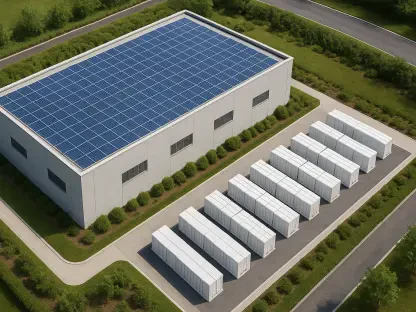

The dusty horizons of Imperial County have become an unexpected battleground where the massive scale of artificial intelligence infrastructure meets the deep-rooted interests of a rural farming community. This tension reached a boiling point when the Imperial Data Center, a project once heralded as a gateway for Southern California to join the global artificial intelligence race, faced a sudden and dramatic halt. Spanning one million square feet, this hyperscale facility promised to bring unprecedented computing power to a landscape dominated by agriculture. However, the momentum shifted abruptly when the Imperial County Board of Supervisors enacted a moratorium, signaling a retreat from the “pro-growth” stance that had initially green-lit the development. This pivot reflects a growing friction between global tech ambitions and the immediate, lived concerns of local residents. As the project sits in limbo, it serves as a reminder that the path to digital dominance is often obstructed by the complexities of local governance. This situation forces an examination of whether industrial expansions can truly coexist with the fragile ecosystems of the communities that host them.
The Economic Promise and Community Skepticism
Weighing Financial Gains: The Industrial Vision
Supporters of the project highlight the transformative economic infusion it would provide to a historically agricultural region that often struggles with industrial diversification. With 2,500 temporary construction jobs and 100 permanent high-tech roles, the project is marketed as a financial lifeline for a working-class area in need of stable employment. Additionally, the massive projected tax revenues, reaching into the millions annually, offer a compelling argument for a county looking to fund essential public services. These funds could bolster local schools, improve emergency response times, and provide the capital necessary for infrastructure repairs that have been delayed for years. For proponents, the data center represents a bridge to the modern economy, moving beyond the volatility of crop prices and into the lucrative world of digital services. The promise of consistent revenue streams is difficult to ignore for local officials tasked with balancing tight budgets while trying to foster growth.
Public Health Concerns: The Cost of Progress
Conversely, local critics argue that these economic perks fail to account for the long-term socio-environmental costs that often fall on the most vulnerable residents. In a community already grappling with some of the highest rates of pediatric asthma in the state, the prospect of adding more industrial infrastructure raises immediate health red flags. Residents fear that the pursuit of tech-driven tax dollars will come at the expense of their air quality and general well-being, leaving the community to pay the bill for the industry’s footprint. The skepticism is rooted in a history of industrial projects that promised prosperity but left behind environmental challenges. Activists emphasize that a few hundred jobs cannot compensate for a decline in public health or the degradation of the local environment. This creates a divide between those who see the data center as a necessary economic evolution and those who view it as a threat to the quality of life for families who have called the region home for generations.
Legal Challenges and Regulatory Oversight
The Fight Over Moratoriums: A Clash of Authority
The shift toward a precautionary approach has triggered a legal showdown between the developer and the county, highlighting the fragility of development agreements. The lead developer contends that the 45-day moratorium is an unlawful planning tool rather than a response to a legitimate emergency, sparking a debate over local authority. His lawsuit challenges the board’s pivot, characterizing it as a reactive move fueled by public emotion rather than objective policy failure, and seeks to restore the project’s original momentum. From the developer’s perspective, changing the rules in the middle of the process creates an environment of uncertainty that discourages future investment. They argue that the county had ample time to review the specifications before granting initial approvals. This legal battle underscores the tension between the need for flexible governance and the contractual expectations of large-scale industrial entities that operate on multi-year development timelines.
Permitting Loopholes: Ministerial Approval Under Scrutiny
A central point of contention in this legal battle is whether the project qualifies for ministerial approval, which allows for automatic permitting on land already zoned for industrial use. The developer argues that skipping extensive environmental reviews is a matter of legal entitlement under existing zoning laws that were established to streamline growth. However, local leaders and activists insist that the sheer scale of a hyperscale facility necessitates a higher level of scrutiny to ensure that public safety and resources are not compromised. They argue that traditional zoning codes did not anticipate the massive energy and water requirements of modern artificial intelligence clusters. This discrepancy has led to calls for modernizing land-use policies to better reflect the realities of high-density tech infrastructure. The outcome of this dispute will likely set a precedent for how other rural counties handle the influx of data centers, determining whether “by-right” development remains a viable path.
Environmental Protection and Resource Management
Water Rights: The Battle for the Colorado River
Water scarcity is a critical issue in the debate, as the facility would require hundreds of millions of gallons of Colorado River water for cooling purposes. The dispute over diverting water from agricultural use to industrial cooling highlights the difficult choices rural communities face in a water-stressed environment. Opponents argue that transferring water rights from fallowed farmland to data centers sets a dangerous precedent that could threaten the region’s agricultural backbone. In an era of prolonged drought and shrinking reservoirs, every gallon allocated to a server farm is seen as a gallon taken away from a farmer’s field. Proponents of the tech project suggest that the economic value per gallon is higher for data processing than for certain low-value crops, but this logic fails to resonate with those whose culture and livelihood are tied to the soil. The conflict forces a reassessment of how water is valued and prioritized as the state enters a more arid phase of its history.
Air Quality Reform: Broadening Local Oversight
Air quality remains a top priority, leading to proposed legislative reforms for the local air pollution control board to ensure better representation. State Senator Steve Padilla has introduced a bill to broaden the governing board to include public health experts and representatives from various local sectors. This move is designed to prevent the “rubber-stamping” of massive projects and to ensure that environmental mitigation is handled with professional expertise rather than political expediency. By including voices from the medical community, the bill aims to create a more balanced decision-making process that prioritizes health over short-term gain. Additionally, the state has considered measures to protect average ratepayers from rising costs and grid instability. These efforts would require data centers to invest in their own zero-carbon power infrastructure and pay for grid upgrades upfront, ensuring that tech giants shoulder their own energy burdens and prevent price hikes for residents.
Accountability and the Future of Industrial Policy
Transparency Mandates: Strengthening Public Disclosure
The battle over the California Environmental Quality Act exemplifies a growing demand for transparency and public disclosure in large-scale developments. Nearby cities argue that because the facility sits in close proximity to residential areas, it should not be exempt from rigorous environmental impact reporting. They believe that disclosing potential harms and proposing mitigation strategies should be a non-negotiable prerequisite for any project of this magnitude, regardless of its zoning status. This push for transparency is not just about environmental compliance but about building trust between the industry and the community. When developers are seen as bypassing public input, it fosters a culture of suspicion that can derail even the most well-intentioned projects. Advocacy groups are now calling for a “community-first” approach where impact studies are conducted early and shared openly with the public to ensure that every stakeholder has a voice in the process.
Actionable Solutions: Redefining Sustainable Tech Growth
The conflict in Imperial County established a new framework where rural areas successfully pushed back against unchecked tech expansion. Communities mandated that “zero-carbon” requirements and the use of recycled water became standard practices for the industry. This shift indicated that the previous method of prioritizing rapid growth over environmental caution was no longer sustainable, and the path to a digital future was paved with accountability. Local governments updated their zoning codes to differentiate between standard industrial use and the unique demands of hyperscale computing. These reforms provided a blueprint for how technology firms could integrate into agricultural regions without depleting essential natural resources. Furthermore, the state legislature enacted strict guidelines that linked industrial permits to measurable improvements in local public health. By centering the needs of the residents, policymakers transformed a period of intense friction into a collaborative model.