
The rapid acceleration of high-performance computing at the extreme perimeter of corporate networks is fundamentally altering how organizations perceive and utilize their local physical spaces. In a world where data is increasingly generated by billions of sensors and high-definition cameras, the centralized cloud model is beginning to buckle under the sheer weight of latency and the prohibitive costs of massive data transfers. Organizations are moving away from the paradigm where the edge was merely a destination for connectivity and toward a model where it serves as a sophisticated hub for immediate decision-making. This transition is not merely a technical upgrade but a strategic necessity, as the requirements of modern artificial intelligence demand that processing happen as close to the source as possible. To bridge this gap between central intelligence and local execution, industry leaders have combined their expertise to provide a cohesive solution that simplifies the complexities of distributed computing environments.
Overcoming the Limitations of Traditional Edge Infrastructure
The Failure of Legacy Models: Why Centralization No Longer Works
For several decades, the standard approach to managing remote sites involved treating them like miniature data centers that were essentially stripped-down versions of their central counterparts. This antiquated model relied heavily on manual intervention and simple servers that were only capable of handling basic transactional data or local file caching. However, as the digital landscape evolved into 2026, these legacy configurations proved to be woefully inadequate for the processing demands of real-time analytics and complex machine learning algorithms. The reliance on remote IT staff or shipping replacement hardware for every minor failure created significant operational bottlenecks that modern businesses can no longer afford. Frequent downtime and high maintenance costs became the norm for companies trying to force old hardware to perform new tricks. This disconnect highlights a fundamental mismatch between the capabilities of traditional infrastructure and the rigorous demands of a modern enterprise.
The persistent challenge of maintaining these remote systems often led to a fragmented IT environment where different locations ran disparate versions of software and hardware. Such inconsistencies made it nearly impossible to implement a cohesive security strategy or to deploy new applications with any degree of speed. Furthermore, the lack of centralized visibility meant that local failures were often only detected after they had already impacted customer experience or production efficiency. As organizations attempted to integrate advanced computer vision and predictive maintenance tools, the limitations of these siloed systems became even more apparent. The inability to scale resources dynamically or to manage thousands of endpoints from a single interface created a barrier to innovation that was only solved by a shift toward a more integrated, software-defined approach. This transformation enabled businesses to treat their entire distributed footprint as a single, flexible resource pool rather than a collection of isolated and difficult-to-manage sites.
Essential Performance Drivers: Latency and Data Sovereignty
Beyond physical limitations, the shift toward an AI-ready edge is driven by a triad of critical operational constraints: latency, data sovereignty, and bandwidth efficiency. In high-stakes environments such as autonomous manufacturing floors or automated logistics hubs, waiting for data to traverse thousands of miles to a central cloud facility and back is simply not a viable option. Decisions in these sectors must occur in mere milliseconds to ensure safety and maintain continuous productivity without interruptions. Furthermore, increasingly stringent global regulations regarding data residency require that sensitive information remains within specific geographic or corporate boundaries. At the same time, the sheer volume of telemetry data produced by modern sensors makes the cost of transferring every bit of information to the cloud economically unsustainable. These factors combined have forced a total reevaluation of how infrastructure is deployed, emphasizing local intelligence over centralized reliance for core logic.
This economic reality has necessitated a move toward preprocessing data at the source, where only the most relevant insights are transmitted back to the primary data center or cloud provider. By filtering and analyzing information locally, companies can drastically reduce their networking overhead while simultaneously improving the responsiveness of their customer-facing applications. For instance, a retail branch using real-time video analytics to manage checkout lines can process the video feed locally and only send occupancy data to corporate headquarters. This approach not only protects consumer privacy but also ensures that the system remains functional even if the primary internet connection is temporarily lost. The ability to maintain local autonomy while remaining part of a larger, coordinated network is the hallmark of a modern edge strategy. It represents a fundamental shift in architecture that prioritizes efficiency and resilience in an increasingly connected world where data growth shows no signs of slowing down.
Technical Foundations of the Modern Edge
Integrating Modular Hardware: The Power of Cisco Unified Edge
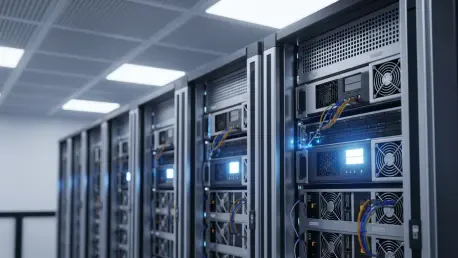
The physical architecture supporting this transition relies on a purpose-built modular hardware platform that is specifically optimized for environments far removed from the climate-controlled comfort of a standard data center. This system, known as Cisco Unified Edge, utilizes a compact and ruggedized chassis that can fit into constrained spaces such as retail backrooms or industrial cabinets without sacrificing performance. Inside these units, the latest Intel Xeon 6 processors provide the high-frequency compute power necessary to handle dense workloads while maintaining power efficiency. High-speed NVMe storage ensures that local databases and cache layers can keep up with the demands of rapid-fire data ingestion from thousands of endpoints. Crucially, the hardware supports high-density Graphics Processing Units, which are the fundamental engines behind the mathematical calculations required for computer vision and generative AI models. This modular design allows organizations to scale their physical footprint precisely as needed.
Furthermore, the inclusion of integrated networking capabilities within the chassis simplifies the physical deployment by reducing the number of individual components that must be managed and secured at each site. This consolidation minimizes the potential points of failure and lowers the overall power consumption, which is a critical consideration for remote locations with limited utility infrastructure. The hardware is also designed with simplified cooling mechanisms that can withstand the dust and temperature fluctuations often found in manufacturing or outdoor settings. By providing a standardized hardware base that can be deployed globally, enterprises can ensure that their edge infrastructure is just as reliable and performant as their primary data centers. This standardization is essential for creating a predictable environment for application developers and IT operators alike, allowing them to build and deploy solutions with the confidence that the underlying hardware will meet the necessary performance benchmarks regardless of the location.
Software Orchestration: Managing Complexity at Scale
While the hardware provides the muscle, the software layer from Nutanix serves as the intelligent orchestration engine that transforms raw compute into a cloud-native experience. The Nutanix Cloud Platform offers a unified management plane that effectively bridges the gap between traditional virtual machine workloads and modern, containerized applications. By leveraging the Nutanix Kubernetes Platform, enterprises can deploy their AI models with the same consistency and security profiles they use in their primary data centers. This architectural continuity is vital for maintaining a strong security posture, as it allows for the automated deployment of patches and updates across thousands of disparate sites simultaneously. The integration of software-defined storage also means that high availability is no longer a luxury reserved for the central office; localized clusters can now provide the same level of resiliency and data protection that was once only possible in massive server farms, ensuring that local operations continue even during network outages.
Ultimately, the implementation of this unified platform allowed businesses to shift their focus from managing fragmented hardware to developing the advanced AI applications that drove competitive differentiation. In practice, organizations realized significant gains in operational efficiency by utilizing automated deployment workflows that eliminated the need for onsite technical expertise. For those looking to modernize their own distributed environments, the first step involved conducting a comprehensive audit of existing latency requirements and data processing localized at each branch. They then prioritized sites where real-time decision-making provided the highest immediate return on investment, such as assembly line quality control or autonomous retail systems. The transition toward a more localized intelligence model proved that the key to success lay in the ability to process and act upon data at its source. Moving forward, the emphasis remained on refining these automated processes to ensure that every site functioned as a high-performance extension of the core strategy.