
The relentless surge in demand for massive generative models has pushed existing data center connectivity to its physical and economic limits, forcing a paradigm shift in how high-speed data transmission is handled. While traditional copper-based interconnects served the industry well for decades, the transition to 1.6 Terabit and beyond necessitates a fundamental change in the underlying physics of hardware communication. This acquisition signals a decisive move by Credo to consolidate the critical intellectual property required to dominate the next generation of optical interconnects. By integrating advanced silicon photonics with high-performance digital signal processors, the company aims to eliminate the bottlenecks that currently stifle the scaling of massive AI clusters. As the industry moves from 2026 to 2028, the ability to manage thermal envelopes while increasing bandwidth will differentiate the market leaders from those tethered to legacy architectures that can no longer sustain the heat and power requirements of hyperscale environments. Furthermore, the integration of these sophisticated technologies highlights a shift toward vertical integration as a means to secure supply chain reliability and accelerate time-to-market for groundbreaking connectivity solutions. As we look at the landscape from 2026 to 2028, it becomes clear that only those who control both the electrical and optical layers will effectively address the increasing complexity of AI-driven traffic patterns and the necessary hardware response.
Integrating Advanced Silicon Photonics: Future-Ready Networks
The Strategic Importance: Photonic Integration
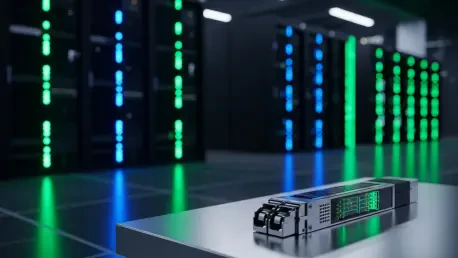
Silicon photonics represents a transformative leap in how data moves between servers, replacing traditional discrete optical components with integrated circuits that leverage existing semiconductor manufacturing processes. DustPhotonics has established itself as a pioneer in this field, specifically through its highly efficient laser coupling and modulation techniques that reduce signal loss and improve overall system reliability. This integration allows for the creation of compact, low-power optical engines that can be placed much closer to the switch or compute silicon than previous generations of hardware permitted. For Credo, this means gaining access to a mature technology stack that complements its established expertise in SerDes and DSP design, creating a unified platform for high-speed connectivity. The synergy between these two technologies is essential for reducing the physical footprint of optical modules, which is a critical requirement as data center operators seek to maximize the density of their existing rack space while minimizing operational costs.
The technical advantages of combining Credo’s electrical signaling expertise with DustPhotonics’ optical capabilities extend far beyond simple speed improvements to include substantial latency reductions. In large-scale AI training clusters, even microscopic delays in data transmission can lead to significant idleness in GPU and accelerator utilization, representing millions of dollars in wasted capital expenditure. By controlling the entire signal path from the electrical domain through the optical fiber, the newly combined entity can optimize every transition to ensure maximum throughput with minimal overhead. This vertical integration allows for a more holistic approach to hardware design, where the DSP and the optical engine are co-optimized for specific workloads and environmental conditions. Such a development is particularly vital as the industry prepares for the deployment of 3.2 Terabit links, where the margin for error in signal integrity is virtually non-existent and the need for precision-engineered components becomes the primary barrier to entry for many competitive networking hardware providers.
Scaling Potential: Overcoming Hyperscale Barriers
Scaling AI infrastructure involves more than just adding more chips; it requires a sophisticated interconnect fabric that can handle the exponential growth in inter-node communication traffic. Traditional pluggable optics are reaching a point of diminishing returns where the power required to drive signals through the electrical interfaces often rivals the power used by the optical transmission itself. The acquisition of DustPhotonics provides Credo with the intellectual property needed to accelerate the adoption of co-packaged optics and other advanced packaging technologies. These innovations effectively shorten the electrical path between the processor and the optical interface, thereby drastically reducing the energy consumed per bit of data transferred. This shift is not merely an incremental improvement but a necessary evolution for hyperscalers who are currently facing stringent power delivery and cooling constraints. As these organizations look toward the 2026 to 2029 window, the implementation of more efficient optical connectivity becomes the most viable path to sustaining the rapid growth of global computing capacity.
The competitive landscape for AI hardware is increasingly defined by how well a company can manage the trade-offs between performance, power, and cost at extreme scales. By internalizing the optical engine design, Credo can significantly reduce its dependence on third-party component suppliers, leading to a more streamlined supply chain and potentially lower costs for end-users. This move also allows for faster iteration cycles, as the design teams can now work in parallel on both the digital and optical aspects of a product rather than waiting for external components to catch up. Furthermore, the integration of DustPhotonics’ technology enables the development of more robust diagnostics and telemetry features within the optical path, providing data center operators with deeper insights into the health and performance of their networks. This level of visibility is increasingly important as AI workloads become more distributed and the complexity of managing thousands of interconnected nodes grows, requiring automated systems that can preemptively identify and mitigate potential failures before they impact system-wide uptime.
Optimizing Energy Efficiency: Power Delivery Solutions
Thermal Management: High-Performance Optical Engines
One of the most significant challenges facing modern data centers is the management of the heat generated by the massive arrays of processors required for training large-scale artificial intelligence models. Every watt of power consumed by networking components contributes to the thermal load, requiring sophisticated and expensive cooling solutions that further increase the overall energy footprint. Silicon photonics offers a way to mitigate this issue by using light rather than electricity to move data over longer distances with significantly less heat generation. The technology developed by DustPhotonics is particularly effective at maintaining stability under varying temperature conditions, which is a common issue in high-density server racks where thermal gradients can be extreme. By incorporating these resilient optical components into its product line, Credo can offer solutions that not only run faster but also run cooler, reducing the strain on facility-level cooling infrastructure. This efficiency gain is a critical component of the broader industry effort to move toward more sustainable computing practices without sacrificing the performance gains needed for modern workloads.
The drive toward energy-efficient networking is also fueled by the physical limitations of power delivery to the chip and the rack level in existing data centers. Many facilities are reaching their total power capacity, meaning that any new performance gains must come from improvements in efficiency rather than simply drawing more current from the grid. High-speed interconnects that leverage integrated silicon photonics provide a clear path forward by offering a lower power-per-bit profile compared to traditional optical modules. This allows data center operators to allocate more of their limited power budget to the actual computation tasks performed by GPUs and TPUs, rather than spending it on the overhead of moving data between them. For Credo, the acquisition represents a strategic pivot toward becoming a provider of comprehensive, energy-conscious connectivity solutions that address the most pressing constraints of the hyperscale market. As the industry advances from 2026 toward 2030, the adoption of these power-optimized optical interconnects will likely become the standard for any organization looking to scale its AI capabilities in a responsible and cost-effective manner.
Future Considerations: Implementing Sustainable Growth
The successful integration of these optical technologies required a meticulous alignment of engineering cultures and a shared vision for the future of high-bandwidth networking components. Leadership teams prioritized the unification of the design flow to ensure that the transition from silicon photonics research to mass-market manufacturing remained seamless and efficient. This collaborative approach focused on eliminating redundancies in the development cycle while capitalizing on the unique strengths of each specialized team to create a more robust product roadmap. By establishing a centralized hub for optical innovation, the organization fostered an environment where new ideas could be tested and validated rapidly against real-world performance metrics. This shift in operational strategy reflected a broader commitment to leading the industry through technological excellence rather than mere market presence. The move solidified the company’s position as a critical enabler of the next wave of digital transformation, providing the foundational hardware necessary for the continued expansion of global artificial intelligence services across diverse sectors of the economy.
Looking toward the next phase of deployment, enterprises and cloud service providers evaluated their current networking architectures to identify where these advanced optical solutions provided the most immediate value. The transition to integrated photonics offered a tangible path for organizations to future-proof their infrastructure against the inevitable rise in data throughput requirements and the tightening of environmental regulations. Proactive teams began auditing their existing power consumption profiles and thermal management strategies to prepare for the integration of higher-speed links that prioritized efficiency over raw performance alone. Industry leaders recognized that the winners in this space would be those who adopted a holistic view of the data center, treating connectivity not as a peripheral component but as a core element of the computational engine. This strategic foresight enabled early adopters to gain a competitive advantage by building more resilient and scalable platforms that were capable of supporting the most demanding AI workloads. The acquisition ultimately served as a catalyst for a more unified approach to hardware design, where the boundaries between electrical and optical systems became increasingly blurred.