
The relentless expansion of hyperscale facilities and the insatiable computational appetite of artificial intelligence have pushed global data center electricity consumption toward a critical tipping point. Current projections suggest that the sector’s energy footprint will more than double by 2030, creating an urgent need for architectural overhauls that prioritize efficiency over traditional convenience. For decades, the industry relied on alternating current (AC) because of its historical dominance in utility distribution, yet this choice introduces inherent friction when powering modern microchips that operate exclusively on direct current (DC). This fundamental mismatch forces facility operators to manage constant power conversions, each acting as a drain on resources and a source of unnecessary heat. As the physical limits of traditional power delivery systems become apparent, the transition to native DC architectures is no longer a niche experimental strategy but a vital necessity for maintaining growth.
Power Conversion Chain: Eliminating Redundant Steps
Conventional data centers operate using a complex sequence of electrical translations that inevitably lead to significant energy dissipation through heat and mechanical stress. Electricity usually arrives at the facility as high-voltage AC, which is stepped down and then rectified into DC to charge massive uninterruptible power supply (UPS) battery banks. From there, the energy is often inverted back into AC for distribution across the server floor, only to be converted one final time back into DC by the power supply units residing within the individual server chassis. Each of these conversion stages creates a bottleneck, where roughly three to five percent of the total power can be lost as waste. By the time a single watt reaches the processor, it has likely passed through four or more transformation steps, making the entire infrastructure less responsive and more prone to inefficiencies that scale poorly as power densities increase across the floor.
Distribution Strategy: Streamlining Energy Flow to the Rack
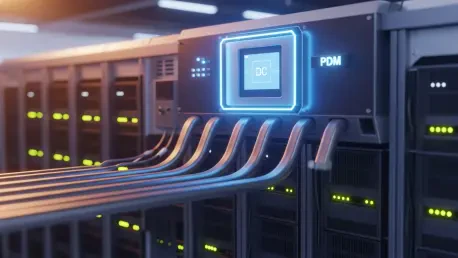
Implementing a direct-to-chip DC architecture simplifies the power chain by performing a single, high-efficiency conversion at the facility’s edge or at the lineup level. By maintaining a steady flow of direct current from the centralized battery systems to the equipment racks, operators can bypass the redundant inversion and rectification cycles that define older setups. This streamlined approach allows for the removal of numerous internal components, such as the bulky AC-to-DC converters found in every individual server, which effectively reduces the overall bill of materials and the complexity of the hardware stack. Beyond the immediate energy savings, a simplified distribution path minimizes the physical footprint of the electrical infrastructure, freeing up valuable floor space for additional computing equipment. The result is a leaner power delivery system that aligns perfectly with the electrical requirements of modern semiconductors while stripping away legacy baggage.
Operational Efficiency: Quantifying Direct Current Gains
The primary driver behind the adoption of DC power is the quantifiable reduction in wasted electricity, which translates directly into lower operational expenses for large-scale operators. Industry research indicates that by eliminating intermediary conversion stages, facilities can achieve efficiency gains ranging from seven to twenty percent, depending on the specific architecture and load profiles. In the context of a massive campus consuming hundreds of megawatts, even a five percent improvement can prevent the loss of substantial amounts of energy that would otherwise be dissipated. Technologies like 400 VDC distribution are now being deployed to support the immense requirements of high-density racks, which often exceed thirty kilowatts per cabinet. This higher voltage allows for the transmission of more power through smaller conductors, reducing the amount of copper required and improving the overall economics of the electrical build-out for hyperscale environments.
Thermal Dynamics: Leveraging Benefits for Cooling Systems
A critical benefit of the transition to DC power is the significant improvement in the facility’s thermal profile and cooling requirements. Since every electrical conversion process naturally generates heat as a byproduct, reducing the number of these conversion points lowers the ambient temperature within the server halls. When servers no longer need to house inefficient power supply units that blow hot air into the aisles, the burden on the cooling infrastructure is dramatically reduced. This creates a virtuous cycle where the cooling fans and chillers do not have to work as hard to maintain stable operating temperatures, leading to further energy savings at the facility level. Consequently, this lower heat generation enables operators to achieve much higher equipment densities, allowing for more powerful AI clusters to be packed into the same physical space without risking thermal throttling or hardware failure due to excessive heat soak.
Infrastructure Reliability: Enhancing System Resilience
Beyond energy-based metrics, DC power offers a substantial boost to system reliability by reducing the complexity of the electrical distribution network. A DC-native architecture requires fewer active components and less intricate wiring, which statistically translates to fewer potential points of failure within the critical power path. Furthermore, energy storage solutions like lithium-ion batteries or flywheels can be integrated directly into the DC bus without the need for additional inverters or complex synchronization hardware. This native integration facilitates more efficient charging and discharging cycles, ensuring that the transition to backup power during a grid disturbance is virtually instantaneous and highly reliable. By stripping away the layers of equipment that usually manage AC-to-DC handoffs, data center managers can achieve higher uptime and simplify the maintenance routines required to keep these massive mission-critical systems running.
Green Integration: The Synergy of DC Power and Renewables
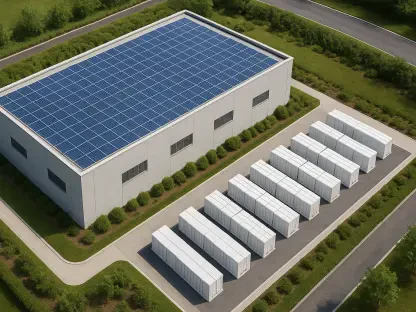
As data centers face mounting pressure to meet aggressive sustainability targets, DC power emerges as an ideal partner for the integration of onsite renewable energy sources. Technologies such as solar photovoltaic panels and modern battery storage systems inherently produce and store electricity as direct current, making them naturally compatible with a DC-based facility. In a traditional AC setup, solar energy must be converted to AC for distribution and then back to DC for the servers, a process that wastes a significant portion of the green energy generated. By adopting a DC-first approach, operators can utilize renewable power directly, maximizing the yield from their investments in carbon-neutral infrastructure. While legacy retrofitting remains a challenge, major industry players are rapidly moving toward standardizing these systems, ensuring that they become the foundational architecture for the next generation of high-performance and environmentally responsible facilities.
Implementation Hurdles: Overcoming Legacy Facility Challenges
Transitioning to a DC-based infrastructure requires a strategic approach that addresses the existing challenges of legacy hardware and evolving electrical safety codes. Most current data centers were designed with AC distribution in mind, meaning that a full conversion often necessitates a complete overhaul of the power distribution units and rack-level equipment. However, the rise of modular data center designs and the Open Compute Project has provided a roadmap for gradual adoption, allowing operators to deploy DC-ready islands within larger AC facilities. This hybrid approach enables companies to test the benefits of 48V or 400V DC architectures on specific high-density workloads, such as AI training or big data analytics, before committing to a site-wide transition. By focusing on these high-impact areas first, organizations can demonstrate clear ROI through reduced energy bills and improved hardware longevity, paving the way for broader cultural shifts.
Strategic Modernization: Developing a Roadmap for Efficiency
The successful adoption of direct current architectures represented a pivotal shift in how the industry approached energy management and facility design. Organizations that prioritized the removal of redundant conversion steps realized significant gains in both operational efficiency and system reliability. Moving forward, the most effective strategy involved the implementation of standardized DC busbars at the rack level and the direct integration of onsite renewable arrays to minimize grid dependence. Engineers focused on streamlining the power path from the substation to the silicon, ensuring that every milliwatt was utilized for computation rather than dissipated as waste heat. It was essential for stakeholders to align their hardware procurement cycles with these new power standards to avoid the pitfalls of legacy incompatibility. By embracing these changes, the industry established a more resilient foundation that balanced the explosive growth of digital services with the urgent need for environmental sustainability.