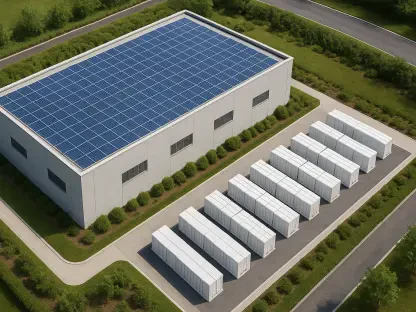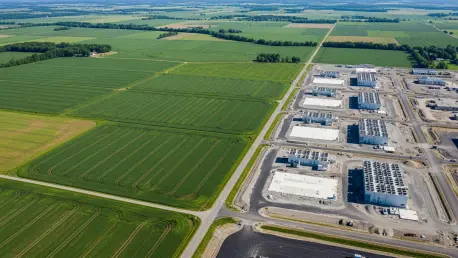

The sprawling landscapes once defined by the rhythmic cycles of planting and harvesting now face a permanent transformation as massive concrete monoliths housing thousands of high-performance servers begin to punctuate the horizon of Pennsylvania’s most fertile valleys. Pennsylvania is navigating a complex social and economic conflict as the demand for artificial intelligence and cloud computing drives data center developers into rural areas. While the state government aims to position the Commonwealth as a leader in high-tech industrial growth, this ambition creates a direct friction with the state’s deeply rooted agricultural heritage. The rapid expansion of hyperscale server farms highlights an escalating tension between the need for modern digital infrastructure and the long-term economic stability of farming communities. This trend is visible in counties like Lancaster and York, where the intersection of power lines and affordable land presents a major opportunity for tech giants. As the digital economy accelerates, the traditional silhouettes of silos are increasingly replaced by windowless facades, marking a transition that is as much cultural as it is physical.
Evaluating the Economic Shift: Fields to Fiber
Agricultural land is uniquely attractive to data center developers because it is typically flat, cleared, and strategically located near high-voltage power grids and fiber-optic routes. These expansive parcels allow for the rapid construction of the massive campuses required to house modern server arrays. However, converting this land into industrial zones is an irreversible process; once prime soil is covered with heavy concrete foundations and specialized cooling systems, it is effectively lost to food production. The soil quality in Pennsylvania’s central valleys is among the best in the United States, and its removal from the agricultural pool represents a significant loss of domestic food security. Developers often offer prices that far exceed the agricultural value of the land, tempting multi-generational farming families to sell their legacy to secure financial stability. This trade-off creates a permanent shift in the regional topography and erodes the critical mass of farming activity needed to maintain the industry.
Beyond the physical loss of acreage, the rise of data centers introduces significant economic pressures that threaten the future of the farming industry. Speculative development drives up property values and rental costs, making it increasingly difficult for the next generation of farmers to acquire land or expand their operations. This environment creates a ripple effect where rising prices in one county can spread to neighboring rural areas, complicating statewide efforts to maintain affordable, productive farmland. Local agricultural support businesses, such as tractor dealerships and seed suppliers, also face uncertainty as their customer base shrinks due to land conversion. When a significant portion of a township’s land is transitioned to industrial use, the remaining farmers often find themselves isolated from the necessary infrastructure and community support that once sustained them. This fragmentation can lead to a gradual decline in the overall viability of the regional agricultural economy, making it harder to sustain growth.
Balancing Industrial Ambition With Resource Protection
The state government’s current strategy focuses on responsible growth through frameworks designed to provide tax credits and faster permitting to developers who respect local resources. While the administration views the tech sector as a vital pillar of a modern economy, some legislators and local residents argue that voluntary standards are not enough to protect rural character. Proposed measures, such as a temporary moratorium on hyperscale projects, reflect a growing desire for a thoughtful pause to ensure local zoning and environmental regulations can keep pace with industrial expansion. Current initiatives in 2026 aim to establish stricter criteria for where these facilities can be built, specifically targeting regions with existing industrial zoning. By incentivizing the use of previously developed sites, the state hopes to satisfy the hunger of the tech sector without sacrificing the heritage that defines Pennsylvania’s rural identity. This legislative balancing act requires a delicate touch to avoid stifling innovation.
Data centers are also known for their intense consumption of electricity and water, often leading to a resource tug-of-war in rural communities. In areas where utility infrastructure may be limited, the massive requirements for cooling server racks can strain local water supplies and compete with the irrigation needs of nearby farms. This heavy reliance on local resources forces communities to weigh the immediate financial infusions of tech investment against the long-term sustainability of their water and energy grids. Furthermore, the massive power draw from these facilities often necessitates the construction of new substations and high-tension lines that crisscross remaining farmland, further complicating the operational logistics for farmers. Residents have expressed concerns about the noise pollution generated by cooling fans and the visual impact of industrial structures on the pastoral landscape. These environmental factors contribute to a growing sense of urgency among local planning commissions to update outdated ordinances.
Sustainable Development: Implementing Long-Term Solutions
To resolve the friction between these two vital sectors, policymakers are exploring ways to direct high-tech projects toward less sensitive locations, such as industrial brownfields, rather than high-yield agricultural soil. Stricter zoning definitions and more granular land-use policies could help protect Pennsylvania’s food security while still allowing for necessary technological advancement. By repurposing abandoned steel mills or old manufacturing sites, the state can provide the infrastructure data centers need while revitalizing distressed urban and suburban areas. This strategy not only preserves the sanctity of prime farmland but also brings high-paying technical jobs to communities that have experienced industrial decline over the past few decades. Regional planners began looking into these alternative sites as early as the beginning of the year to determine the feasibility of retrofitting existing power grids to support high-density compute loads. Such a transition requires significant public-private partnership.
The state finally prioritized a dual-track development model that integrated technological expansion with the mandatory preservation of high-yield acreage. Legislative bodies established new standards for water recycling within data centers to mitigate the impact on local aquifers, ensuring that agricultural operations maintained priority access to vital resources. Policymakers also implemented a sliding-scale tax structure that rewarded developers for selecting brownfield sites over greenfield locations, which successfully steered the majority of new projects away from vulnerable rural regions. This approach created a more sustainable equilibrium where the digital infrastructure required for 2027 and beyond existed alongside a protected agricultural economy. Furthermore, the development of specialized agricultural technology zones allowed for the integration of smart-farming tools, showing that high-tech and traditional industry could coexist. These measures proved that economic progress did not necessitate the destruction of rural traditions, as clear boundaries and innovative land-use strategies emerged.