
The global expansion of digital infrastructure has reached a critical juncture where the physical limitations of the traditional electrical grid are now dictating the pace of technological innovation for the world’s largest companies. As hyperscalers like Amazon, Google, and Microsoft accelerate the deployment of massive artificial intelligence clusters, they are discovering that the existing power distribution framework is fundamentally unequipped to handle the concentrated energy density required by modern high-performance computing. This unprecedented mismatch between digital ambition and physical reality has triggered a radical paradigm shift toward behind-the-meter energy production. By decoupling their facilities from the public utility grid, operators are attempting to secure their operational future and maintain their competitive edge in a landscape where electricity has become the most precious commodity. This transition marks the end of the data center as a passive consumer and its rebirth as a self-sustaining power node.
Regulatory Mandates: The Shift Toward Corporate Responsibility
The movement toward energy self-sufficiency gained significant momentum following the pivotal meeting at the White House in early 2025, where the industry’s largest players formalized the Ratepayer Protection Pledge. This nonbinding yet influential agreement established a clear framework in which technology corporations committed to assuming the full financial burden of the electricity generation required for their new high-capacity facilities. The primary objective behind this pledge was to ensure that the massive capital investments necessary to power the next generation of artificial intelligence do not result in higher utility bills for residential and small business customers. By taking this proactive stance, the industry aimed to address growing political concerns regarding the equity of energy distribution. This shift indicates a new era of corporate accountability where the success of a technology project is measured not just by its processing power, but by its ability to exist without depleting shared public resources.
Beyond the immediate financial implications, data center developers are navigating an increasingly complex social landscape in traditional technology hubs. In regions where these facilities have a dense footprint, local populations have expressed rising concern over the strain placed on local grids and the potential for service disruptions during peak demand periods. To maintain their social license to operate, hyperscalers are now forced to demonstrate that they can expand their operations without compromising the reliability of the regional power supply. Investing in behind-the-meter solutions serves as a powerful signal to community leaders and regulators that these companies are bringing their own energy resources to the table. This approach not only helps in smoothing the often-contentious zoning and approval processes but also positions the data center as a responsible neighbor. By generating power on-site, these facilities transition from perceived burdens on the infrastructure to independent entities that can sustain their own requirements without grid reliance.
Bridging the Gap: Overcoming the Crisis in Time-to-Power
The primary operational driver for the adoption of on-site power is the widening discrepancy between the rapid pace of facility construction and the slow timeline for utility-scale grid upgrades. Current market conditions reveal that while a developer can complete a state-of-the-art data center in eighteen months, the necessary high-voltage grid interconnections often require a waiting period of three to five years. This critical time-to-power gap has become a significant bottleneck in primary markets such as Northern Virginia and Dallas-Fort Worth, where the demand for new capacity has outstripped the ability of utilities to respond. In many instances, the lack of guaranteed power has led to the suspension of multi-billion dollar projects or a complete freeze on new development in certain zones. Consequently, behind-the-meter generation has evolved from an expensive alternative into a baseline requirement for any developer hoping to meet the aggressive deployment schedules demanded by the current artificial intelligence arms race.
To manage the complexities of local energy production, developers are turning to sophisticated microgrid architectures that function as autonomous energy ecosystems. These advanced systems provide the orchestration necessary to balance multiple power sources while ensuring that the data center remains fully operational even during widespread grid instability. A key feature of these modern microgrids is their ability to island themselves, effectively severing the connection to the public utility during periods of extreme load or emergency. This capability prevents the facility from contributing to regional brownouts while simultaneously protecting sensitive server hardware from voltage fluctuations. Furthermore, these systems are engineered to prevent dangerous electrical backflow into the utility lines, a critical safety requirement for regulatory compliance. By utilizing these localized distribution networks, operators gain a level of control over their energy destiny that was previously impossible, transforming the facility into a resilient node that operates independently of broader municipal failures.
Technological Strategies: Diversifying the On-Site Power Portfolio
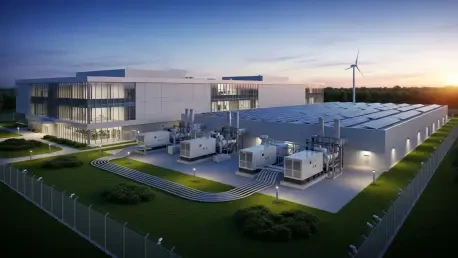
The selection of power generation technology is now a cornerstone of the data center design process, with fuel cells emerging as a preferred solution for providing reliable baseload energy. Unlike traditional backup generators, these systems are designed for continuous operation and can be deployed significantly faster than a standard grid connection can be established. In parallel, many operators are integrating hybrid renewable systems that combine solar or wind arrays with long-duration battery storage to meet corporate sustainability mandates. The integration of these green technologies presents a unique engineering challenge, as the intermittent nature of renewable energy must be carefully balanced to provide the constant, unwavering load required by high-density servers. Advanced energy management software is now employed to predict weather patterns and manage battery discharge rates, ensuring that the transition between different power sources is seamless and does not interrupt the critical computing tasks performed by artificial intelligence models.
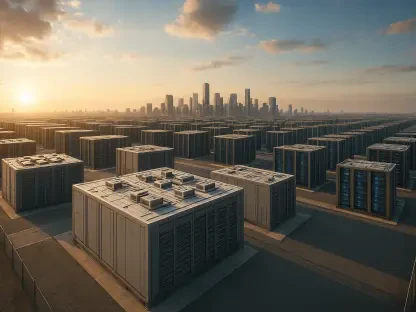
While the industry moves toward greener alternatives, natural gas turbines remain a vital component of the energy mix due to their high power density and proven reliability. These turbines provide a stable source of electricity that can be scaled to meet the massive demands of hyperscale campuses, though they currently face significant supply chain constraints that have extended lead times for new units. Looking toward the horizon of the current decade, there is an increasing focus on the potential of small modular reactors to provide carbon-free, high-capacity energy on-site. These compact nuclear plants are viewed by many industry experts as the ultimate solution for the data center sector, offering a continuous power supply that can run for decades without refueling. Although these reactors are still transitioning from pilot programs to commercial availability, their development represents a significant shift in how the industry views long-term energy security. The commitment to such diverse technologies highlights the industry’s recognition that no single energy source will be sufficient to meet the future.
Operational Integration: The New Business Model of Power Generation
The transition toward behind-the-meter power has fundamentally altered the operational DNA of the data center industry, forcing companies to move beyond their traditional focus on real estate and networking. Becoming a power producer requires a comprehensive set of new competencies, ranging from complex fuel procurement and logistics to the specialized maintenance of high-output generation equipment. This evolution introduces a different risk profile for operators, who must now navigate the intricacies of energy market regulations and environmental compliance standards that were previously the sole responsibility of utility companies. The shift also necessitates a massive investment in human capital, as firms compete for engineers and technicians with expertise in power plant operations. This transformation is not without its difficulties, as the added complexity of managing a private utility can strain the financial models of smaller providers. However, for the major players, this integration is seen as a necessary cost of doing business in an environment where grid capacity is no longer guaranteed.
The shift toward on-site power generation represented a defining evolution for the digital infrastructure sector as it grappled with the energy demands of the mid-decade. Rather than remaining isolated consumers, data centers functioned as integrated partners within a more flexible and resilient energy landscape. This model of collaborative power allowed facilities to mitigate their impact on the public grid by utilizing their on-site resources during periods of high regional demand. By implementing bi-directional energy flows, many operators successfully transformed their campuses into local assets that supported grid stability rather than threatening it. These efforts demonstrated that the path forward required a proactive approach to energy management that balanced technological growth with social responsibility. Ultimately, the successful deployment of behind-the-meter systems ensured that the expansion of artificial intelligence continued without compromising the reliability of the power systems upon which the broader public relied for their daily lives.