
The ongoing evolution of the enterprise technology landscape is marked by a fundamental transition where the primary constraints on innovation have migrated from the digital realm of software optimization toward the rigid physical limitations of the power grid and electrical transmission capacity. For years, the conversation surrounding artificial intelligence focused almost exclusively on the elegance of neural networks, the size of datasets, and the speed of specialized processing units. However, as organizations attempt to scale these systems from isolated experimental pilots into the core fabric of their global operations, they are encountering a barrier that cannot be solved by better code. The silicon-based dreams of the early AI boom have met the copper-based reality of a strained and aging electrical infrastructure. This shift marks a pivotal moment where the metric of success is no longer how many floating-point operations a system can perform per second, but rather whether there is enough stable electricity to keep the fans spinning and the processors humming.
This transition from digital metrics to physical reality represents the most significant architectural hurdle for the enterprise since the dawn of the internet. While cloud computing once promised an infinite, invisible abstraction of resources, the energy-intensive nature of generative AI has stripped that abstraction away, revealing a complex and unyielding physical layer underneath. In this new environment, the availability of 110-kilovolt transmission lines and the proximity to regional substations have become more important to the board of directors than the specific iteration of a large language model. We are witnessing the emergence of “Infrastructure Friction,” a state where the lightning-fast iteration cycles of software development are forced to slow down to accommodate the multi-year timelines required for utility upgrades.
The 123-Gigawatt Challenge: Why AI Success Is No Longer Measured in Code
The sheer scale of the energy demand required by the current generation of artificial intelligence is difficult for many traditional IT leaders to grasp. In 2026, the United States is facing a jarring reality where the demand for data center power is expected to soar from roughly 4 gigawatts in the current cycle to a staggering 123 gigawatts by 2035. This is not a gradual increase but a vertical climb that threatens to overwhelm existing regional grids. Success in this era is no longer about the efficiency of an algorithm but about the strategic acquisition of energy capacity. Organizations that once obsessed over CPU cycles and storage latency are now deeply concerned with the physical stability of the regional power grids where their assets are housed.
This massive surge in demand has created a scenario of profound “Infrastructure Friction.” In the past, scaling a digital service was as simple as spinning up more virtual machines in a preferred cloud region. Today, that flexibility is evaporating. When the software-defined speed of a developer’s deployment script meets the unyielding constraints of a high-voltage transmission line that is already at 95 percent capacity, the software loses. The physical reality of the power grid is now the primary driver of enterprise strategy, forcing companies to move beyond digital abstraction and engage directly with the physics of energy distribution.
The shift toward measuring AI success in watts rather than code highlights a fundamental change in the corporate hierarchy. Energy procurement and facility engineering, once relegated to the background of corporate operations, are now front and center in strategic planning. The ability to secure a consistent and massive supply of electricity is becoming a competitive advantage that is harder to replicate than any software feature. As power becomes the ultimate scarce resource, the enterprises that survive will be those that treat their compute footprint as a physical industrial operation rather than a purely digital one.
The Collision of Digital Innovation and Physical Infrastructure Timelines
There is a fundamental and growing mismatch between the speed at which artificial intelligence models iterate and the timeline required to build the infrastructure that supports them. A state-of-the-art AI model can be retrained, refined, and deployed in a matter of weeks, yet the construction of a new utility substation or the permitting of a major transmission line can take a decade or more. This temporal collision is creating a bottleneck that threatens to stall the progress of even the most well-funded tech initiatives. The abstraction of the cloud, which once allowed developers to ignore the hardware entirely, is being stripped away as the physical constraints of the real world become impossible to bypass.
As these physical layers are revealed, the traditional “Real Estate” approach to data centers is proving to be inadequate for the demands of the modern era. In the past, choosing a data center location was primarily about finding cheap land and tax incentives. Now, the focus has shifted toward “Active Infrastructure” management. This involves a deep understanding of the local utility’s long-term capacity plans and the political landscape of energy generation. Companies can no longer afford to be passive tenants of the grid; they must become active participants in the energy ecosystem, sometimes even co-developing power solutions alongside utility providers to ensure their long-term viability.
This collision is forcing a reevaluation of how projects are greenlit within the enterprise. When the digital speed of the business is capped by the analog speed of the grid, the entire lifecycle of innovation must be reconsidered. Planning horizons are extending from eighteen-month software cycles to ten-year infrastructure roadmaps. This shift requires a new kind of leadership that can bridge the gap between the visionary speed of AI development and the grounded, regulated, and slow-moving world of heavy electrical engineering and public utilities.
Redefining the Data Center: The Shift Toward Industrial-Scale Compute Ecosystems
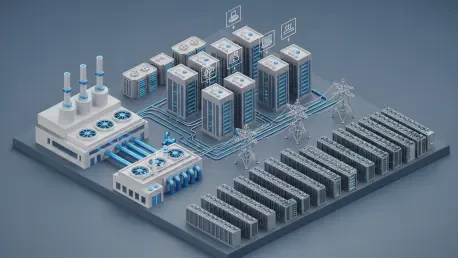
The nature of the work being performed in modern data centers has changed, necessitating a complete redefinition of these facilities. Traditional cloud workloads are largely transactional and elastic; they experience peaks and valleys based on user activity or batch processing schedules. In contrast, generative AI and agentic workflows create a sustained, continuous, and heavy draw on the power supply. These are not just servers responding to queries; they are massive, industrial-scale compute ecosystems that operate more like a smelting plant or a heavy manufacturing facility than a traditional IT office. This continuous demand places a unique strain on power delivery systems that were originally designed for more intermittent usage.
Beyond the raw electricity consumption, the extreme density of GPU-heavy racks has introduced severe thermal constraints. Traditional air-cooling methods are increasingly insufficient for the heat generated by modern AI hardware, making specialized liquid cooling systems a mandatory requirement rather than a luxury. These cooling systems themselves act as a secondary bottleneck to electricity usage, as they require significant power to circulate fluids and manage heat exchange. When a single rack of servers consumes as much power as a small residential neighborhood, the cooling infrastructure becomes as critical to the business as the chips themselves.
Furthermore, the business risk associated with infrastructure instability has increased exponentially with the rise of AI agents. Traditional batch processing can often tolerate a brief power dip or a short period of downtime, but live AI agents integrated into real-time business logic have a much lower interruption tolerance. If the power fluctuates or the cooling fails, the cascading effects on agentic workflows can disrupt customer interactions, supply chain decisions, and financial transactions in ways that are difficult to recover from. This shift in risk profile is driving enterprises to invest in higher levels of redundancy and more sophisticated power management tools to ensure their industrial-scale compute remains stable.
Evidence of a Global Power Strain: Insights from the IEA and Deloitte
The strain on global power resources is no longer a theoretical concern for the future; it is a documented reality supported by data from leading international organizations. The International Energy Agency (IEA) has issued projections indicating that global data center energy consumption is on track to double by 2030, a rate of growth that few national grids are currently prepared to handle. This surge is driven almost entirely by the adoption of AI and the transition to high-density compute clusters. As these projections become reality, the competition for reliable energy is intensifying, creating a new geopolitical and economic landscape where power-rich regions hold a distinct advantage.
This phenomenon is often described as the “Victim of Success” problem, particularly in regions that have historically been fiber-rich hubs for data center activity. Areas like Northern Virginia or parts of Ireland have seen such a massive concentration of data center construction that their local grids have reached a state of exhaustion. In these locations, new projects are being denied or delayed for years because there is simply no more capacity to spare. This concentration has led to a realization among experts that the “Hard Ceiling” for AI growth is not the availability of GPUs or data, but the availability of the next megawatt of power.
The expert consensus is shifting toward the idea that location-aware AI design must now prioritize power availability over geographic proximity or even latency. In the early days of the internet, being as close to the user as possible was the primary goal. Today, the priority is being as close to the source of power as possible. This is leading to the emergence of “power-first” site selection strategies, where enterprises are looking toward regions with underutilized renewable energy surpluses or robust nuclear power baseloads, even if those locations are thousands of miles away from their primary user base.
Designing for Resilience: A Strategic Framework for Power-Aware AI Deployment
To navigate this new reality, organizations must adopt a strategic framework that treats power as a primary design variable rather than an afterthought. This begins with “Power-Aware Task Profiling,” where AI tasks are categorized based on their energy intensity and urgency. Not every workload requires the immediate, high-density power of a top-tier data center. Training massive new models, which is extremely energy-intensive but not always time-sensitive, can be moved to regions with abundant, cheap renewable energy. In contrast, inference tasks that support live customer interactions might be kept in power-stable hubs with higher reliability, even if the cost per kilowatt is higher.
The C-suite must also move beyond simple procurement and conduct comprehensive reliability audits of their infrastructure partners. These audits should ask critical questions about regional grid stability, the utility’s commitment to capacity expansion, and the “growth ceiling” of a specific location. It is no longer enough to know that a data center has power today; an enterprise needs to know that the grid will be able to support their growth five or ten years from now. This long-term thinking is essential for ensuring that a multi-billion-dollar investment in AI does not become a stranded asset because of a local power shortage.
Operational resilience also requires the implementation of “Industrial Load Shifting” strategies. Just as manufacturing plants move non-essential operations to off-peak hours to save on energy costs and reduce grid strain, AI-driven enterprises are beginning to schedule their non-urgent processing tasks for times when renewable energy production is at its peak or when overall grid demand is low. Finally, this shift requires breaking down the traditional silos between cloud architects and utility stakeholders. By integrating facilities management with IT planning early in the lifecycle, companies can ensure that their digital ambitions remain grounded in the physical reality of what the power infrastructure can actually deliver.
The shift toward a power-centric infrastructure model represented a fundamental departure from the era of invisible, elastic cloud resources. Organizations that recognized the physical limits of the electrical grid early on were able to secure the capacity needed to sustain their competitive advantage, while those that ignored the warning signs found their growth capped by local utility constraints. The realization that electricity had become the ultimate arbiter of digital progress forced a total reconfiguration of corporate strategy, moving energy management from a utility bill to a core business priority. Leaders learned that the sustainability of their AI initiatives depended on more than just high-quality data; it required a deep, strategic commitment to the physical architecture of the power systems that made that data useful. As the industry moved forward, the most successful enterprises were those that mastered the delicate balance between software innovation and the unyielding physics of the power grid. This period marked the end of the digital-only mindset and established a new standard where infrastructure and intelligence were inextricably linked in the pursuit of resilience.