
The Dawn of the Gigawatt ErNavigating the AI Infrastructure Shift
The traditional metrics of digital expansion have been completely rewritten as the world moves into an age where a single data center campus can consume as much electricity as a mid-sized city. As of early 2026, the industry has transitioned into a transformative expansion phase, moving far beyond the legacy requirements of cloud storage and simple web hosting. This evolution represents a fundamental shift in how digital services are built, powered, and scaled, triggered by an insatiable appetite for artificial intelligence compute power. Massive capital infusions are no longer measured in millions, but in tens of billions of dollars, reflecting the high stakes of this new technological arms race.
This shift is characterized by a critical tension between boundless digital ambition and the physical limitations of global power grids. In this new landscape, energy availability—rather than just fiber connectivity or tax incentives—dictates the pace of progress for the world’s largest technology firms. By analyzing current regional developments and the radical technological pivots occurring within the sector, one can see the emergence of a strategy that will define the next decade. Success in this era is less about possessing the best code and more about securing the physical infrastructure and raw wattage necessary to run it at a global scale.
From Cloud Storage to AI Factories: The Historical Context of Data Evolution
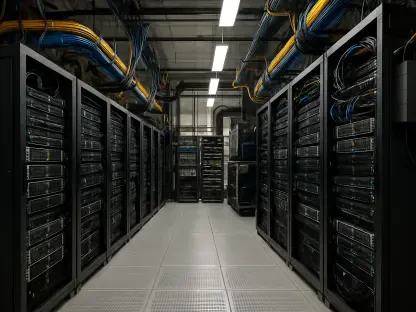
Historically, data centers functioned as passive repositories for enterprise data and consumer cloud services, operating as quiet backbones for the digital economy. Throughout the early 2020s, growth remained steady and predictable, centered primarily around established connectivity hubs like Northern Virginia, London, or Tokyo. However, the emergence of advanced generative AI models disrupted this trajectory entirely, transforming these facilities into “AI factories.” These modern sites require unprecedented levels of power and cooling to support the specialized chips that process massive datasets in real time.
Past industry shifts toward hyperscale computing provided a basic blueprint for large-scale operations, yet the current environment is fundamentally different due to the sheer intensity of high-density hardware. Understanding this transition is vital because it explains why traditional site selection criteria are being discarded in favor of proximity to high-capacity energy sources. We are witnessing a literal redrawing of the global digital map, where geography is determined by the robustness of a local utility’s high-voltage transmission lines rather than its proximity to a corporate headquarters or a specific user base.
The Strategic Decentralization of Global Infrastructure
The Migration to Secondary Markets and Sovereign AI
As vacancy rates in traditional data center hubs plummet to historic lows of roughly 1%, developers are aggressively pivoting toward secondary and tertiary markets to find breathing room. This decentralization is driven by a critical need for available land and, more importantly, immediate access to power grids that are not yet overextended. In Europe, this shift is further complicated by the rise of “sovereign AI,” a movement where nations like Germany and France invest heavily in localized infrastructure to ensure data privacy and technological independence. This prevents reliance on distant hubs and keeps sensitive processing within national borders.
The move away from the traditional “FLAP” markets—Frankfurt, London, Amsterdam, and Paris—is no longer a choice but a necessity for growth. For instance, recent partnerships in Munich highlight how national interests are accelerating the development of localized AI clusters to meet regional demand. By moving capacity to these newer markets, developers can bypass the years-long waiting lists for power connections in older cities. This trend reflects a broader global pattern where the digital economy is becoming more distributed, yet more integrated with local energy ecosystems.
The Rise of the Gigawatt Campus and Specialized Hardware
The scale of modern data center projects has reached the “gigawatt era,” a milestone where individual campuses are designed to handle 1,000 megawatts of demand or more. These mega-sites are no longer just buildings filled with servers; they are industrial-scale complexes designed specifically to house specialized AI hardware like the latest Nvidia Blackwell series or advanced AMD architectures. The sheer heat generated by these high-performance chips has rendered traditional air cooling obsolete in many cases, forcing a wholesale move toward liquid cooling at the rack level.
This transition illustrates a significant shift in the relationship between hardware manufacturers and data center operators. Multi-billion dollar agreements for dedicated AI capacity are becoming the standard for securing the compute power necessary to train the next generation of large language models. Consequently, the design of the data center itself is becoming more bespoke. Every element, from the power transformers to the coolant loops, is being optimized for the specific silicon it houses, turning the facility into a highly integrated component of the AI stack rather than a general-purpose shell.
Regional Growth Engines and the America-India Connect
While North America and Europe grapple with aging grid constraints, the Asia-Pacific region is emerging as a primary growth engine, with India positioned at the center of this surge. Strategic initiatives such as the “America-India Connect” aim to transform the subcontinent into a central hub for global digital connectivity, supported by new subsea gateways and massive domestic investments. Ambitious plans to reach 5 GW of capacity within the next decade reflect a national strategy to dominate the AI infrastructure space and provide a cost-effective alternative to Western markets.
However, these regional developments are not without complexity, as differing regulatory speeds and environmental standards create a fragmented playing field. While some markets are expanding rapidly due to streamlined permitting, others face intense scrutiny over the sustainability of their energy consumption and its impact on local residents. This regional tension means that global players must navigate a patchwork of local utility politics and environmental expectations, making the role of the data center developer as much about diplomacy and energy management as it is about technology.
Innovation in Energy and the Future of Power Procurement
Looking forward, the industry is shifting from being a passive consumer of energy to an active participant in power generation and grid management. Emerging trends suggest a heavy reliance on carbon-free energy sources to sustain growth, with hyperscalers exploring everything from deep-well geothermal energy to Small Modular Reactors (SMRs). While nuclear solutions face significant regulatory hurdles in the short term, they represent the industry’s long-term bet for stable, baseload power that does not fluctuate with the weather or time of day.
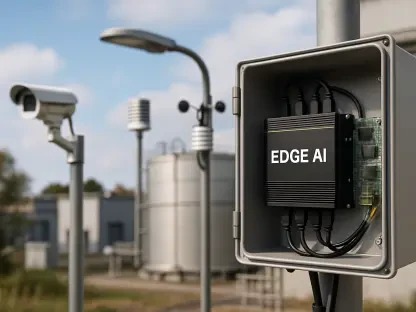
Furthermore, a clear bifurcation of the market is expected to take place. Massive rural sites will likely handle resource-heavy AI training, while a distributed network of smaller “edge” facilities will manage AI inference, bringing real-time processing closer to the end-user. This dual-track evolution will be heavily influenced by tightening environmental regulations and the need for greater grid efficiency. Companies that can successfully integrate their own power generation or energy storage systems will have a distinct competitive advantage, as they will no longer be entirely beholden to the limitations of public utilities.
Strategic Takeaways for the Digital Economy
The primary takeaway from the current state of the industry is that “grid-readiness” has become the ultimate currency in data center development. For businesses and investors, the focus must shift from merely securing physical floor space to securing sustainable, long-term power contracts. Actionable strategies include prioritizing energy-efficient liquid cooling technologies and exploring locations that offer diverse energy portfolios, such as those with a mix of wind, solar, and hydroelectric power.
For policymakers, the challenge lies in balancing the economic benefits of massive data center investments with the stability of the public power grid and the needs of other industries. Best practices now involve early and deep engagement with utility providers to plan for infrastructure upgrades years in advance. Developers are also finding that a commitment to transparent sustainability reporting is no longer optional; it is a prerequisite for navigating the increasingly stringent environmental criteria and public scrutiny that accompany these massive energy-intensive projects.
Conclusion: The New Foundation of Global Strategy
The global data center industry successfully transitioned from a niche real estate sector into the foundational engine of the entire digital economy. This evolution was marked by a shift toward AI-native infrastructure, which placed unprecedented pressure on global power grids and forced a radical decentralization of hardware. Operators who prioritized energy innovation and hardware integration over traditional site selection began to see the highest returns on their investments. The focus moved toward securing carbon-free baseload power and implementing advanced cooling techniques to manage the heat of specialized AI silicon.
Ultimately, the ability to balance massive technological ambition with physical and environmental constraints became the defining trait of industry leaders. Strategic moves into secondary markets and the development of gigawatt-scale campuses provided the necessary runway for the next generation of scientific and economic breakthroughs. As the industry matured, the infrastructure built during this period established the framework for technological sovereignty and global connectivity for years to come. Stakeholders who embraced the convergence of energy and compute were best positioned to thrive in an era where power was the most valuable resource.