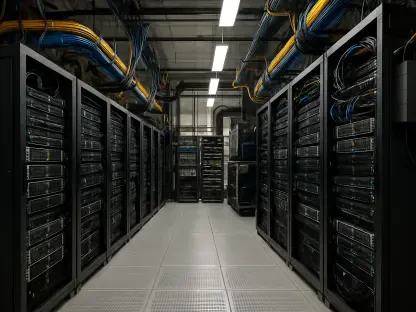

The era of consequence-free digital hoarding has collided with a relentless supply chain reality where the price of a single memory chip can now dictate the entire fiscal health of a Fortune 500 company. For decades, the tech industry operated under the comfortable delusion that storage capacity would eternally outpace the growth of information. However, the meteoric rise of generative artificial intelligence has fundamentally broken this cycle, turning the semiconductor market into a battlefield of scarcity. What was once considered a cheap commodity is now a high-stakes luxury, forcing a long-overdue transformation in how organizations value their digital assets.
This shift represents more than just a temporary spike in hardware costs; it is a catalyst for a structural evolution in data governance. As high-performance components become increasingly difficult to procure, the practice of “storing everything and deciding later” has transformed from a minor inefficiency into a critical financial liability. Organizations are now finding that the only way to sustain their AI ambitions is to adopt a rigorous, quality-first approach to information management. This scarcity is effectively acting as a filter, stripping away the digital noise that has cluttered corporate servers for years.
The End of the “Infinite Storage” Illusion
The assumption that storage is an infinite resource has finally met its demise as the physical limitations of semiconductor manufacturing struggle to keep pace with algorithmic demands. In the past, data centers were expanded with little regard for the specific utility of the bits being saved, largely because the cost of another rack of drives was negligible compared to the effort of auditing files. Today, that logic has inverted. The infrastructure required to power modern intelligence is no longer a generic utility but a specialized, restricted resource that demands surgical precision in its deployment.
Every unmanaged byte now carries a measurable price tag that extends far beyond the initial purchase of hardware. Maintaining massive, disorganized archives requires constant power, cooling, and administrative oversight, all of which have become significantly more expensive in a resource-constrained environment. This pressure is forcing leadership teams to abandon the hoarding instinct and instead treat storage as a high-value portfolio that must be actively managed to provide a return on investment. The transition is painful for those accustomed to the old ways, yet it is a necessary step toward building a sustainable digital future.
The Convergence of AI Demand and Semiconductor Scarcity
The current strain on global infrastructure is primarily driven by the unique and voracious appetite of modern transformer architectures and Large Language Models. These systems require specific types of high-bandwidth memory and high-density flash storage to function, which has siphoned production capacity away from traditional enterprise products. Contract prices for essential components, which already saw a 50% increase in the latter half of the previous year, are currently on a trajectory to double by the end of the current quarter. This surge is not a mere market fluctuation but a reflection of a fundamental shift in manufacturing priorities.
In the current market, manufacturers are increasingly dedicating their fabrication lines to AI-grade components, leaving standard data center requirements to fight for the remaining, more expensive scraps. DRAM inventories that previously sat at several months of buffer have withered to a precarious two-week supply window in many regions. This scarcity means that IT departments can no longer solve performance bottlenecks by simply adding more hardware. Instead, they must find ways to do more with less, optimizing their existing footprints to ensure that high-value AI workloads are not stalled by the rising cost of physical memory.
Transforming Unstructured Data from a Liability to an Asset
Decades of uninhibited data growth have left most organizations with vast “estates” of unstructured information, much of which is redundant, obsolete, or trivial. In an era of cheap storage, this “ROT” data was a nuisance; in the current climate of memory shortages, it is a drain on innovation. When low-quality data is fed into AI pipelines, it forces expensive compute cycles to work harder for diminishing returns. The result is an inefficient system where the most expensive hardware on earth is being used to process information that should have been deleted years ago.
Furthermore, the operational overhead of managing these unoptimized datasets has become a significant barrier to agility. Large, sprawling data sets exhibit a phenomenon known as “data gravity,” making them difficult to move, protect, and index efficiently. This lack of mobility is particularly dangerous in a world where rapid deployment is a competitive necessity. By cleaning up these unstructured pools, organizations can reduce their total cost of ownership while simultaneously improving the “signal-to-noise” ratio for their machine learning models, ensuring that every megabyte of occupied memory contributes to a meaningful business outcome.
Leveraging Metadata and Expert Insights for Strategic Retention
The industry is moving toward a philosophy of “intent-based retention,” where the value of information is determined by its purpose rather than its age. Industry experts and research firms like IDC have highlighted that the quality of data lineage and context is far more critical for AI performance than sheer volume. Metadata management has emerged as the most effective tool for navigating the memory crisis, providing the visibility needed to distinguish between a vital business asset and an orphaned file. By enriching metadata, companies can finally see through the fog of their own archives.
Using information about data—such as who owns it, how often it is accessed, and whether it contains sensitive information—allows for much more sophisticated governance. This visibility not only helps in purging unnecessary files but also serves as a critical security layer. Expert findings suggest that identifying and masking sensitive data within unstructured pools prevents it from being inadvertently leaked during AI training sessions. This approach transforms data management from a back-office maintenance task into a strategic pillar of the organization, ensuring that the limited memory available is reserved for the highest-signal information.
Strategies for Implementing a Lean Data Framework
Surviving a high-cost hardware environment requires a disciplined, cross-functional approach to the entire data lifecycle. The most successful organizations have begun implementing automated tiering systems that move low-value archives to high-density, lower-cost storage layers. This strategy ensures that premium, high-performance memory is used exclusively for active training and real-time generation pipelines. By automating this process, companies can maintain performance without needing to constantly purchase the most expensive hardware on the market.
Ultimately, the goal is to shift from bulk ingestion to a curated model where only the most relevant information enters the server environment. This requires a unified narrative between IT architects, legal compliance teams, and data scientists to establish clear deletion policies and retention schedules. Implementing tools that automatically identify duplicate system logs or outdated documentation can significantly shrink a company’s digital footprint. This leaner framework not only mitigates the impact of current shortages but also builds a more resilient architecture that is better suited for the sophisticated demands of the modern intelligence era.
The transition toward a leaner data ecosystem was achieved through a systematic re-evaluation of digital storage as a finite, high-value resource. Leaders recognized that the memory crisis provided the necessary friction to eliminate decades of inefficient practices, ultimately resulting in more precise AI models and lower operational costs. Organizations that embraced metadata-driven governance and automated tiering found themselves better positioned to weather supply chain volatility while maximizing the performance of their infrastructure. The hardware shortage served as the catalyst that moved the industry away from the era of hoarding and toward a future defined by data utility and strategic intelligence.