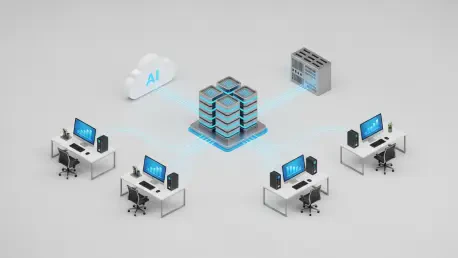

The conversation surrounding artificial intelligence has shifted dramatically from mere fascination with creative text generators toward a focus on autonomous systems capable of executing complex logic. In 2026, the global technology landscape is no longer satisfied with experimental pilots that produce simple text or images; the emphasis has pivoted toward agentic AI. These sophisticated entities are designed to navigate multi-step workflows across diverse sectors, including software engineering, sales, and logistics. This evolution reflects a broader movement toward “useful” AI, where the metric of success is operational autonomy rather than conversational novelty. As organizations look for ways to scale these capabilities, Dell Technologies has positioned itself as a primary architect, providing the physical and logical scaffolding necessary for such a profound industrial shift.
Industry observers suggest that the move toward agentic utility is driven by the urgent need for systems that do not just suggest answers but actually perform tasks. While the initial wave of generative tools democratized access to large language models, the current era demands a transition toward functional agency that integrates deeply with business operations. This transition is not merely a software update but a fundamental reimagining of how enterprises interact with their digital assets. Dell is being recognized for its unique ability to bridge the gap between high-level AI concepts and the practical reality of server racks and data pipelines. By addressing the structural inefficiencies that historically hindered the deployment of autonomous systems, the company is helping to turn theoretical potential into a standardized business practice.
From Generative Curiosity to Agentic Utility: Defining the Next Technological Frontier
The current technological climate is defined by a rapid departure from the era of “generative curiosity.” In earlier years, the primary goal for many IT departments was simply to explore the possibilities of chat-based interfaces. However, the modern enterprise now demands agentic AI—systems that can perceive their environment, reason through complex problems, and take action without constant human intervention. This shift toward autonomy requires a more robust infrastructure than the one used for simple inference. Researchers and industry leaders note that for an agent to be truly effective, it must be able to interact with a multitude of software tools, databases, and APIs in a seamless, high-speed manner.
Dell Technologies has emerged as a key facilitator in this transition by developing a comprehensive suite of solutions tailored for the autonomous era. The focus has moved beyond providing raw compute power to offering integrated systems that handle the intricacies of AI orchestration. By simplifying the path from a pilot project to a production-scale deployment, Dell is enabling companies to bypass the “trough of disillusionment” that often follows the initial excitement of a new technology. This strategic positioning allows organizations to focus on their specific business goals while Dell manages the underlying complexity of the AI stack.
Moreover, the transition to agentic AI is as much about cultural shifts as it is about hardware. Many organizations are restructuring their teams to better align with the capabilities of autonomous agents. Instead of treating AI as a separate entity, businesses are now viewing it as an integrated member of the workforce. Dell supports this organizational change by providing blueprints and “AI Factory” models that illustrate how these systems can be deployed at scale. This holistic approach ensures that the infrastructure is not just a collection of servers, but a dynamic environment capable of supporting the next generation of digital labor.
Engineering the Integrated Framework for Autonomous Intelligence
Solving the Data Gravity Crisis to Fuel Proprietary Agentic Workflows
The efficacy of any autonomous agent is almost entirely contingent upon the quality and accessibility of the data it interprets. IT strategists point out that the democratization of foundational models has turned proprietary data into the only remaining competitive moat for modern corporations. However, a significant majority of technology leaders report that data fragmentation remains a major obstructive barrier to AI adoption. Most corporate information remains trapped in silos, making it difficult for an agent to access the context it needs to make informed decisions. Dell’s AI Data Platform addresses this crisis by offering advanced orchestration tools that transform raw, siloed content into datasets ready for high-speed inference.
This platform moves beyond simple storage by focusing on a dynamic pipeline that allows agents to query real-time information with minimal friction. The integration of the Lightning parallel file system and the ObjectScale X770 ultradense appliance provides the extreme storage density and high-speed access required for these workflows. By utilizing GPU-based SQL analytics, Dell enables organizations to interact with their distributed data assets without the traditional delays associated with manual preparation. This ensure that when an autonomous agent is tasked with a complex problem, it has immediate access to the most relevant and up-to-date information available.
Furthermore, the refinement of raw content into “inference-ready” data is a continuous process that requires significant compute resources. Dell addresses this by integrating data management directly into its compute fabric. This strategy minimizes the need to move massive datasets across networks, thereby reducing latency and improving overall system performance. By solving the problem of “data gravity,” Dell allows enterprises to build agentic workflows that are both highly specialized and incredibly fast, providing a level of responsiveness that was previously unattainable in the cloud-only era.
Scaling Intelligence Beyond the Cloud via Hybrid Architectures and Deskside AI
As AI models grow in complexity, the “gravity” of enterprise data makes cloud-exclusive strategies less viable for many high-performance agentic tasks. Security experts and regulatory specialists emphasize that data sovereignty and low-latency requirements are pushing workloads back toward the edge and local data centers. Dell’s response involves a hybrid architecture that places intelligence where the information is naturally generated and stored. This approach allows businesses to maintain control over their most sensitive assets while still benefiting from the scalability of cloud resources when necessary.
The introduction of local, “deskside” AI capabilities is a cornerstone of this hybrid strategy. By integrating high-performance workstations with Nvidia NemoClaw, Dell enables developers and specialized teams to build and run autonomous agents directly on their local machines. This ensures that sensitive proprietary data never leaves the corporate network, significantly reducing the risk of data breaches or compliance violations. Additionally, local execution provides the near-instantaneous response times required for real-time task execution, such as live code generation or immediate customer support interactions.
This shift toward deskside and on-premises AI also addresses the performance bottlenecks associated with public cloud environments. During periods of high demand, cloud-based AI services can experience significant latency, which is unacceptable for agents performing time-critical operations. By providing a dedicated local resource, Dell ensures that enterprise productivity is not subject to the ebbs and flows of global cloud traffic. This localized intelligence forms a resilient foundation for the modern AI-first organization, offering a level of reliability and security that cloud-only models struggle to match.
Navigating the Economic Shift from Variable Token Costs to Fixed Infrastructure
A notable shift in the financial discourse around AI is the emergence of “token anxiety,” a term used to describe the unpredictable costs associated with cloud-based inference at scale. Finance officers are increasingly wary of consumption-based models that can lead to runaway expenses as autonomous agents perform thousands of background interactions. Much like the shadow cloud phenomenon of previous years, shadow AI is becoming a stealth cost for many departments. Dell is effectively challenging this variable-cost paradigm by promoting local hardware solutions that offer a more predictable financial outlook.
By moving AI workloads to high-performance workstations and on-premises servers, organizations can transition from a variable operating expense to a predictable capital investment. This shift provides greater fiscal stability, allowing CFOs to budget for AI initiatives with a high degree of confidence. Reviewers have noted that for organizations with high-volume agentic workflows, the return on investment for local hardware can be realized in a surprisingly short timeframe. Instead of paying per token for every interaction, the company pays for the hardware once and can then run as many tasks as the system can handle.
This economic transition also empowers IT leaders to regain control over their technology budgets. By centralizing AI compute on-premises, companies can mitigate the risks of unmanaged spending across various cloud providers. This fiscal control is essential for scaling AI initiatives across the entire enterprise. As agents become more integrated into daily business processes, the volume of interactions will only increase, making the shift from a consumption-based model to a fixed infrastructure model an economic necessity for long-term growth.
Orchestrating the AI Factory Through Deep Ecosystem Integration and Modular Design
Leadership in the agentic space requires more than just high-quality hardware; it necessitates a cohesive ecosystem where disparate technologies work in harmony. Dell has fostered a massive collaborative environment, integrating its infrastructure with key players such as Nvidia, Google, and Hugging Face. This “AI Factory” concept treats compute, storage, and networking as a unified, modular system designed for rapid deployment. Rather than forcing customers into a proprietary silo, Dell provides the flexibility to choose the best software and models for their specific needs while maintaining a consistent hardware foundation.
The PowerRack system is a primary example of this modular approach, offering a fully integrated solution that combines compute, networking, and storage into a single, optimized unit. This “plug-and-play” capability for the data center includes specialized thermal designs and power management software, which significantly reduces the time required for assembly and testing. Such pre-integrated systems allow organizations to move from delivery to deployment in a fraction of the time required by traditional, piecemeal approaches. This speed to market is a critical differentiator in the fast-moving AI sector.
By acting as “Customer Zero” and testing these agentic workflows within its own internal operations, Dell provides a tangible blueprint for its clients. This internal commitment allows the company to refine its hardware and software integrations based on real-world usage data. It demonstrates that the transition to an AI-native operating model is not just a marketing slogan but a practical reality. This collaborative and experience-driven strategy ensures that Dell’s infrastructure serves as the preferred landing zone for both open-source and proprietary models, facilitating a smoother path for global enterprises.
Strategizing for Success: Practical Takeaways for the AI-First Organization
For an organization to successfully navigate the transition to an AI-first model, the focus must shift from merely acquiring tools to building a resilient and scalable data foundation. Consulting groups suggest that the primary task for IT leadership is the consolidation of distributed data silos to ensure that autonomous agents are operating on a clean and relevant foundation. Without a unified data strategy, agents will inevitably produce fragmented results, undermining the very efficiency they were designed to create. Prioritizing data orchestration is therefore the most critical step in any AI roadmap.
Adopting a hybrid infrastructure strategy is another essential move for balancing cost-efficiency with performance. Organizations should leverage the high-capacity resources of the cloud for large-scale training and general-purpose tasks while utilizing on-premises compute for security-sensitive inference and low-latency applications. This balanced approach provides the flexibility to scale up or down as requirements change without compromising on security or control. Furthermore, IT leaders should evaluate the long-term financial benefits of local AI execution to avoid the hidden costs associated with high-volume token usage.
Finally, building an AI-first organization requires a commitment to continuous learning and modular design. The technological landscape is shifting so rapidly that any infrastructure must be flexible enough to accommodate new models and methodologies as they emerge. By investing in integrated systems like those offered in Dell’s AI Factory, companies can ensure they are not locked into a single technology path. This modularity allows for the seamless integration of future innovations, ensuring that the organization remains at the forefront of the agentic revolution.
Closing the Gap Between Imagination and Execution in the Agentic Era
Dell Technologies served as a critical bridge for enterprises that sought to move from the experimental phase of AI into a period of high-impact execution. The company’s focus on resolving the data gravity problem, ensuring financial predictability, and offering modular infrastructure addressed the core anxieties that had previously stalled large-scale adoption. By creating a unified environment for autonomous intelligence, Dell enabled a future where AI functioned as the primary operating model for global business. The initiative successfully reduced the complexity of deploying complex agents, making them accessible to a wider range of industries.
The transition to agentic workflows was no longer a distant possibility; it became a current reality for those who recognized the importance of an integrated, hybrid infrastructure. Market leaders adopted these systems to streamline their operations and drive innovation at an unprecedented pace. Ultimately, the ability to deploy these complex systems at scale became the defining characteristic of success in the modern era. Those who invested in a robust foundation found themselves better equipped to handle the demands of a rapidly evolving digital economy, securing their positions as pioneers in the age of autonomous intelligence.