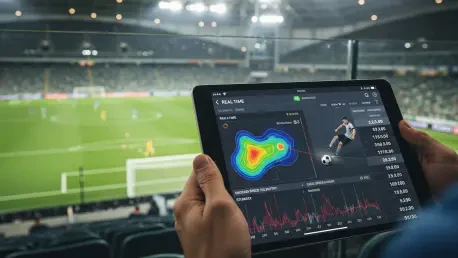

The split second between a striker connecting with the ball and the net rippling represents the ultimate challenge for modern digital sportsbooks attempting to maintain accurate, real-time pricing. For years, the industry relied on centralized cloud servers that introduced a noticeable delay, often resulting in suspended markets that frustrated users who found their information already obsolete by the time they attempted to place a wager. As 2026 progresses, the arrival of edge computing is fundamentally rewriting this narrative by moving the heavy lifting of data processing from distant regional hubs directly to the perimeter of the network. This shift allows for an unprecedented level of synchronization between the physical events occurring on the pitch and the digital odds displayed on a mobile device. By localized data handling, operators can effectively eliminate the long journey that packets traditionally take, ensuring that every deflection or tactical shift is reflected in the market price with nearly zero latency.
Eradicating Latency: The Shift to Localized Infrastructure
The core technical limitation of traditional cloud-based betting ecosystems is the physical distance between the source of the action and the data processing center. When a stadium is located hundreds of miles away from a primary server hub, even the speed of light cannot overcome the cumulative delays caused by routing, switching, and protocol overheads during peak traffic periods. Edge computing bypasses these bottlenecks by installing localized micro-data centers or utilizing 5G-integrated edge nodes situated within or very near the sports venue itself. This configuration ensures that raw sensor data from player wearables and high-frame-rate video feeds are processed locally, with only the essential distilled insights being transmitted to the wider network. By reducing the round-trip time of data, sportsbooks can provide a seamless interface where the odds feel like a live extension of the game rather than a lagging secondary reflection of past events.
In this newly decentralized landscape, the cloud does not become obsolete but rather evolves into a strategic layer for deep historical modeling and long-term storage. This creates a powerful hybrid architecture where the edge acts as the reflex system of the operation, managing the immediate, millisecond-by-millisecond updates required for live markets, while the central cloud functions as the brain for complex post-game analysis. Such a division of labor is essential for handling the massive influx of telemetry data generated by modern smart-stadiums, which can produce terabytes of information during a single high-profile match. By offloading the time-sensitive tasks to the network edge, operators can maintain a highly responsive user experience even during global events when central servers might otherwise buckle under the weight of requests. This architectural resilience is becoming the new gold standard for reliability in an industry where a five-second delay can mean a significant liability.
Granular Tactical Insights: Moving Beyond the Scoreboard
Traditional betting models have historically been reactive, triggering adjustments only after a significant event like a goal, a penalty, or a red card has been officially recorded by the league. However, the integration of edge computing allows for a move toward highly granular tactical analysis that monitors the subtle precursors to these major turning points in real-time. Sophisticated algorithms can now track the precise positioning of a defensive line or the dropping stamina levels of a specific midfielder by analyzing movement data at the source. If a left-back consistently fails to track back after an overlap, the edge-enabled system can adjust the next goal probability long before the opposing team exploits that specific vulnerability. This level of foresight transforms the betting experience from a simple reaction to outcomes into a sophisticated engagement with the underlying mechanics of the sport, offering users a deeper window into the strategic battles occurring on the field.
Computer vision is a cornerstone of this transition, as it allows artificial intelligence to watch and interpret a match with a level of detail that human observers simply cannot maintain for ninety minutes. Processing multiple 4K video streams to detect player skeletal movements or ball spin rates requires immense computational power that would overwhelm standard internet connections if sent to the cloud in raw form. Edge computing enables this heavy processing to occur on-site, extracting lightweight metadata such as formation changes, pressing intensity, or player-to-player spacing. These insights are then delivered to the sportsbook’s pricing engine as small, efficient data packets that describe the state of play with incredible accuracy. This technological synergy allows for the creation of entirely new betting markets based on specific tactical metrics, such as the probability of a team successfully completing ten consecutive passes in the final third or the likelihood of a player winning their next duel.
User Experience: Transparency through Real-Time Context
As these sophisticated data processing capabilities become more widespread, the focus for many betting platforms is shifting toward enhancing the transparency of their automated decision-making processes. Modern bettors are increasingly tech-savvy and demand more than just a fluctuating number; they want to understand the logic behind why a particular team’s win probability has suddenly shifted during a lull in play. Edge computing facilitates this by allowing platforms to serve context-aware notifications that explain the why behind the data in real-time, such as highlighting a drop in a team’s passing accuracy over the last five minutes. This creates a more educational environment where the user feels empowered by information rather than intimidated by a black box algorithm. By bridging the gap between complex mathematical models and the intuitive understanding of a fan, sportsbooks can foster a more loyal and engaged community that views betting as a form of informed analysis.
This evolution is also fostering a new culture of automated personal analysis, where sophisticated users leverage edge-processed data to build their own predictive models in real-time. Instead of relying on the pre-packaged insights provided by a single operator, the availability of low-latency data feeds allows for the creation of personalized dashboards that track specific player matchups or tactical trends. This democratization of high-level sports data is changing the relationship between the fan and the game, turning every match into a data-rich interactive experience. Furthermore, the reduction in market freeze times—the periods when betting is locked due to uncertainty—means that users can remain active throughout the entire match, significantly increasing the continuity of the experience. The result is a much smoother interface that prioritizes flow and engagement, making the digital platform feel like a natural part of the stadium atmosphere rather than a disconnected and lagging service.
Technical Challenges: Balancing Speed with Integrity
The transition to instantaneous data processing is not without its significant technical and ethical hurdles, particularly concerning the potential for increased market volatility and the risk of information inequality. When data moves at the speed of the edge, the traditional thinking gap that allowed bettors to pause and consider their choices is virtually eliminated, which could potentially encourage more impulsive and high-frequency wagering behaviors. Moreover, there is a legitimate concern that a tiered system could emerge, where only premium users or large-scale institutional bettors have access to the absolute fastest edge-processed feeds, leaving casual fans at a structural disadvantage. Maintaining a fair and balanced ecosystem requires operators to implement sophisticated safeguards that ensure speed does not come at the expense of market integrity or consumer protection. Addressing these issues will be critical as the industry seeks to normalize edge computing across all levels of professional sports.
While edge computing offers a much clearer window into the present state of a match, it cannot entirely eliminate the inherent unpredictability and noise that makes sports so compelling. No matter how many data points are processed at the stadium, a sudden gust of wind, a freak injury, or a momentary lapse in concentration by a world-class athlete can override the most accurate predictive model. The challenge for developers lies in creating systems that can distinguish between a meaningful tactical trend and a statistical anomaly that carries no predictive value. Relying too heavily on real-time data without considering the broader human context of the game can lead to over-fitting, where a model reacts too aggressively to minor fluctuations in the match tempo. Therefore, the most successful implementations of edge technology will likely be those that combine high-speed technical insights with a robust understanding of the psychological and physical variables that define the unpredictable nature of elite athletics.
Sustaining Progress: Strategic Resilience and Future Fairness
The integration of decentralized processing throughout 2026 established a new framework for how digital engagement is managed during high-stakes athletic events. By prioritizing localized data handling, the industry successfully reduced the technical friction that once plagued live markets, allowing for a more fluid and transparent relationship between the spectator and the statistics. This transition required a significant overhaul of existing network infrastructures, but the resulting improvements in latency and analytical depth proved to be a transformative shift for the broader ecosystem. Operators discovered that providing users with context-rich, real-time insights not only increased engagement but also fostered a more responsible environment where data served as an educational tool rather than just a catalyst for rapid wagering. These advancements suggested that the future of the industry rested not just on speed, but on the quality and accessibility of the information provided to the end-user.
To maintain this momentum, stakeholders should prioritize the development of standardized protocols for edge data transmission to prevent fragmented ecosystems that disadvantage certain users. Developers ought to focus on creating more robust AI models that can interpret environmental variables and human factors, ensuring that automated odds remained grounded in the reality of the sport. Moving forward, it became essential for regulatory bodies to collaborate with technology providers to establish clear guidelines regarding data latency and market fairness. By implementing these structural improvements, the sports betting industry ensured that the technological leap provided by edge computing enhanced the integrity of the game. The ultimate goal remained the creation of a balanced environment where high-speed analytics complemented the unpredictable human drama of live sports, providing a sustainable path for both operators and fans in an increasingly digital and data-driven world.