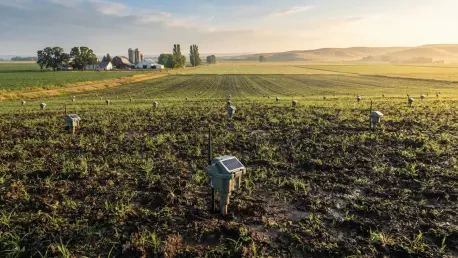

The global agricultural landscape is currently witnessing a tectonic shift as traditional practices intersect with the precision of the digital age. The transition toward smart farming in the Banyumas Regency demonstrates the potential for higher education institutions to act as catalysts for regional growth. In the village of Wlahar Wetan, this evolution is manifest through the implementation of Internet of Things (IoT) sensors, which provide a bridge between academic research and the granular needs of local soil. Historically, farmers here have relied on intuition and ancestral knowledge, which, while deeply rooted in culture, often falls short when faced with modern environmental volatility. By integrating high-tech infrastructure directly into the earth, these rural communities are now moving beyond the limitations of visual estimation. This transformation represents a move toward a more measurable and scientific framework, where decisions are no longer made by guesswork but are instead guided by empirical data that informs every stage of the growing process.
Empowering Agriculture: The Integration of Digital Intelligence
Monitoring Vital Metrics: Precision Soil Analysis
At the heart of this technological leap lies a suite of high-precision sensors designed to monitor the subterranean environment with surgical accuracy. These devices are strategically embedded in the fields to track critical metrics such as pH levels and volumetric water content, both of which are fundamental to crop health. The acidity or alkalinity of the soil determines the solubility of essential nutrients; without this balance, even the most expensive fertilizers remain locked away from the plant’s roots. Simultaneously, moisture sensors provide a continuous stream of data regarding hydration, ensuring that irrigation is only applied when it is strictly necessary. This prevents the twin dangers of water stress and root rot, which are common issues in unregulated farming environments. By providing a real-time window into the hidden chemical and physical processes beneath the surface, these sensors empower farmers to manage their land with a level of detail that was previously unimaginable in traditional management regimes.
Nutrient Management: Optimizing the NPK Profile
Beyond the basic monitoring of water and acidity, the ability to manage macro-nutrients such as Nitrogen, Phosphorus, and Potassium represents the next frontier for rural productivity. These chemical components are the primary drivers of plant growth, yet their traditional application is often inefficient and environmentally damaging. In many rural sectors, fertilizers are applied based on broad regional recommendations rather than the specific, varying needs of different soil patches. IoT sensors change this dynamic by providing a precise NPK profile that allows for site-specific nutrient management. This means that farmers can apply precisely the amount of fertilizer needed, reducing the risk of nutrient leaching into local waterways and saving significant costs on agricultural inputs. By transforming soil fertility into a quantifiable metric, technology ensures that every intervention is justified by scientific necessity. This data-driven approach not only boosts crop quality but also prevents the long-term degradation of the land.
Data Accessibility: The Digital Command Dashboard
The raw data collected by these sensors is funneled into a centralized, web-based dashboard that translates complex subterranean chemical properties into intuitive visualizations. This digital interface acts as a remote command center, allowing farmers to check the status of their fields from a smartphone or computer without having to be physically present at every site. This capability is particularly transformative for regional agricultural cooperatives that manage large or fragmented land holdings. The dashboard highlights trends over time, providing early warnings about declining nutrient levels or localized dry spots before they become visible to the naked eye. By making the invisible visible, the technology shifts the farmer’s role from a reactive observer to a proactive manager. This shift is essential for modernizing rural economies, as it provides the transparency needed to make informed decisions that impact both immediate harvests and future land value, ensuring that no resources are wasted on unnecessary or mistimed interventions.
Sustaining Innovation: Community Collaboration and Growth
Social Integration: Fostering Technology Adoption
Success in digital agriculture depends heavily on the social integration of the tools, involving direct training and demonstrations with local farmer groups. These socialization efforts ensure that the technology is seen as a supplement to, rather than a replacement for, traditional knowledge. Developers have maintained an open feedback loop with the farmers, allowing the end-users to voice concerns about device durability, interface clarity, and power requirements. This collaborative process ensured that the final iteration of the sensors was rugged enough to withstand the local climate and simple enough for users with varying levels of digital literacy to operate effectively. By incorporating local insights into the technical design, the university ensured that the tools remained relevant to the specific agricultural cycles of Central Java. This two-way communication channel allowed researchers to identify unique soil challenges that they might have overlooked in a laboratory setting, creating a more robust product.
Long-Term Impact: Maintenance and Local Support
The handover of soil monitoring equipment marks only the beginning of a long-term commitment to agricultural excellence and technological sustainability. For these tools to have a lasting impact, a robust infrastructure for ongoing system checks, sensor calibrations, and software updates must be established to ensure that the generated data remains accurate over several growing seasons. In Wlahar Wetan, the local government has taken an active role in overseeing the project, providing a layer of institutional support that bridges the gap between academic innovation and community governance. This partnership ensures that if a technical issue arises, there is a clear protocol for resolution, preventing the equipment from becoming obsolete. Sustainable innovation in rural areas is less about the initial deployment and more about the continuous support and refinement that allow a community to truly master and integrate new tools into their everyday lives, ultimately fostering a culture of scientific resilience.
Strategic Paths: Advancing Digital Agricultural Maturity
The initiative in the Banyumas Regency proved that the successful modernization of rural agriculture depended on a seamless blend of high-tech solutions and local participation. Researchers and farmers established a framework where data-driven soil management was no longer a theoretical luxury but a practical reality. Stakeholders recognized the need to prioritize the expansion of digital literacy programs and the installation of rural internet infrastructure to support widespread sensor networks. Subsequent strategies focused on scaling these modular IoT units to neighboring districts, while simultaneously developing local cooperatives to manage the shared data and equipment. By formalizing the collaboration between technical universities and village administrations, other regions replicated this model of scientific empowerment. The project successfully demonstrated that when technology was accessible and tailored to local or specific environmental conditions, it became an indispensable asset for protecting soil health and ensuring future food security.