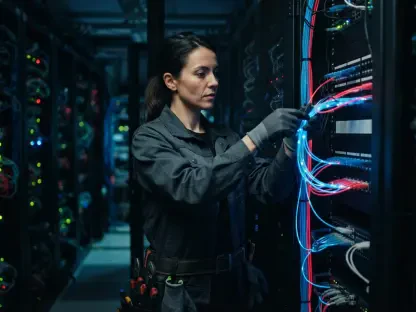

A budget approved at the beginning of the fiscal year may prove entirely insufficient by June due to the extreme price volatility of memory components. The global enterprise landscape is currently grappling with a systemic shortage of critical IT infrastructure that shows no signs of immediate relief. Characterized by unprecedented lead times and extreme price volatility, this infrastructure drought has created a massive imbalance between supply and demand across the industry. Organizations looking to modernize find themselves in a fierce competition for dwindling resources, largely driven by the aggressive expansion of hyperscale data centers and the rapid integration of artificial intelligence across all sectors. This crisis is not merely a temporary logistical hiccup but a fundamental structural shift in the technology market. As memory components, servers, and networking hardware become increasingly scarce, businesses must move away from traditional procurement models. Success in this era requires a deep understanding of why these shortages exist and a willingness to adopt radical strategies to maintain operational momentum despite the lack of readily available physical assets.
The Dominance of Hyperscalers and the Memory Crunch
The primary driver of the current hardware shortage is the insatiable appetite of hyperscalers like AWS, Google, and Microsoft. These industry titans are consuming the vast majority of the world’s memory capacity to fuel their own AI and cloud services. Since memory is a foundational element in nearly every piece of IT hardware, this massive consumption creates a trickle-down effect that leaves traditional enterprises struggling to secure even basic server and networking components. These large-scale operators often have direct agreements with manufacturers that prioritize their orders, effectively pushing smaller players to the back of the queue. This structural disadvantage means that even when global production increases, the surplus rarely reaches the open market in a timely fashion. The result is a segmented market where the most advanced components are reserved for a handful of giants, forcing everyone else to fight over the remaining stock.
Market analysts report that this high demand has caused memory prices to surge by as much as 200% since early 2026. This spike directly impacts the bottom line for enterprises, with server configurations and PC prices seeing double-digit increases on a quarterly basis. Experts predict that memory costs will eventually account for a quarter of all networking hardware expenses by 2027, suggesting that high prices will remain a permanent fixture of the IT budget for the foreseeable future. This financial pressure is compounded by the fact that modern applications are becoming more memory-intensive, requiring more capacity just to maintain existing performance levels. As businesses attempt to scale their digital operations, they are finding that the cost of the underlying silicon is becoming a prohibitive barrier to entry. This environment demands a more sophisticated approach to financial planning, where IT and finance teams collaborate to mitigate the risks of sudden price hikes that can derail multi-year transformation projects.
Long Lead Times: The Death of Just-in-Time Procurement
The most disruptive aspect of the current crisis is the dramatic extension of lead times for critical gear. Procurement cycles that once lasted 30 days have ballooned into waits of 12 to 18 months, creating a significant bottleneck for innovation. This delay is particularly damaging for AI-driven projects, which require specialized GPUs and high-performance networking equipment that are currently at the center of the global supply squeeze. When a project roadmap is contingent on hardware arriving within a quarter, a year-long delay can render the entire initiative obsolete before it even starts. Companies are finding that their competitors, who may have ordered equipment years in advance, are gaining a significant edge in the market. The inability to pivot quickly or scale resources in response to market demands has become a major operational risk that reaches far beyond the walls of the server room.
Manufacturing limitations further complicate the timeline for recovery. Even when vendors design their own silicon, they often rely on a single central manufacturer like TSMC, creating a centralized point of failure in the global supply chain. Because building new fabrication plants takes years and requires tens of billions of dollars in investment, enterprises cannot wait for a manufacturing surge to solve their problems. Instead, they must shift from a just-in-time model to a just-in-case strategy, placing orders for critical equipment long before a project actually begins. This requires a level of long-term forecasting that many IT departments are not accustomed to. Planning for infrastructure needs two years out involves a degree of speculation, but in 2026, it is the only way to ensure that the physical foundation of the business is ready when the software layer is complete. Waiting for a finalized project plan before ordering hardware is now a recipe for failure.
Maximizing Assets Through Internal Optimization
To bridge the gap during long wait times, organizations are turning to a strategy known as sweating assets. This involves squeezing every bit of value out of current hardware rather than seeking immediate replacements. Many enterprise servers operate at low utilization rates; by conducting rigorous capacity audits and consolidating workloads, IT teams can often find the hidden capacity needed to power new initiatives without buying a single new machine. Modern virtualization technologies and containerization allow for much higher density than was common just a few years ago. By reorganizing how existing resources are distributed, a company can effectively simulate the addition of new hardware. This approach not only saves money but also buys the organization precious time while they wait for their new orders to be fulfilled. It requires a high level of technical skill to manage these denser environments, but the payoff is a much more resilient infrastructure.
Furthermore, the traditional four-year hardware refresh cycle is being discarded in favor of longer lifespans. Modern enterprise hardware is often robust enough to last six or seven years if properly maintained. By focusing on software updates, license extensions, and service agreement renewals, companies can maintain high performance and security levels while waiting for the global supply chain to stabilize. This shift requires a change in mindset from both IT leadership and the finance department, as older hardware is often seen as a liability rather than an asset. However, with the current scarcity, a well-maintained five-year-old server is infinitely more valuable than a cutting-edge server that will not arrive for 14 months. Organizations are investing more in preventative maintenance and third-party support services to ensure that their existing fleet remains operational for as long as possible. This extension of the lifecycle is becoming a standard practice for managing risk in an unpredictable market.
Embracing Vendor Agnosticism and Heterogeneous Environments
The days of strict brand loyalty are fading as availability becomes the most important metric in procurement. If a preferred vendor cannot deliver a server for 14 months, enterprises must be prepared to pivot to competitors who can deliver sooner. Building a heterogeneous infrastructure—one that mixes different brands and platforms—allows a business to stay agile and ensures that progress is not halted by the production delays of a single manufacturer. While managing a diverse environment can be more complex from an administrative standpoint, the use of open standards and cross-platform management tools has made this more feasible. The priority has shifted from maintaining a uniform stack to ensuring that the lights stay on and the data keeps flowing. In this context, being locked into a single vendor’s ecosystem is no longer a sign of stability but a dangerous vulnerability that can paralyze an entire organization during a supply crunch.
This flexibility is especially vital for AI infrastructure. While certain chips are considered the gold standard, their extreme scarcity makes them a risky bet for a sole-source strategy. Forward-thinking organizations are now leveraging a hybrid approach: using the public cloud for the initial, heavy lifting of AI model training and then bringing those workloads back on-premises only when the necessary physical hardware eventually arrives on the loading dock. This allows projects to proceed without delay while still maintaining the long-term goal of data sovereignty and cost control. By treating hardware as a fungible resource rather than a dedicated architectural choice, companies can adapt to whatever the market offers. This vendor-agnostic mindset also gives procurement teams more leverage in negotiations, as they are no longer beholden to the delivery timelines of a single provider. The ability to switch between vendors based on inventory levels has become a key competitive advantage.
Aligning IT Strategy With Financial Reality
Navigating market volatility requires a unified front between the IT department and the finance office. Because prices can fluctuate wildly within a single fiscal year, a static budget is no longer effective. Enterprises are moving toward rolling forecasts that look 12 to 24 months into the future, allowing finance teams to anticipate price hikes and allocate capital more dynamically as market conditions shift. This move toward financial agility is a direct response to the unpredictable nature of component costs. Instead of a once-a-year budgeting cycle, finance and IT leaders meet monthly to review the supply chain landscape and adjust their spending plans accordingly. This allows the organization to take advantage of temporary dips in pricing or to secure inventory before a predicted spike. Without this close alignment, the IT department risks running out of funds halfway through a project, or worse, being unable to purchase critical equipment when it finally becomes available.
Transparent communication is the key to maintaining this alignment. IT leaders must educate their financial counterparts on the unnatural market triggers currently at play, such as the disproportionate influence of hyperscalers on memory pricing. By establishing strategic partnerships with vendors and committing to regular buys, organizations can secure a better position in the allocation queue and take advantage of subsidized financing or deferred payment options offered by manufacturers. These partnerships are no longer just about getting the best price; they are about securing a guaranteed supply of hardware. Manufacturers are often willing to provide better terms to customers who commit to long-term purchasing agreements, providing some level of stability in an otherwise chaotic market. This strategic approach to procurement helps to insulate the business from the worst effects of price volatility, ensuring that critical infrastructure remains affordable even as global demand continues to climb.
The Physical Constraints of Power and Cooling
A significant but often overlooked hurdle in the hardware crisis is the physical limitation of existing facilities. Modern AI servers are not just hard to find; they are incredibly power-hungry and generate immense heat compared to previous generations of hardware. Even if an enterprise successfully procures the latest hardware, their current data center may not have the electrical capacity or cooling infrastructure to support it. This represents a parallel shortage of utility resources that can be just as restrictive as the chip shortage. Many older data centers were designed for a different era of computing, and retrofitting them to handle the high-density requirements of 2026 and beyond is a massive engineering challenge. Without the necessary power and cooling, the most advanced hardware in the world is essentially useless, leaving organizations with expensive equipment that they cannot even plug in.
IT teams must now collaborate closely with facility managers to ensure that their infrastructure strategy is physically viable. Modernizing an environment can actually lead to a smaller physical footprint by reducing the total number of servers, but the concentration of power in those remaining racks is much higher. Navigating this power premium is a critical component of surviving the hardware crisis, requiring a holistic view of the technology stack that includes the electricity and cooling that keep it running. Some companies are finding that they need to invest in liquid cooling or other advanced thermal management systems just to keep their new AI clusters operational. This adds another layer of cost and complexity to infrastructure projects, further highlighting the need for comprehensive planning. The crisis is not just about the availability of the servers themselves, but the availability of the environment required to host them, forcing a rethink of what a modern data center looks like.
Implementing Resilient Path Forward for Infrastructure
The successful navigation of the global IT hardware crisis required a fundamental shift in how organizations perceived their technological foundations. Businesses that effectively survived these challenges moved away from reactive procurement and embraced a proactive, multifaceted approach to resource management. They prioritized flexibility over brand loyalty and recognized that the physical constraints of power and cooling were just as critical as the silicon itself. By integrating finance, facilities, and IT into a single cohesive strategy, these enterprises minimized the impact of market volatility and ensured that their digital transformation initiatives remained on track. This holistic perspective allowed them to adapt to a world where hardware was no longer a commodity to be purchased at will, but a precious resource to be carefully managed and optimized.
Moving forward, the lessons learned during this period of scarcity provided a roadmap for long-term resilience. Organizations implemented rolling forecasts and established deeper, more strategic relationships with a diverse range of vendors to safeguard their supply chains. They also invested heavily in automation and optimization tools that allowed them to extract maximum performance from their existing assets, effectively decoupling their growth from the immediate availability of new hardware. By leveraging secondary markets for routine operations and utilizing colocation for high-density AI workloads, these companies built a more robust and adaptable infrastructure. These actions did not just solve the immediate problem of the hardware shortage; they created a more efficient and disciplined approach to IT management that will serve them well into 2027 and 2028. The crisis ultimately served as a catalyst for a more mature and strategically aligned technology landscape.