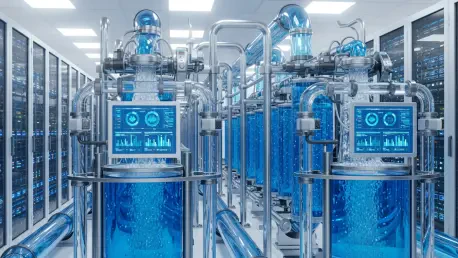

The sudden decision by the Ohio Environmental Protection Agency to scrap its proposed streamlined permitting process for data centers marks a significant pivot in how the state balances industrial expansion with the preservation of its critical water resources. Initially, the agency envisioned a simplified regulatory landscape that would allow the rapid construction of hyperscale facilities, which are essential for supporting the infrastructure of artificial intelligence and high-performance computing. However, this administrative u-turn indicates that the sheer volume of liquid waste produced by sophisticated cooling systems presents ecological risks that cannot be addressed through a one-size-fits-all approach. By returning to a more rigorous, site-specific review system, regulators are acknowledging that the cooling needs of massive server farms can place an unprecedented strain on local municipalities and watersheds. This shift reflects a growing national skepticism toward the idea that technological progress should come at the expense of environmental safety.
Public Advocacy: Community Engagement and Chemical Risks
The reversal followed an unprecedented wave of public participation, during which the agency received over 7,000 comments from residents and advocacy groups concerned about the chemical makeup of industrial runoff. A primary point of contention involved the presence of per- and polyfluoroalkyl substances, commonly known as PFAS or forever chemicals, which are often used in the manufacturing and maintenance of high-end cooling equipment. Without the granular oversight provided by individual permits, critics argued that these persistent pollutants could migrate into the water supply undetected. The general permit model would have essentially allowed facilities to discharge untreated stormwater and cooling effluents into the ecosystem without the specific testing protocols required for other heavy industries. This lack of transparency was seen as a major loophole that prioritized the operational speed of tech giants over the fundamental rights of communities to access clean drinking water and healthy ecosystems.
Regulatory Scrutiny: The Necessity of Individual Permit Reviews
Beyond chemical additives, the thermal impact of discharging millions of gallons of heated water into local streams posed a significant threat to aquatic biodiversity and the stability of river temperatures. When data centers use evaporative cooling or liquid-to-liquid heat exchangers, the resulting wastewater often carries a high concentration of nitrates and minerals that can lead to harmful algal blooms. Individual permitting allows the state to set specific temperature and nutrient limits tailored to the unique capacity of the receiving water body, ensuring that a facility in a sensitive watershed is held to higher standards than one in a less vulnerable area. By abandoning the general permit, the agency is reclaiming its authority to demand precise data on the volume and frequency of these discharges. This move forces companies to invest in more sustainable water management technologies rather than relying on public infrastructure to absorb the externalized costs of their resource-intensive operations.
Regional Trends: Resource Preservation in the Great Lakes
Ohio’s legislative and regulatory recalibration is part of a much larger trend sweeping across the Great Lakes region as states grapple with the massive footprint of the digital economy. In neighboring jurisdictions, governors are increasingly prioritizing the protection of the world’s largest freshwater system over the tax revenue generated by hyperscale data centers. For instance, Michigan and Illinois have begun phasing out the aggressive incentives that previously encouraged unchecked expansion, while New York has experimented with moratoriums to assess the cumulative impact of these facilities on the power grid and water table. This regional shift suggests a new era where the growth-at-any-cost mentality is being replaced by a sophisticated resource-first strategy. Lawmakers now recognize that the massive water consumption required to cool server racks can jeopardize the long-term viability of local agriculture and residential development if it is not managed with extreme precision.
Infrastructure Hazards: Lessons from National Contamination Incidents
The urgency of this oversight was recently underscored by a biological contamination incident in Cheyenne, Wyoming, where a rare strain of bacteria was detected in the city’s wastewater system. Investigations linked the contamination to a large-scale data center construction site, highlighting that the risks associated with these projects begin long before the first server is ever powered on. Such incidents serve as a cautionary tale for Ohio, proving that municipal treatment plants are often ill-equipped to handle the specialized biological or chemical waste streams generated by the tech industry. Consequently, many cities are now moving toward a requirement for dedicated on-site storage tanks and treatment facilities, ensuring that all wastewater is pre-processed before entering the public sewers. This evolution in building codes and environmental law marks a permanent transition away from the plug-and-play model of infrastructure, requiring developers to integrate advanced environmental safeguards.
Future Compliance: Strategic Water Management and Innovation
The decision to reinstate individual permitting provided a clear roadmap for how industrial growth must align with ecological stewardship to ensure long-term regional stability. Regulators established that technological advancement could no longer serve as a justification for bypassing the rigorous scrutiny required to protect public health. This move effectively signaled to the global tech sector that Ohio required high-transparency operations and specific mitigation strategies for every gallon of water utilized in the cooling process. Looking ahead, companies were encouraged to transition toward air-cooling methods or ultra-efficient liquid cooling that minimized chemical additives and thermal pollution. Success in this new regulatory environment depended on the early adoption of water-recycling technologies and the integration of comprehensive monitoring systems that provided real-time data to local officials. By setting these high standards, the state ensured that the digital infrastructure remained compatible with its natural resources.