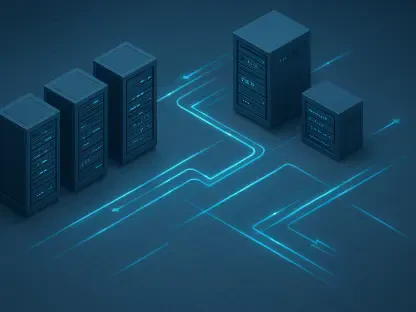

Scaling AI infrastructure vertically involves adding more powerful components to a central rack, whereas scaling at the edge requires the horizontal addition of many individual physical units. This fundamental architectural divide defines the strategic landscape for enterprises as they move beyond experimental model development into the deployment of large-scale production environments. In the current landscape of 2026, the location of inference—the process where a trained model generates outputs from new data—is no longer a secondary technical concern but a primary driver of operational viability. Organizations must weigh the benefits of massive, centralized computational power against the necessity of immediate, localized responsiveness. While a centralized approach offers the luxury of unconstrained model complexity and high-density storage, the edge provides the autonomy required for systems that operate in the physical world. The decision-making process involves evaluating the specific needs of the application, ranging from the sub-millisecond requirements of autonomous transportation to the deep analytical needs of corporate financial modeling. As the sheer volume of data generated by connected devices continues to surge, the friction between data gravity and processing speed creates a complex set of trade-offs that influence everything from hardware procurement to long-term energy sustainability and security protocols.
Performance and Hardware Architecture
Compute Resources: High-Performance Clusters vs. Embedded Systems
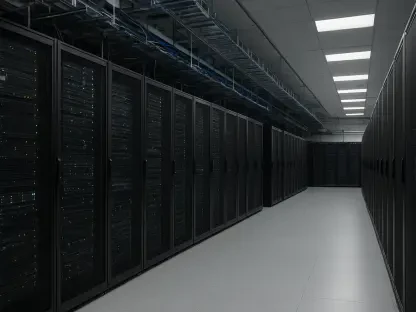
The physical infrastructure required for on-premises inference is characterized by high-density racks equipped with the latest iterations of multi-die GPUs and specialized AI accelerators designed for massive throughput. These systems are optimized to handle the largest models, such as billion-parameter large language models or complex molecular simulations, which require significant memory bandwidth and interconnected processing units. In a centralized data center, engineers can utilize liquid cooling and high-capacity power delivery to push hardware to its thermal limits, ensuring that even the most demanding inference tasks are completed with maximum precision. This environment allows for the use of full-precision floating-point arithmetic, which maintains the highest possible accuracy for sensitive applications like medical diagnostics or predictive maintenance in aerospace. The centralized nature of this hardware also simplifies the upgrade cycle, as technical teams can swap out aging accelerators for newer generations within a single facility, effectively boosting the performance of all hosted models simultaneously without needing to touch geographically dispersed assets.
In contrast, inference at the edge is defined by the constraints of the physical environment, often requiring hardware that fits into a small enclosure or operates on limited battery power. Modern edge devices utilize System-on-Chip (SoC) architectures and integrated Neural Processing Units (NPUs) that are specifically designed to maximize performance per watt. These chips are not intended to compete with the raw teraflops of a data center cluster but instead focus on executing specific, optimized tasks with extreme efficiency. For instance, an intelligent camera in a smart city grid might use a dedicated vision processor to identify traffic patterns in real-time, consuming only a few watts of power while providing immediate insights. This decentralized approach shifts the burden of processing away from the core network, allowing each individual unit to act as a self-contained intelligence node. While these devices lack the memory capacity to run uncompressed flagship models, their specialized hardware enables them to perform specific functions with remarkable reliability in environments where traditional server-grade hardware would fail due to heat, vibration, or lack of space.
Latency and Networking: The Millisecond Threshold in Real-Time Operations
The impact of network latency remains the most significant technical hurdle for centralized inference models, as the time required for data to travel from its source to a data center and back can create unacceptable delays. Even with the widespread adoption of high-bandwidth connectivity and optimized fiber routes, the round-trip time typically hovers between 15 and 40 milliseconds. While this delay is virtually imperceptible for a customer service chatbot or a back-office automation tool, it represents an eternity for high-speed industrial robotics or autonomous vehicle navigation systems. In these scenarios, the AI must process visual and sensor data to make split-second decisions that ensure physical safety. If a manufacturing robot encounters an unexpected obstacle, waiting for a remote server to process the stop command could lead to equipment damage or human injury. Consequently, the edge becomes the mandatory choice for any application where the cost of a delay exceeds the value of the deeper intelligence that a larger, centralized model might provide.
By eliminating the reliance on a stable network connection for every single inference request, edge computing provides a level of deterministic performance that centralized systems cannot match. Localized processing allows for “ultra-low latency” responses, often reaching the sub-millisecond range, which is critical for the synchronization of complex systems in 2026. This capability is particularly vital in remote or hostile environments where connectivity is either expensive or intermittent, such as deep-sea exploration vessels, remote mining sites, or agricultural drones operating in rural areas. When the inference engine lives on the device, the system remains functional even during a complete network blackout, maintaining operational continuity. Furthermore, by processing the bulk of the data locally and only transmitting the final results or critical alerts to the central hub, organizations can significantly reduce their total network traffic. This optimization not only lowers bandwidth costs but also prevents the network congestion that often plagues large-scale deployments of connected sensors and smart devices.
Management and Data Integrity
Lifecycle Management: Model Optimization and Remote Orchestration
Deploying AI models to a fleet of thousands of edge devices requires a sophisticated approach to model management that differs significantly from the centralized update process. To fit large models onto localized hardware, engineers utilize advanced optimization techniques such as quantization, which reduces the precision of the model weights, and pruning, which removes redundant connections within the neural network. These processes allow a model that originally required hundreds of gigabytes of memory to run on a device with only a few gigabytes available, though this often comes with a marginal trade-off in accuracy. Managing the lifecycle of these models involves rigorous testing to ensure that the “shrunken” version still meets the necessary performance benchmarks in the field. Once a model is ready for deployment, the organization must rely on robust over-the-air (OTA) update mechanisms to push the new software to devices that may be scattered across different time zones or operating under varying network conditions, requiring a high level of orchestration to prevent widespread failures.
Centralized on-premises systems offer a more streamlined management experience, as the entire inference environment is contained within a controlled space where IT staff have direct physical and digital access. When a model needs to be updated or replaced, the process happens on a unified set of servers, allowing for immediate rollbacks if something goes wrong. There is no need for the aggressive model compression that edge devices require, which simplifies the development pipeline and ensures that the most accurate version of the AI is always in use. However, the operational challenge for on-premises systems lies in managing the massive power and cooling infrastructure needed to sustain high-volume inference. As the demand for AI services grows, the centralized data center must constantly scale its utility intake and heat dissipation systems to avoid thermal throttling. This centralized management model is highly efficient for organizations with a predictable flow of data, but it lacks the granular flexibility of an edge-based system where each node can be updated or replaced independently without affecting the integrity of the entire network.
Security and Privacy: Data Sovereignty vs. Physical Tamper Resistance
The security landscape for AI inference is a study in contrasts between the digital protection of centralized assets and the physical protection of distributed ones. On-premises inference provides the highest degree of data sovereignty, a factor that has become increasingly critical as global regulations regarding data privacy and retention have tightened through 2026. By keeping the entire inference loop within the corporate firewall, organizations can guarantee that sensitive customer information, proprietary trade secrets, or healthcare records never traverse the public internet. This environment allows for the implementation of traditional defense-in-depth strategies, including rigorous identity and access management, encrypted storage arrays, and physical security measures like biometric locks and surveillance in the server room. The primary risk in this scenario is the “honey pot” effect, where a single successful breach of the central data center could expose a massive amount of valuable intelligence to an attacker, making the stakes for security exceptionally high.
Edge AI addresses the data privacy challenge by shifting the “attack surface” from a central hub to the individual devices, which significantly reduces the amount of sensitive data being transmitted and stored in the cloud. When a facial recognition system or a voice assistant processes data locally at the edge, the raw biometric information can be deleted immediately after the inference is complete, with only a randomized token or a simple “match/no-match” signal being sent back to the server. This minimize-by-design approach is inherently more private and helps organizations comply with strict regional laws. However, the physical security of the edge hardware is a major concern, as devices located in public or remote areas are vulnerable to theft and tampering. To counter this, hardware manufacturers have integrated secure boot protocols and hardware-level encryption into the silicon, ensuring that even if a device is stolen, the AI models and the data they process remain inaccessible. This creates a resilient security posture where the failure or compromise of a single node does not jeopardize the security of the broader infrastructure.
Economic and Strategic Integration
Cost Structures: Comparing Infrastructure Investment and Scaling Efficiency
The financial implications of an AI deployment strategy are heavily influenced by the nature of the scaling required for the specific use case. Establishing an on-premises inference center involves a significant upfront capital expenditure for specialized hardware, facility construction, and high-capacity electrical systems. While these initial costs are substantial, the long-term operational expenses are relatively predictable, as the cost per inference decreases as the volume of requests grows. This makes the data center model particularly attractive for enterprises with massive, steady-state workloads where they can achieve significant economies of scale. However, the hidden costs of on-premises systems, such as the specialized personnel required to maintain the hardware and the rising price of industrial electricity, can erode these savings over time. Furthermore, the rigidity of a centralized facility means that if the organization’s needs suddenly change, they may be left with expensive, underutilized hardware that is difficult to repurpose.
Scaling an edge AI deployment follows a horizontal trajectory, where the cost increases incrementally with the addition of each new physical unit. This allows for a lower entry price, as a company can start with a small pilot program of a few dozen sensors or drones before committing to a full-scale rollout. This “pay-as-you-grow” model provides greater financial flexibility and reduces the risk of massive initial investment failures. However, the cumulative costs of managing a fleet of thousands of devices can eventually surpass the cost of a centralized server. Beyond the hardware purchase price, organizations must account for the logistics of field maintenance, the replacement of lost or damaged units, and the software licensing fees associated with remote management platforms. In the competitive landscape of 2026, the total cost of ownership for edge AI often depends on the longevity of the hardware; if the devices must be replaced every two years to keep up with model requirements, the economic viability of the edge can become strained compared to the more stable environment of the data center.
Future Implementation: The Rise of the Hybrid Inference Continuum
The strategic evolution of AI infrastructure culminated in a shift away from binary choices, as organizations successfully established hybrid inference models that bridged the gap between centralized power and localized speed. This architectural synthesis allowed for a tiered approach to intelligence where the edge handled immediate, mission-critical tasks while the data center performed the deep, retrospective analysis needed for continuous improvement. High-speed 5G and 6G connectivity acted as the nervous system for these deployments, enabling a fluid exchange of data that maximized the strengths of both environments. In many industrial sectors, this meant that sensors at the edge were responsible for real-time safety monitoring, but they simultaneously streamed anonymized, summarized datasets back to a central on-premises rack where global models were retrained based on real-world experiences. This feedback loop ensured that the localized intelligence was never static, but instead benefited from the collective learning of every other device in the fleet.
Strategic leaders discovered that the most resilient systems were those that could dynamically shift workloads based on current network conditions or computational demands. During periods of high network congestion, more processing was pushed to the edge to maintain performance, while during periods of low activity, complex tasks were offloaded to the data center to conserve battery life on the remote devices. This fluid management of resources reduced the total energy footprint of AI operations and provided a robust safeguard against system-wide outages. The successful integration of these hybrid models required a fundamental change in how software was developed, moving toward modular architectures that could run seamlessly across different types of hardware. Ultimately, the choice of where AI inference lived became less about a physical location and more about the optimal distribution of logic across a unified digital fabric. This approach provided the agility needed to respond to the rapid changes in technology and market demands that characterized the mid-decade era of 2026.