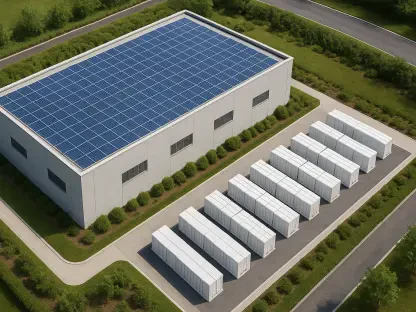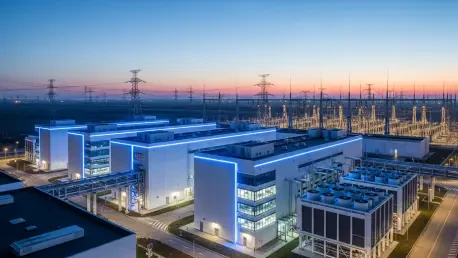

The quiet landscapes of southern Ohio are about to transform into the most concentrated hub of computational power ever conceived by human ambition. This massive project, a joint endeavor by OpenAI and Nvidia, signals a fundamental change in the global race for artificial intelligence supremacy. By committing to a scale that was unimaginable only a short time ago, these industry titans are redefining the boundaries of infrastructure, energy, and finance to secure the future of generative models.
This half-trillion-dollar commitment represents more than a local construction project; it is a fundamental restructuring of the global AI supply chain. By merging energy generation, advanced silicon, and massive capital, the initiative attempts to solve the compute shortage that has defined the industry, positioning the American Midwest as the primary engine for synthetic reasoning. As the project moves from the planning stages of 2026 toward an operational reality, its success will likely determine the trajectory of the entire digital economy.
A Half-Trillion Dollar Bet on the Future of Intelligence
The sheer magnitude of the $500 billion investment represents a seismic departure from previous technology infrastructure projects, eclipsing the annual research budgets of entire nations. This capital injection is not merely for buildings; it covers the astronomical costs of specialized silicon, sophisticated liquid cooling systems, and entirely new power substations. Such a financial commitment underscores the belief that the next generation of artificial intelligence requires physical resources on an industrial scale.
At the center of this ambition is a 10-gigawatt power target, a figure that dwarfs the capacity of even the largest existing cloud clusters. While traditional hyperscale facilities typically operate in the hundreds of megawatts, this project aims to provide the raw electrical force needed for the most complex model training. The timeline for progress is equally aggressive, with groundbreaking ceremonies expected to lead into a phased operational launch scheduled to begin by 2028.
Why the Silicon Heartland Is Becoming the Global Epicenter of AI
Ohio’s selection as the site for this mega-campus is no coincidence, as the region offers a unique combination of vast land and existing industrial infrastructure. Specifically, the former Portsmouth Gaseous Diffusion Plant near Piketon provides a historical foundation that is now being repurposed for modern compute. This site choice breathes new life into a community once defined by nuclear enrichment, turning a relic of the Cold War into a forge for the digital future.
This transition signals a pivot in the tech industry from a software-first approach to one that is heavily dependent on physical infrastructure and energy security. Regional revitalization efforts have found a powerful ally in federal energy interests, creating an environment where massive data hubs can thrive. The availability of space and the existing power grid connections make the Silicon Heartland a more viable long-term home for these giants than the increasingly crowded coastal markets.
Decoding the 10-Gigawatt Blueprint: Power, Hardware, and Financial Backstops
The financial plumbing of the Ohio project is as innovative as the technology itself, utilizing a novel 20-year lease structure. This long-term commitment grants OpenAI unprecedented operational control over the site, ensuring stability for its developmental roadmap. In contrast to standard short-term cloud contracts, this arrangement provides the developer with a guaranteed environment for two decades, which is essential for training models that require years of continuous compute.
Nvidia is playing a dual role in this endeavor, acting as both the primary hardware architect and a significant financial guarantor. By providing backstops for the lease obligations, Nvidia is effectively de-risking the massive loans required to build the site. This partnership ensures the integration of the upcoming “Vera Rubin” platform, maintaining a competitive hardware edge while transforming Nvidia from a hardware vendor into a vital pillar of the project’s financial viability.
Managing the energy logistics for such a massive footprint requires more than just standard utility connections. SB Energy, a SoftBank subsidiary, has developed a strategy focused on 9.2 gigawatts of natural gas generation to provide the constant, reliable power that AI clusters demand. This approach necessitates a massive expansion of the regional transmission grid, highlighting the critical need for infrastructure that can handle a load equivalent to millions of homes.
The Economic Gravity Field: Expert Insights Into Infrastructure Symbiosis
Analysts are increasingly focused on the concept of “contractual scarcity,” where exclusive, long-term agreements limit broader market access to high-end compute. By locking up 10 gigawatts of capacity years in advance, OpenAI and Nvidia are creating an ecosystem that is difficult for smaller competitors to penetrate. This effectively turns compute power into a scarce financial asset, where the ability to innovate is directly tied to the ability to secure long-term physical capacity.
The boundaries between chip designers, software developers, and energy providers are blurring into a single, unified partnership model. However, this level of interdependence carries significant execution risks that must be carefully managed. Balancing a decade-long construction timeline against the rapid shifts in technology and regulation requires almost perfect foresight, as the hardware installed in 2026 might face obsolescence before the campus reaches its full 10-gigawatt potential in the next decade.
Navigating the Mega-Campus ErPractical Strategies for Enterprise Leaders
For enterprise leaders, the rise of these specialized campuses necessitates a strategy of infrastructure diversification to avoid total dependence on a single premium ecosystem. While the Ohio facility will offer unparalleled scale, maintaining relationships with diversified cloud providers remains essential for operational redundancy. Leaders must ensure their organizations can pivot between different hardware environments as the market for high-end compute continues to consolidate.
Decisions regarding workload optimization must now account for the cost-benefit analysis of using $500 billion premium capacity versus standard cloud solutions. Companies should determine which high-priority tasks require the extreme performance of the latest Nvidia hardware and which routine operations can be handled by more economical resources. This tiered approach prevents overspending on sophisticated compute when simpler, more accessible alternatives like AWS or Google Cloud are sufficient.
As compute becomes a long-term financial asset, businesses must prepare for new pricing models, including reservation tiers and high usage thresholds. Anticipating these financial shifts allows organizations to secure the necessary resources without being blindsided by the high costs of advanced intelligence. Moving forward, the most successful enterprises will be those that treat compute capacity as a strategic commodity, balancing immediate needs with long-term reservation strategies.
The collaboration between OpenAI and Nvidia in Ohio established a new paradigm for how global technology leaders approached the challenges of energy and infrastructure. It transformed a former industrial site into a beacon of modern computation, proving that the future of artificial intelligence depended as much on physical foundations as it did on digital innovation. Business leaders and policymakers alike observed how this project reshaped the regional economy and set a precedent for future multi-billion-dollar investments. By prioritizing long-term energy security and hardware integration, the partnership provided a roadmap for scaling intelligence at a level that was previously thought impossible.