
The relentless intensity of modern heat waves has transformed data center management from a routine background operation into a high-stakes battle against physics and silent infrastructure decay. While a catastrophic system failure makes headlines, the more insidious threat lies in the gradual degradation of silicon components and mechanical systems exposed to prolonged thermal stress. In many instances, hardware begins to fail long before temperatures reach critical thresholds, as excessive heat triggers microscopic disruptions in electrical pathways and accelerates the wear of cooling fans. Recent summers in Europe have served as a wake-up call, particularly when prestigious institutions like the Guy’s and St Thomas’ NHS Foundation Trust in London or high-performance computing clusters in France were forced into emergency shutdowns during record-breaking spikes. These incidents proved that even systems designed for high availability have zero margin for error when the ambient environment exceeds their cooling capacity, highlighting a fundamental vulnerability in the global digital backbone that requires immediate architectural reconsideration.
1. The Rising Financial and Physical Toll of Extreme Heat
The economic implications of climate-related disruptions are no longer theoretical, with projections indicating that the global data center industry could face up to $81 billion in annual costs due to operational risks by 2035. This massive figure accounts for not only the direct costs of hardware replacement and emergency cooling measures but also the cascading financial impact of downtime on digital economies. As of 2026, nearly 80% of global facilities are grappling with increased risk levels, necessitating a shift in how capital is allocated for infrastructure hardening. The situation is further complicated by the massive surge in Artificial Intelligence deployments, which require dense clusters of high-wattage GPUs that generate significantly more heat than traditional server configurations. This dual pressure—rising external temperatures and increasing internal thermal loads—has created a scenario where traditional air-conditioning methods are becoming financially and physically unsustainable for many older facilities that were not built with this level of intensity in mind.
Beyond the immediate financial losses, the physical toll on equipment represents a long-term threat to the reliability of cloud services. Servers exposed to marginal heat stress often suffer from “silent errors,” where bit-flips or subtle data corruption occur without triggering an immediate system crash. This degradation shortens the lifespan of expensive enterprise hardware, forcing operators into more frequent and costly refresh cycles. For example, the transition from 2026 to 2028 will likely see a significant spike in hardware failures for facilities that failed to upgrade their thermal management strategies during the preceding years. Maintenance teams are finding that the old paradigm of reactive repair is obsolete; instead, they must anticipate the cumulative effect of thermal expansion and contraction on motherboards and connectors. This environment demands a more robust approach to resilience, where the health of the hardware is treated as a dynamic variable rather than a static guarantee of service level agreements.
2. Geographic Disparities in Infrastructure Design
The divergence in operational success during recent heat waves has highlighted a stark contrast between facilities in Spain and those in Northern Europe or the United Kingdom. Spanish data center operators have historically navigated a climate characterized by intense solar radiation and high ambient temperatures, leading them to build facilities with significantly higher redundancy and wider safety margins. These designs often include oversized cooling towers, specialized chillers capable of operating at 45 degrees Celsius, and structural insulation that prevents heat soak from entering the server halls. In Madrid and Barcelona, heat management is integrated into the core business strategy, ensuring that even during the most extreme summer months, the internal environment remains stable. This proactive regional design philosophy has allowed Iberian facilities to maintain continuous service while their northern counterparts struggled to cope with temperatures that were previously considered anomalies but have now become the standard seasonal reality.
Conversely, many data centers in traditionally cooler climates were constructed under the assumption that ambient air would remain mild enough for “free cooling” methods for the majority of the year. When temperatures suddenly spike 10 to 15 degrees above the historical average, these facilities lack the mechanical cooling capacity to compensate for the lost efficiency of outside air systems. Furthermore, the reliance on local water supplies for evaporative cooling has become a liability in regions where heat waves are accompanied by drought conditions and water usage restrictions. The inability to adapt to these sudden shifts in the environment has forced many operators in the UK and Scandinavia to throttle their performance or shut down entirely to protect their equipment. This geographical reality has turned the Iberian Peninsula into a model for resilience, demonstrating that preparedness is not just about having the latest technology but about designing for the worst-case scenario from the initial site selection and architectural planning phases.
3. Implementation of Advanced Monitoring Protocols
To move beyond the limitations of manual tracking, sophisticated operators are now adopting a three-step strategy focused on granular hardware metrics rather than general room conditions. The first critical step involves monitoring specific equipment variables, such as internal vibrations, energy intake, and heat fluctuations within the server chassis itself. By focusing on the internal state of the hardware, technicians can identify when a specific rack is struggling even if the overall room temperature appears within safe limits. This localized data provides a much clearer picture of how thermal energy is moving through the facility, allowing for targeted airflow adjustments that prevent hot spots from developing. This transition from macro-level monitoring to micro-level diagnostics represents a fundamental shift in how data center health is measured, ensuring that the most sensitive components are protected from the cumulative effects of thermal stress.
The second and third steps of this survival strategy focus on proactive intervention and historical data analysis to prevent total system failures. When data deviates from established norms, even by a small margin, automated systems should trigger immediate cooling redirects or workload migrations before the equipment reaches its breaking point. This response to early warning signs is vital for maintaining uptime in an environment where a five-minute delay can lead to permanent hardware damage. Furthermore, documenting these performance histories allows operators to build predictive models that identify patterns in hardware behavior during heat events. By learning from past incidents, facilities can anticipate which components are likely to fail next and perform preventive maintenance during cooler periods. This data-driven approach transforms heat management from a crisis-response activity into a controlled operational variable, significantly reducing the likelihood of unexpected outages during peak summer temperatures.
4. Strategic Evolution of Cooling Technologies
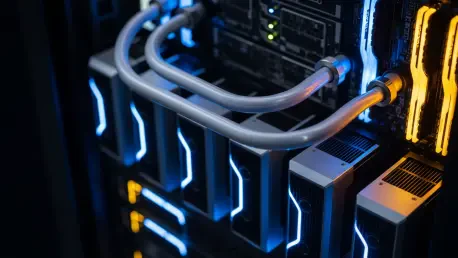
In response to the growing challenges of water scarcity and energy efficiency, the industry has seen an accelerated shift toward closed-loop cooling systems that eliminate the need for constant water consumption. These systems utilize a recirculating volume of water or specialized cooling agents that transfer heat away from the servers without evaporation or waste. In water-stressed regions like Spain and Portugal, these methods have moved from being innovative alternatives to becoming the standard requirement for new builds. By decoupling the cooling process from the local water grid, data centers can maintain peak performance during droughts while also reducing their environmental footprint. This shift is not merely about sustainability; it is a strategic necessity for ensuring that a facility can operate independently of external resource fluctuations. The adoption of liquid-to-chip cooling and immersion technologies has also gained traction, providing a more direct and efficient way to handle the intense thermal output of modern AI hardware.
The transition to these resilient technologies was marked by a fundamental change in how operators perceived the relationship between the facility and the environment. Leaders in the sector recognized that treating heat as an occasional crisis was a failing strategy, leading them to re-engineer their systems for constant high-temperature endurance. They prioritized the integration of low-carbon power supplies and localized energy storage to ensure that cooling systems remained operational even during grid stress. By the end of this transition period, the most successful organizations had established new protocols that moved away from simple air circulation toward total thermal immersion and intelligent load balancing. These actionable steps, ranging from the deployment of adiabatic cooling to the implementation of AI-driven thermal optimization, provided a clear path forward for the global industry. This evolution ensured that the digital infrastructure remained robust, proving that the lessons learned from the Iberian model were applicable to any facility facing the realities of a warming world.