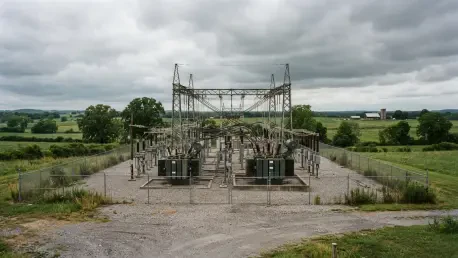

The transformation of Maryland into a potential primary hub for hyperscale data centers has shifted from a celebrated economic ambition into one of the most contentious political debates across the state. Following the recent 2026 election cycle, a clear paradigm shift has emerged as newly elected county executives move away from traditional pro-growth incentives toward a policy framework centered on infrastructure resilience and fiscal protection. This transition is deeply rooted in what public policy analysts describe as a “chain of causation,” where residents directly link large-scale industrial land use to their own economic security and physical health. Recent polling data from the University of Maryland indicates that an overwhelming 80 percent of likely voters are concerned that the massive energy consumption of these facilities will inevitably lead to higher household electricity rates. This widespread public anxiety has forced political leaders to prioritize the stability of the local power grid over the allure of tech industry tax revenue.
Legislative Action: The Rise of Moratoriums and Zoning Pauses
Throughout the most populous regions of Maryland, local governments have responded to the rapid influx of data center proposals by implementing strategic legislative moratoriums to stall development until the full impact on local resources can be studied. In Anne Arundel County, the administration has established a developmental freeze that is scheduled to remain in effect until early 2028, providing officials with the necessary time to evaluate how these massive energy consumers affect the financial well-being of residential utility payers. Similarly, in Prince George’s County, executive orders have been utilized to halt the processing of new permits for hyperscale facilities, signaling a regional consensus that the industry has outstripped the existing regulatory framework. These pauses are not merely bureaucratic delays but represent a fundamental shift in how local leaders view their responsibility to protect the existing infrastructure from being overwhelmed by industrial demand.
Montgomery County has adopted what is arguably the most stringent set of regulatory barriers in the state by pairing a long-term moratorium with sweeping zoning changes that effectively ban hyperscale facilities in several key districts. The legislative strategy pushed by local leadership requires that any future data center project must be powered exclusively by renewable energy sources, ensuring that new industrial growth does not jeopardize the county’s aggressive climate goals. This approach effectively forces developers to bring their own sustainable power solutions to the table rather than drawing from the existing grid during periods of peak demand. By mandating that these facilities operate independently of traditional fossil fuel generation, the county is attempting to insulate its residents from the environmental and economic volatility associated with high-density computing. This shift reflects a broader trend of local sovereignty, where jurisdictions prioritize long-term grid stability and health.
Fiscal Responsibility: Ensuring Developers Pay the Full Cost
A central pillar of the new political climate in Maryland is the insistence on absolute fiscal neutrality, ensuring that the financial burden of infrastructure upgrades falls solely on the developers rather than the general public. In Baltimore County, officials have pioneered a “pay their way” philosophy that explicitly denies tax breaks or subsidies to data center projects unless they can prove a net zero impact on residential utility bills. This policy requires tech companies to fund their own electrical grid enhancements and generation capacity, effectively decoupling industrial expansion from the rising costs of energy distribution. By treating the electrical grid as a finite public resource, local leaders are signaling that the massive power draw of a data center is a private liability that must be managed with private capital. This ensures that economic development goals do not subsidize the operational costs of corporations at the expense of the average taxpayer.
In jurisdictions where agricultural heritage remains a primary concern, such as Frederick County, the debate over data centers has evolved into a sophisticated metrics-based approach to land preservation and community reinvestment. The county has introduced a “five-to-one” ratio that mandates the permanent preservation of five acres of agricultural land for every single acre of land converted for data center use. This strategy aims to mitigate the loss of rural character while simultaneously directing a portion of industrial revenue toward critical public infrastructure like local school systems. While certain brownfield sites are still being considered for development, the requirement for such high levels of mitigation ensures that only the most financially viable and community-oriented projects move forward. This creates a competitive environment where developers must offer tangible benefits to the local population to earn the right to build and maintain their specialized digital infrastructure.
Community Defense: Outright Bans and Labor Standards
While many Maryland counties are attempting to balance development with regulation, Harford County has established a significant precedent by enacting an outright ban on new hyperscale data center construction. Local officials reached this conclusion after determining that the negative externalities associated with these facilities, including constant low-frequency noise and massive water consumption for cooling, far outweighed the potential economic gains. The county’s leadership emphasized that the minimal long-term employment provided by data centers—which often require only a skeleton crew of technicians once operational—did not justify the permanent alteration of the local landscape or the strain on shared resources. This decisive action serves as a stark warning to the industry that not every jurisdiction views technology hubs as a desirable outcome. It highlights a growing skepticism where the environmental and social costs are scrutinized with the same intensity as the revenue.
Beyond land use and energy concerns, there is an increasing movement to tie any successful data center project to strict social and labor mandates that ensure local workers benefit from the construction boom. In several high-growth counties, platforms now include requirements for union labor and prevailing wage standards for both the initial build and the ongoing maintenance of these massive facilities. By mandating that developers hire locally and provide comprehensive benefits, officials are attempting to transform data centers from isolated resource consumers into engines of local middle-class job growth. Furthermore, these mandates often include requirements for significant reinvestment into vocational training programs, ensuring that the local workforce is equipped to handle the specialized technical needs of the digital era. This social contract approach forces tech companies to become active participants in the community’s economic health, moving beyond the traditional role of a passive tenant.
Strategic Oversight: Navigating the New Grid Reality
The political landscape established after the recent elections has effectively ended the era of unregulated expansion for the data center industry in the Mid-Atlantic region. As the state moves toward a model of grid protectionism, the priority has shifted from expanding the tax base to securing the long-term reliability of the domestic electrical supply. In regions where policy remained undefined, such as Howard and Wicomico counties, there is an increasing expectation that state-level guidance will eventually codify the protective measures already seen in the Baltimore-Washington corridor. This suggests that the future of the industry in Maryland will be dictated by a standardized framework that emphasizes resource conservation and developer responsibility. The emerging consensus is that the digital economy must exist within the physical constraints of the state’s power generation and distribution capabilities, rather than the grid being forced to expand indefinitely to meet industrial demand.
The transition toward a highly regulated “pay-to-play” environment provided the necessary safeguards to protect Maryland residents from the potential volatility of the global digital economy. Policymakers successfully established a framework that required developers to demonstrate both environmental sustainability and fiscal accountability before breaking ground on any new projects. This proactive stance ensured that the expansion of the power grid remained focused on the needs of the public rather than the profit margins of private tech corporations. Moving forward, the most effective strategy for the state involved a continuous assessment of energy demand and a firm commitment to maintaining the “chain of causation” between industrial policy and resident well-being. By prioritizing renewable energy mandates and land preservation ratios, the state demonstrated that economic progress did not have to come at the expense of environmental or financial stability for its modern citizens.