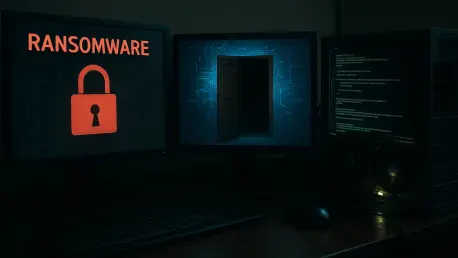

Vanderbilt’s immediate directive for students and faculty to disconnect from all campus networks reflects the extreme measures required to contain a rapidly spreading ransomware infection. This abrupt digital isolation, occurring on November 9, highlights the volatile nature of modern cybersecurity threats targeting major research institutions. The university’s IT department, working alongside federal investigators, identified a sophisticated intrusion attributed to a threat actor known as BYOD. This group claimed to have successfully infiltrated the primary domain controller, subsequently encrypting critical databases with a distinctive .byod file extension and allegedly compromising the integrity of off-site backups. The resulting disruption forced an immediate cessation of all Wi-Fi connectivity and internal system access, creating a challenging environment for students and researchers. Despite these obstacles, the administration prioritized operational resilience by resuming basic services within twenty-four hours while continuing to investigate the breach.
Assessing the Adversary: Threat Actor Tactics and Mitigation
The emergence of the BYOD group as the primary suspect suggests a calculated approach that extends beyond mere encryption to include massive data exfiltration. Reports indicate that the group claims to possess sensitive information belonging to over one million individuals, including Social Security numbers, employee records, and proprietary research findings. This specific adversary had previously been associated with high-profile breaches of commercial entities like Trump Mobile, utilizing platforms such as Session to facilitate anonymous negotiations. By targeting the domain controller, the attackers gained administrative control over the entire network ecosystem, allowing them to bypass standard security hurdles and deploy ransomware simultaneously across hundreds of connected devices. This level of access explains why the university was forced to implement such a drastic shutdown. The leverage created by holding intellectual property hostage alongside personal data makes these incidents particularly complex for academic institutions to resolve without significant fallout.
The successful mitigation of future incidents required a shift toward a zero-trust architecture where no user or device was inherently trusted, regardless of location on the network. To achieve this, the IT department implemented more rigorous endpoint detection and response systems that monitored for anomalous behavior in real time. Organizations found that automating the isolation of suspicious nodes significantly reduced the time needed to contain a breach. Furthermore, the adoption of immutable backup solutions ensured that even if a domain controller was compromised, the core data remained protected from unauthorized encryption or deletion. Universities also prioritized the development of offline recovery protocols that allowed for the continuation of critical research without reliance on the primary campus infrastructure. By treating cybersecurity as a continuous challenge, the institution strengthened its posture against the tactics of sophisticated threat actors. This proactive stance provided a clearer roadmap for protecting data and intellectual property.