
The relentless expansion of artificial intelligence has officially outpaced the ability of terrestrial power grids to provide reliable energy, forcing a fundamental shift toward the stars. As generative models and complex neural networks demand ever-increasing amounts of electricity, the infrastructure supporting these workloads is reaching a physical and regulatory plateau. Data centers on the ground are no longer just repositories for information; they have become massive industrial consumers that compete with local residents and existing industries for limited utility resources. This competition has pushed the technological sector to look upward, where Low-Earth Orbit (LEO) offers a unique environment for high-density compute that avoids many of the pitfalls found on the planet’s surface.
Moving computational power into orbit is evolving from a fringe concept into a critical strategic priority for major technology firms. The shift is primarily driven by the realization that terrestrial grids are not expanding fast enough to keep up with the exponential growth of artificial intelligence. By positioning data centers in space, organizations can tap into near-constant solar energy without the inefficiencies of atmospheric interference or the logistical nightmare of finding available land near urban centers. This strategy represents a decoupling of digital progress from terrestrial physical constraints, positioning the vacuum of space as a primary site for future technological growth.
The move to orbital facilities also provides a way to bypass the growing community resistance to data center expansion. On Earth, the construction of massive server farms often meets significant opposition due to their immense water consumption for cooling and the visual impact of new transmission lines. Space-based facilities eliminate these local conflicts entirely, offering a path forward that does not require lengthy public hearings or complex zoning negotiations. This preview into the next decade of infrastructure suggests that the high-density compute needed for the next generation of AI will likely reside hundreds of miles above the people it serves.
Breaking the Terrestrial Ceiling: The Impending Collision of AI and Infrastructure
The sheer magnitude of the electricity required to train modern large language models has created a situation where traditional infrastructure is simply unable to keep pace. Local utilities in major tech hubs are already warning of potential brownouts as data centers consume a larger share of the total power load. This strain is not merely a temporary bottleneck but a structural crisis that threatens to halt the development of more advanced AI systems if new energy solutions are not implemented. The transition to orbital platforms is becoming the only viable way to provide the massive, uninterrupted power supply required by these power-hungry digital architectures.
Furthermore, the strategic necessity of Low-Earth Orbit becomes clear when considering the limitations of terrestrial expansion. Every new ground-based facility requires years of planning, environmental assessments, and multi-billion-dollar investments in local grid upgrades. In contrast, orbital facilities can be deployed with relative speed once the launch logistics are established, allowing for a more agile response to the fluctuating demands of the AI market. This shift signifies a broader trend in the industry where the “where” of computing is being redefined by the “how much power is available.”
The friction between high-density compute and local communities has reached a boiling point in many regions, leading to bans or severe restrictions on new data center developments. Regulatory bodies are increasingly prioritizing residential and traditional industrial needs over the insatiable requirements of the tech sector. This environment makes the prospect of an extraterrestrial infrastructure not just an engineering challenge but a diplomatic relief. By moving the most power-intensive workloads to orbit, hyperscalers can maintain their growth trajectories without becoming the targets of public ire or restrictive local legislation.
Evaluating the Extraterrestrial Solution to High-Density Compute
The Gigawatt Gap: Why Earth’s Power Grids Are Buckling Under Modern Workloads
The scale of the current energy challenge is best illustrated by the staggering projections provided by the International Energy Agency (IEA), which estimates that data center electricity consumption will reach approximately 950 TWh by 2030. This growth is largely fueled by AI, which requires significantly more power per rack than traditional cloud services. Terrestrial grids, many of which are already decades old, were never designed to support such concentrated, high-density loads. The result is a widening “gigawatt gap” where the demand for AI intelligence is growing far faster than the physical ability to deliver the electrons needed to power it.
Adding to this complexity is the prohibitive timeline required to build new terrestrial transmission lines, which often takes between four and eight years to complete. These delays are primarily due to the complex web of environmental regulations, property rights, and inter-state coordination required to move power from generation sites to data center clusters. For an industry that measures progress in months, waiting nearly a decade for a grid connection is an unacceptable barrier to innovation. Orbital power generation avoids these earthly bureaucratic hurdles, offering a streamlined alternative for power-intensive operations.
The issue of land-use has also become a “contentious issue” as data centers expand into areas that were previously reserved for housing or agriculture. High-density compute facilities require massive footprints, not just for the servers themselves, but for the cooling infrastructure and electrical substations required to support them. In urban and suburban environments, this leads to skyrocketing real estate prices and direct competition for resources. The vacuum of space, however, offers a functionally infinite amount of “land” that requires no zoning permits and consumes no local water, making it the ultimate destination for the world’s most demanding digital workloads.
Assessing the Economic Shift: From Prohibitive Launch Costs to Competitive Orbital Power
Historically, the cost of putting anything into orbit was the primary deterrent for commercial enterprises, but that financial landscape is undergoing a massive transformation. We are moving away from the era of $51 billion orbital builds and toward a future where orbital power could cost as little as $810 per kilowatt-year. This economic shift is making the stars look increasingly attractive to accountants who previously dismissed space as a purely scientific endeavor. As the price per kilowatt falls, the logic of keeping energy-intensive AI training on the ground begins to erode, especially when factoring in the rising costs of terrestrial electricity and cooling.
The primary catalyst for this change is the development of next-generation launch platforms like SpaceX’s Starship, which aims to bring launch costs down to a threshold of $200 per kilogram. At this price point, the economics of orbital infrastructure change completely, allowing for the deployment of massive solar arrays and server constellations at a fraction of their former cost. This reduction in the “barrier to entry” is encouraging a wider range of companies to consider space-based solutions as part of their standard infrastructure stack. The competitive advantage will soon belong to those who can leverage the low-cost environment of orbit to power their most advanced AI models.
Furthermore, the “speed to market” for orbital deployment is becoming a decisive factor for enterprise leaders. While a ground-based data center might be stuck in a decade-long permitting cycle, an orbital facility can be launched and operational as soon as the hardware is ready. This agility is crucial in a market where being first to train a new model can result in billions of dollars in revenue. The time-value of money is pushing the industry toward the stars, as the delays associated with Earth-bound construction are increasingly seen as a greater risk than the challenges of space-based engineering.
Hardening Hardware for the Vacuum: Engineering Longevity Amidst Radiation and Orbital Obsolescence
Designing hardware for the vacuum of space presents a unique set of engineering challenges that are vastly different from the controlled environments of terrestrial data centers. Servers in orbit must be built to withstand the extreme vibrations of launch, constant exposure to ionizing radiation, and thermal swings that can vary by hundreds of degrees within a single orbit. This requirement for “hardening” hardware increases the complexity and weight of the equipment, necessitating innovative cooling solutions that rely on radiation rather than convection. Engineering for survivability is now a primary focus for manufacturers looking to capture a share of the burgeoning orbital compute market.
Another significant hurdle is the concept of “orbital obsolescence,” where the lifecycle of a satellite may be much longer than the useful life of the AI chips it carries. AI accelerators are evolving at a breakneck pace, with new, more efficient generations released every few years. If a satellite is designed to stay in orbit for a decade, its computing power may be vastly outdated halfway through its mission. This mismatch requires modular satellite designs that allow for easier hardware refreshes or a shift toward shorter-lived, disposable constellations that can be replaced as new technology becomes available.
The assumption that space provides infinite room is also being challenged by the increasing risk of Kessler Syndrome and the total lack of on-site maintenance crews. A single collision in a crowded orbit can create a cloud of debris that threatens all other assets in that path, making space-based infrastructure a high-stakes gamble. Without the ability to send a technician to swap out a faulty chip or repair a cooling line, every component must be designed with redundant systems and autonomous self-healing capabilities. The risk profile of orbital computing is therefore much higher than that of terrestrial facilities, demanding robust insurance and risk-mitigation strategies.
Beyond Low-Earth Orbit: The Lunar Backup Plan and the Rise of Off-World Infrastructure
The Moon is emerging as a critical second location for resilient storage through ventures like Lonestar Data Holdings and various NASA partnerships. Unlike the crowded and debris-prone LEO, the lunar surface offers a stable environment for long-term data preservation. This “off-world” infrastructure is being designed to act as a ultimate backup for humanity’s most important digital assets, providing a level of security and permanence that is impossible to achieve on a geologically and politically active Earth. The development of lunar data centers represents the next step in creating a truly multi-planetary digital economy.
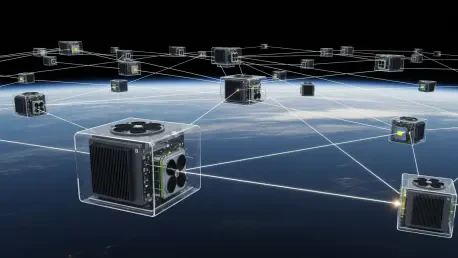
A comparative analysis of industry giants reveals a variety of strategies for conquering the off-world compute market. For instance, Google’s Project Suncatcher is focused on testing the performance of specialized AI hardware in formation-flying satellite clusters, while Blue Origin’s Project Sunrise aims for massive, sun-synchronous constellations. Each approach highlights a different philosophy on how to best balance the trade-offs between power generation, latency, and system reliability. These diverse efforts demonstrate that there is no single “right way” to build an orbital data center, but rather a spectrum of solutions tailored to different computational needs.
Specialized use cases are also providing a compelling value proposition for off-world compute beyond simple AI training. For instance, ultra-secure off-world backups are becoming attractive to governments and high-value enterprises that want to insulate their data from terrestrial conflicts or natural disasters. Additionally, processing data that is already generated in space—such as satellite imagery or scientific telemetry—is much more efficient if done in orbit rather than beaming raw data back to Earth. This specialized “edge computing in space” is likely to be the first area where orbital data centers become commercially profitable.
Strategic Benchmarks: Navigating the Thresholds of Commercial Viability
Enterprise leaders must carefully monitor four critical thresholds to determine when orbital computing becomes a viable option for their specific needs. First is the continued reduction in launch costs; until the price per kilogram falls significantly, space remains reserved for the most niche applications. Second is the validation of the technology by hyperscalers, as their success will provide the necessary proof-of-concept for the rest of the industry. Third is the stability of the insurance market and its willingness to underwrite high-value digital assets in a potentially hostile orbital environment. Finally, the continued failure or degradation of the terrestrial grid will act as the ultimate catalyst, making space not just an option, but a necessity.
For organizations looking to lead in this space, identifying specific workloads suitable for orbital trials is the first actionable step. Processing data generated in space—such as weather patterns, maritime tracking, or defense surveillance—is a natural starting point for these experiments. These tasks benefit from proximity to the source of the data and provide a controlled environment to test the reliability of orbital hardware. By starting with these specialized tasks, companies can build the internal expertise required to eventually move more general AI training and inference tasks to extraterrestrial facilities.
Monitoring the insurance market’s appetite for space-based assets is also a practical strategy for assessing the maturity of the industry. As underwriters develop more sophisticated models for orbital risk, the cost of insuring these assets will drop, signaling a broader acceptance of the technology within the financial sector. Keeping a close watch on the availability and terms of these insurance policies will provide enterprise leaders with a clear indicator of when the transition to orbital compute has moved from the experimental phase to a stable, bankable business model.
The New Horizon of Digital Architecture: Redefining Global Infrastructure
The transition of digital infrastructure toward the stars reflected a fundamental shift in how the global economy approached resource management and growth. As the AI revolution encountered the hard physical limits of the planet, the industry looked upward to find the energy and space required to continue its expansion. This movement demonstrated that the most advanced technologies of the era were no longer bound by the geography of Earth but were instead becoming part of a broader, extraterrestrial ecosystem. The stars ceased to be a distant frontier and became a secondary, functionally limitless power source for the world’s digital intelligence.
The global economy reached a point where the traditional models of building and powering data centers were no longer sufficient to sustain the pace of innovation. By decoupling compute from the terrestrial grid, the technology sector established a more resilient and scalable foundation for the future of artificial intelligence. This shift toward orbital infrastructure eventually transformed from an experimental moonshot into a mandatory architecture for any organization that required massive, high-density processing power. The decision to move to space was ultimately driven by the realization that Earth’s resources, while vast, could not keep up with the infinite potential of human and artificial curiosity.
In the end, the move to orbit represented more than just a search for more power; it was the beginning of a new era in global digital architecture. The integration of space-based assets into the standard infrastructure stack allowed for a level of redundancy and security that was previously unimaginable. What began as a desperate search for energy in a time of grid failure evolved into a sophisticated, multi-planetary network of compute and storage. The transition toward orbital data centers ensured that the digital economy remained vibrant and capable of meeting the ever-growing demands of the artificial intelligence revolution.