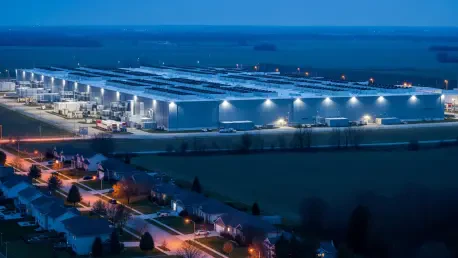

The relentless hum of industrial-scale cooling fans has replaced the once-quiet rustle of Wisconsin cornfields, sparking a legal confrontation between local homeowners and one of the world’s largest technology conglomerates. As artificial intelligence infrastructure continues its rapid expansion across the American Midwest, the physical footprint of the cloud is becoming an unavoidable reality for rural communities. In Mount Pleasant, the promise of high-tech jobs and billions in infrastructure investment now faces the scrutiny of residents who claim their quality of life has been dismantled by the constant acoustic output of massive server farms. This legal battle represents a critical inflection point where the digital needs of a global economy collide with the fundamental rights of individuals to enjoy peaceful habitation. The transition from traditional manufacturing to high-density computing has brought unexpected challenges that extend far beyond the local grid.
Industrial Impact: Community Well-Being
Acoustic Stress: The Physical Toll
The specific nature of the noise generated by these data centers is often described as a low-frequency drone that is virtually impossible to ignore, even within the insulated walls of modern homes. Unlike the intermittent sounds of a passing train or the daytime activity of a construction site, the cooling systems for AI-optimized hardware operate at full capacity around the clock. This relentless auditory pressure leads to significant physiological effects, including chronic sleep deprivation, heightened cortisol levels, and a persistent sense of unease. For many Wisconsin families, the dream of a quiet suburban or rural existence has been replaced by a landscape dominated by industrial vibration that resonates through floors and windows. The psychological toll of living in a constant state of noise pollution cannot be overstated, as individuals find themselves unable to escape the sound even in their most private spaces today as the facility expands.
Thermal Load: Engineering Limits
The engineering requirements for housing tens of thousands of high-performance graphics processing units necessitate an extraordinary amount of heat dissipation, which is currently achieved through massive rooftop air-chilling units. These systems are essential for preventing the silicon chips from melting under the immense thermal load generated by complex machine learning algorithms. However, the sheer density of the hardware within these structures means that the volume of air moved per minute is staggering, creating a localized atmospheric disturbance that carries sound for miles. While some sound-dampening measures have been implemented, critics argue that these efforts are insufficient given the proximity of the facilities to established residential neighborhoods. The rapid pace of construction from 2026 to 2028 has outstripped the development of effective noise mitigation technologies, leaving a gap between operational necessity and community compatibility for nearby homes.
Judicial Review: Regulatory Accountability
Legal Rights: Private Nuisance
Legal experts are closely watching the Wisconsin case because it seeks to establish whether existing noise ordinances are adequate for the unique challenges posed by the AI boom. Traditional nuisance laws were designed for factories with specific working hours, not for digital infrastructure that hums incessantly regardless of the time or day. The plaintiffs are arguing that the current operation constitutes a private nuisance, as it interferes with the reasonable use and enjoyment of their land. Microsoft maintains that its facilities operate within the parameters of local and state regulations, highlighting the tension between regulatory compliance and actual community impact. This dispute emphasizes the need for a modernization of zoning codes that specifically address the acoustic signatures of data centers. If the court sides with the residents, it could force a massive redesign of cooling infrastructures across the country, potentially shifting the industry toward new liquid cooling.
Policy Change: Future Frameworks
The resolution of this dispute provided a blueprint for how municipalities and tech giants navigated the integration of massive infrastructure into quiet communities. Stakeholders realized that the traditional metrics for industrial impact were no longer sufficient in an age where server farms required continuous thermal management near residential zones. Developers shifted their focus toward advanced sound suppression walls and integrated liquid-to-chip cooling systems that eliminated the need for high-decibel rooftop fans. Local governments updated their zoning frameworks to include specific decibel limits tailored to the low-frequency range that most heavily affected human health and property values. These proactive adjustments ensured that the benefits of technological progress did not come at the expense of local well-being. By prioritizing transparency and community involvement during the early planning stages, future projects avoided the litigious pitfalls that characterized the initial expansion in the area.