
The traditional perception of the enterprise network as a collection of static hardware has been replaced by a dynamic, intelligent fabric capable of self-correction and real-time workload optimization. As businesses navigate the complexities of 2026, the demand for infrastructure that supports massive artificial intelligence inference and training models has forced a fundamental departure from manual configuration. Organizations are no longer looking for simple connectivity; they are investing in adaptive platforms that prioritize operational maturity and clear returns on investment over speculative technical upgrades. This evolution is defined by a shift from human-led troubleshooting to autonomous systems that align technical performance with specific business outcomes. The following analysis explores how the convergence of intelligence and connectivity is redefining the strategic role of the modern network within the global enterprise ecosystem.
The Rise of Agentic AIOps: Moving Toward Autonomous Management
The integration of agentic artificial intelligence into network operations has successfully eliminated the need for human intervention in routine Tier 1 and Tier 2 infrastructure tasks. These systems operate as independent agents capable of diagnosing performance bottlenecks and executing remediation protocols without a human trigger, effectively transforming the help desk into a strategic oversight function. By 2026, the reduction in manual trouble tickets has enabled IT departments to focus exclusively on architecture and high-level policy, significantly lowering the total cost of ownership for complex global networks.
This shift toward full autonomy is not merely a matter of convenience but a response to the growing shortage of specialized networking talent capable of managing hybrid environments. Organizations have realized that the labor savings provided by machine learning platforms far outweigh the recurring software licensing fees required for their operation. Consequently, the deployment cycle for new branch offices and data center expansions has decreased from weeks to hours, as self-configuring hardware utilizes cloud-native templates to join the enterprise fabric. This move toward automated resilience ensures that uptime is maintained through predictive modeling rather than reactive patching.
Intent-Centric Governance: Translating Business Goals into Network Policy
Enterprise infrastructure has transitioned away from the granular management of IP addresses and ports toward a model of intent-centric governance that prioritizes high-level business objectives. Instead of manually scripting thousands of individual firewall rules, administrators now define desired outcomes, such as ensuring financial data remains inaccessible to non-authorized devices, which the network then interprets and enforces. This abstraction layer has drastically reduced the risk of human error, which historically served as the leading cause of catastrophic outages in distributed environments.
The network has effectively become “application-aware,” meaning it can identify the specific requirements of every workload and adjust bandwidth or latency priorities in real time. For instance, mission-critical AI inference streams are automatically granted priority over less sensitive administrative traffic, ensuring that real-time analytics are never throttled during peak demand periods. This move toward policy-driven architecture allows for consistent security and performance across hybrid and multi-cloud environments, ensuring that the user experience remains uniform regardless of the physical location of the data or the employee.
The Private AI Factory: Repatriation and Performance Control
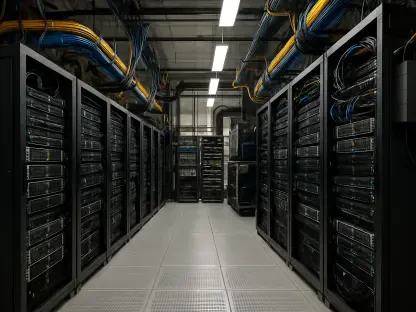
The initial rush to the public cloud has been met with a sophisticated trend toward the repatriation of artificial intelligence workloads into private data centers. This movement is driven by the need for predictable performance, cost transparency, and the strict governance of proprietary data sets that are often too sensitive for multi-tenant environments. By 2026, the concept of the “Private AI Factory” has become the standard for large-scale enterprises that require dedicated clusters of high-performance compute resources optimized for their specific industrial or financial algorithms.
These modernized on-premises environments leverage specialized cooling and power architectures to support the density required by modern graphics processing units and specialized accelerators. By keeping data local, organizations have successfully bypassed the latency issues and egress fees associated with hyperscale cloud providers, leading to a more sustainable long-term financial model for AI operations. Furthermore, the move to private infrastructure allows for the implementation of customized security protocols that meet the specific regulatory requirements of different global regions, providing a level of sovereignty that was previously difficult to achieve.
Connectivity at the Edge: Decentralized Security and Autonomy
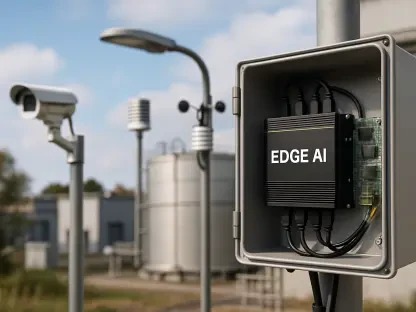
The expansion of decentralized operations has pushed network intelligence away from the central core and toward the edge, where data is generated and consumed. By 2026, edge locations such as remote clinics and automated manufacturing facilities operate with a high degree of autonomy, utilizing software-defined systems to manage multiple connectivity paths including 5G and fiber. This ensures that even if a primary connection fails, local operations can continue uninterrupted by processing critical information on-site before syncing with the central repository during off-peak hours.
Security enforcement has followed this migration to the edge, with Secure Service Edge (SSE) and Zero Trust Network Access (ZTNA) becoming the standard for every remote deployment. Rather than backhauling traffic to a centralized hub for inspection, security policies are now enforced at the point of origin based on user identity and device health. This distributed security model reduces latency and provides a more robust defense against lateral movement by attackers, as every connection attempt is continuously verified. The result is a network that is both highly accessible for legitimate users and inherently hostile to potential threats.
High-Performance Fabrics: The Standardized Dominance of Ethernet
Ethernet has emerged as the undisputed standard for the high-performance fabrics that connect the massive clusters of processors within modern AI data centers. While proprietary technologies once dominated this space, the industry has shifted toward open, high-speed Ethernet standards that offer the scalability and interoperability required for multi-vendor environments. By 2026, the adoption of 800GbE and 1.6T ports has become widespread, providing the massive bandwidth necessary to handle the asymmetric data flows generated by large-scale training and inference workloads.
This transition has been facilitated by the rise of open-source network operating systems, which allow organizations to run consistent software across a variety of hardware platforms. This flexibility prevents vendor lock-in and allows enterprises to scale their infrastructure according to their specific budget and performance requirements. The move toward standardized high-speed switching ensures that the backend network is no longer a bottleneck for computational progress, but rather a transparent and highly efficient delivery mechanism for the vast amounts of data that modern artificial intelligence demands to function effectively.
Wireless Modernization: The Implementation of Wi-Fi 7 and Private 5G
Wireless infrastructure has undergone a massive upgrade cycle as Wi-Fi 7 has become the primary standard for enterprise local area networks. The introduction of multi-link operation has allowed devices to communicate across multiple frequency bands simultaneously, providing the low latency and high reliability required for augmented reality and real-time collaboration tools. This technological leap has enabled businesses to transition away from physical cabling in many office and industrial settings, providing a level of flexibility that was previously impossible with older wireless generations.
For environments requiring even greater range and mobility, such as shipping ports and sprawling logistics hubs, private 5G networks have provided a robust alternative to traditional connectivity. These private cellular deployments offer the security of a managed network with the performance of a wired connection, supporting thousands of industrial sensors and autonomous vehicles within a single geographic footprint. By 2026, the integration of Wi-Fi 7 and private 5G has created a seamless wireless environment where devices can transition between different access technologies without any loss in performance or security posture.
Conclusion
The transformation of network infrastructure by 2026 was defined by a decisive move toward autonomous, intent-driven platforms that functioned as the central nervous system of the enterprise. Organizations successfully transitioned away from manual configuration in favor of AIOps and standardized high-speed fabrics that prioritized business outcomes over technical minutiae. This shift allowed decision-makers to achieve greater operational efficiency while securing highly distributed environments against increasingly sophisticated threats. The network finally matured into a strategic asset that was as agile and intelligent as the artificial intelligence applications it was built to support.