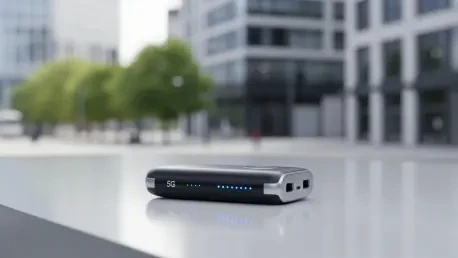

Organizations today are realizing that the four walls of a corporate office no longer define the boundaries of productivity or the limits of their digital reach. This paradigm shift has accelerated the adoption of portable 5G and Citizens Broadband Radio Service (CBRS) technologies, transforming them from experimental niche tools into the backbone of a truly mobile American enterprise. As businesses expand into remote regions, temporary construction sites, and highly mobile field service models, the reliance on traditional fixed-line internet has become a significant bottleneck for growth. By integrating high-performance mobile hotspots that support both public 5G and private CBRS bands, companies are finally overcoming the long-standing obstacles of last mile connectivity. These devices provide more than just a simple internet connection; they act as secure, enterprise-grade gateways that ensure mission-critical data remains accessible whether an employee is in a Manhattan skyscraper or a rural utility substation.
Overcoming the Constraints of Traditional Infrastructure
Addressing Connectivity Gaps: The Limitations of Fixed Lines
Fixed-line services like fiber and cable are the traditional gold standard for stability, yet they possess an inherent lack of agility that often hinders rapid deployment in dynamic business environments. In many cases, waiting for a local service provider to trench fiber or install high-speed cable can delay a project by weeks or even months, leading to significant lost revenue and operational downtime. Furthermore, relying on public Wi-Fi in airports, hotels, or coffee shops introduces an unacceptable level of risk for any enterprise handling proprietary data or financial information. These public access points are notoriously susceptible to man-in-the-middle attacks and packet sniffing, making them unsuitable for accessing sensitive cloud-based Enterprise Resource Planning systems. Portable 5G solutions address these vulnerabilities by creating a private, encrypted tunnel between the user and the corporate network, effectively bypassing the security pitfalls of shared infrastructure.
Managing Security Risks: Beyond Public Wireless Networks
The emergence of CBRS on Band 48 represents a significant leap forward in how organizations manage their internal connectivity, specifically by allowing the creation of private cellular networks. Many existing laptops and tablets lack the internal modems required to communicate directly with these private frequencies, which creates a compatibility gap for organizations looking to modernize. Portable hotspots serve as the critical hardware bridge in this scenario, receiving the specialized CBRS signal and translating it into a secure Wi-Fi 6 broadcast that standard enterprise devices can easily consume. This allows a logistics company, for example, to blanket a massive warehouse in private 5G coverage without the need to replace every handheld scanner or computer in their fleet. By utilizing these mobile gateways, businesses can leverage the low latency and high capacity of private spectrum while maintaining the flexibility to use their current hardware inventory, resulting in a much higher return on investment.
Strategic Implementation Across Diverse Business Sectors
Empowering Field Operations: Real-Time Data for Industrial Sites
Within the construction and heavy industry sectors, the ability to maintain high-speed data links in locations where fixed infrastructure is nonexistent has become a primary driver of efficiency. Modern job sites rely heavily on data-intensive applications such as real-time 3D modeling, high-resolution drone mapping, and collaborative project management software that requires constant cloud synchronization. Without a reliable portable 5G gateway, field engineers are often forced to work offline, which leads to versioning errors and delays in critical decision-making processes. Providing teams with dedicated mobile hotspots ensures that every change made to a blueprint is instantly visible to stakeholders back at the central office, fostering a more synchronized workflow. This capability also extends to utility providers who must manage remote assets; technicians can now upload high-quality diagnostic video and access complex schematics on-site, drastically reducing the time required for repairs.
Enabling Rapid Deployment: Day One Connectivity for Pop-Up Sites
Temporary workspaces and seasonal pop-up operations also derive immense value from portable connectivity, as these sites often require Day One internet access to be commercially viable. Traditional ISPs are frequently unable to meet the aggressive timelines of marketing events, temporary training centers, or disaster recovery sites, leaving organizations in a difficult lurch. Portable CBRS and 5G units offer a plug-and-play solution that bypasses the logistical nightmare of scheduling physical installations and navigating landlord permissions for wiring. For instance, a retail brand launching a temporary boutique can have its point-of-sale systems and customer Wi-Fi operational within minutes of arriving on-site. Beyond the immediate convenience, these tools serve as a robust secondary path for permanent offices, providing an essential failover mechanism that keeps the business online during fiber cuts. This level of redundancy ensures that even if the primary local network fails, critical cloud services and communications remain fully operational.
Critical Specifications for Professional Connectivity
Technical Performance: Multi-Band Support and Wi-Fi 6 Integration
Enterprise-grade mobile hotspots must satisfy a much higher threshold of performance than consumer-level devices, particularly when it comes to multi-band support and radio frequency versatility. To be truly effective in a corporate fleet, a device must seamlessly handle 5G Sub-6, LTE, and Band 48 CBRS signals to ensure the user stays connected regardless of the local network environment. This versatility is vital for consultants and sales professionals who move between dense urban environments using public carrier towers and private corporate campuses utilizing localized 5G cells. Furthermore, the integration of Wi-Fi 6 technology within these hotspots is non-negotiable for modern high-density environments. This standard allows for significantly better management of multiple simultaneous connections, ensuring that an executive’s laptop, smartphone, and tablet all receive consistent bandwidth without interfering with each other. High-performance antennas are also a key differentiator, as they allow for stable connections in fringe areas.
Fleet Management: Durability and Centralized IT Control
Logistical management and physical durability are equally important factors that IT directors must consider when deploying a large-scale mobile connectivity strategy across their organization. Field workers often operate in environments where access to electrical outlets is a luxury, making high-capacity, removable batteries an essential requirement for continuous productivity throughout a long shift. From an administrative perspective, the ability to manage hundreds or even thousands of these units through a centralized remote software platform is a mandatory feature for maintaining security. These cloud-based management tools allow IT departments to push critical firmware updates, monitor data usage patterns, and enforce strict configuration profiles across the entire fleet without physically touching a single device. By maintaining this level of control, organizations can ensure that every mobile gateway adheres to established cybersecurity protocols and corporate usage policies. This centralized oversight reduces the burden on support staff and ensures a uniform user experience.
Future-Proofing the Mobile Enterprise Strategy
Operational Agility: Redefining Connectivity as a Mobile Utility
The trajectory of the American business model is clearly moving toward a decoupled state where the mission of the organization is no longer tethered to a specific physical address. This shift necessitates a fundamental change in how leadership views connectivity, treating it as a mobile utility that follows the employee rather than a static resource tied to a wall jack. Portable 5G and CBRS hotspots have effectively solved the last mile problem, providing a high-speed, secure bridge between the edge of the network and the core of enterprise operations. As organizations continue to embrace cloud-native architectures and real-time data analytics, the demand for this type of agile infrastructure will only continue to intensify. Companies that have proactively invested in these mobile tools find themselves better equipped to pivot in response to market changes or operational disruptions. The ability to deploy a fully functional, secure network environment in any location provides a level of operational freedom that was previously impossible.
Strategic Implementation: Building a Resilient Digital Foundation
Decisions made regarding mobile infrastructure defined the competitive posture of the American enterprise for the duration of the operational year. IT leadership focused on integrating robust portable 5G and CBRS solutions into their standard equipment packages to ensure that every team member possessed the tools needed for uninterrupted performance. They prioritized the acquisition of hardware that offered centralized management and multi-frequency support to mitigate the risks of network obsolescence and security breaches. By establishing these secure mobile gateways as the standard for field and remote work, organizations successfully eliminated the productivity gaps that once plagued the distributed workforce. They leveraged these technologies to create a more resilient, responsive, and data-driven business culture that flourished regardless of geographical constraints. The focus shifted toward optimizing these connections through advanced software-defined networking, ensuring that the mobile workforce remained at the cutting edge.