
Agricultural productivity in the modern age has become intrinsically linked to the continuous stream of data flowing from fields to the cloud, allowing farmers to make critical decisions based on real-time environmental metrics. While the hardware for soil monitoring and weather tracking has advanced significantly, the primary bottleneck remained the logistical nightmare of managing cellular connectivity across diverse international borders. Pessl Instruments addressed this complexity by partnering with 1NCE to utilize a global IoT flat rate that provides consistent network access without the traditional burdens of monthly subscriptions or fluctuating roaming fees. This integration allowed the deployment of smart farming tools in remote regions where traditional telecommunications contracts were previously too expensive or difficult to manage. By embedding a single SIM card that works across hundreds of countries, the partnership simplified the supply chain and ensured that devices remained functional for their entire lifecycle.
Global Connectivity: Integrating IoT Into Modern Agriculture
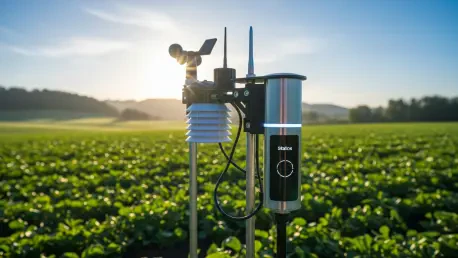
The adoption of a flat-rate connectivity model fundamentally changed how Pessl Instruments approached the manufacturing and distribution of its METOS brand weather stations. Previously, the need to negotiate separate contracts with local carriers in every country of operation created a fragmented ecosystem that hindered rapid deployment and increased overhead costs significantly. By utilizing 1NCE’s localized infrastructure, the company moved toward a plug-and-play model where sensors could be shipped anywhere in the world and activated instantly upon arrival. This transition eliminated the necessity for manual configuration or the selection of regional data plans, which had often led to unexpected expenses when devices crossed digital borders. The fixed-fee structure provided a predictable cost basis for the hardware’s decade-long operational life, ensuring that even small-scale farmers could access sophisticated digital tools without worrying about the recurring costs of data transmission.
Technical resilience is paramount in agriculture, where monitoring equipment often sits in isolated areas with limited cellular signal strength or inconsistent network reliability. The collaboration between these two entities prioritized the use of Narrowband IoT and LTE-M technologies, which are specifically designed to penetrate deep foliage and reach subterranean soil sensors while consuming minimal power. Because these low-power wide-area networks are now widely available across global markets, the integration provided a stable foundation for the continuous transmission of critical data points such as leaf wetness, soil temperature, and localized precipitation. This level of connectivity ensured that the data reached the decision-making platform without the typical latency or outages associated with standard consumer-grade cellular connections. Furthermore, the ability of the 1NCE system to automatically switch between available roaming partners meant that the sensors maintained a high uptime even in geographically complex regions.
Resource Management: Scaling Systems for Future Development
Scaling these operations from local pilot programs to international agricultural enterprises required an infrastructure that can keep pace with the increasing density of sensor networks. Between 2026 and 2028, the expansion of these smart systems is facilitating the creation of vast data lakes that aggregate environmental trends across entire continents, providing researchers with essential insights into climate adaptation strategies. This massive influx of information is made possible by the low-cost nature of the IoT connectivity, which allows for the deployment of hundreds of thousands of individual data points without straining the operational budget of the service providers. As these networks grow, the focus has shifted toward ensuring that the data remains secure and consistent across different jurisdictions. The standardization of the connectivity protocol means that the software stack is updated remotely across the entire fleet of devices, ensuring that the latest analytical algorithms are always available to the end users.
Having successfully bridged the gap between complex cellular logistics and the practical needs of the agricultural sector, the industry moved toward several critical actionable steps. Organizations prioritized the deployment of multi-network fallback systems to ensure that environmental data remained accessible during localized infrastructure failures. Stakeholders also adopted a unified data standard that allowed different sensor types to communicate through the same global IoT gateway, which reduced the cost of system integration for large-scale farming cooperatives. Furthermore, the focus shifted toward the implementation of automated alert systems that utilized the low-latency connection to trigger irrigation valves or frost protection fans without human intervention. These developments proved that the elimination of connectivity barriers was merely the first step in creating a fully autonomous agricultural ecosystem. Ultimately, the industry transitioned to a model where the value was derived from the quality of the insights.