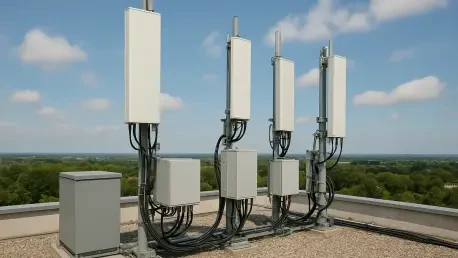

Industrial environments like electrical grids and rail networks are undergoing a massive shift as once-isolated mechanical systems integrate into the digital world through Private 5G networks. This convergence of operational technology and information technology enables unprecedented levels of efficiency, allowing for real-time monitoring of assets that were previously invisible to central management. However, this increased connectivity introduces a significant security paradox: the very digital pathways that provide data also serve as potential entry points for sophisticated cyber adversaries. Protecting these critical assets is further complicated by the reality that they are frequently located in harsh “outside plant” environments. Standard enterprise hardware is simply not built to withstand the extreme temperatures, humidity, and vibration found at remote power substations or along rail tracks. Consequently, there is a growing need for ruggedized security solutions that offer advanced protection without succumbing to the physical stressors of the industrial edge.
Industrial Security and Intelligent Protection
Defense: Virtual Patching and Protocol Visibility
Operational technology environments often rely on legacy industrial controllers that are difficult, if not impossible, to update regularly. These devices frequently run on outdated firmware that contains known vulnerabilities, yet the cost of downtime or the risk of a botched update prevents traditional patching cycles. The PA-50R series addresses this specific challenge through Frontier Virtual Patching, which provides a network-level defense layer that intercepts and blocks known exploits before they reach the vulnerable hardware. By implementing this protective shield, organizations can maintain continuous uptime for essential services while effectively neutralizing the threats targeting unpatched systems. This approach allows security teams to manage risks at the network perimeter rather than performing manual, high-risk updates on hundreds of remote devices. It essentially buys time for long-term maintenance windows while providing immediate defense against the latest common vulnerabilities and exposures.
In addition to virtual patching, the series utilizes Precision AI to gain deep visibility into specialized industrial protocols that are the lifeblood of operational technology. Unlike standard IT traffic, industrial communications involve protocols like Modbus, DNP3, and PROFINET, which require specialized inspection to identify malicious activity. The PA-50R performs granular deep-packet inspection of these protocols to distinguish between a legitimate operational command and a potentially catastrophic unauthorized instruction. This level of intelligence is vital for preventing lateral movement within a network, ensuring that a compromised sensor at one end of a facility cannot be used to sabotage a turbine at the other. By analyzing the context and intent of every industrial packet, the system provides a robust defense against state-sponsored actors and cybercriminals who seek to manipulate physical processes through digital means, thereby ensuring the integrity of the entire infrastructure.
Resilience: Hardware Durability in Extreme Conditions
The physical environment of critical infrastructure poses as much of a threat to network reliability as any hacker. Typical networking equipment is designed for climate-controlled data centers, but the PA-50R is engineered for the rigors of the industrial edge. Its fanless, ruggedized chassis is built to operate in extreme temperature ranges, from the intense heat of desert solar farms to the freezing conditions of mountainous rail lines. This hardware durability ensures that security services remain operational even when environmental conditions are at their worst. Furthermore, the absence of moving parts like fans reduces the risk of mechanical failure caused by dust and debris infiltration, which is a common problem in mining and manufacturing sectors. By deploying hardware that is purpose-built for these conditions, organizations avoid the frequent replacement cycles and maintenance costs associated with using standard equipment in non-standard environments, ensuring the long-term reliability of the security stack.
Beyond simple durability, the series addresses the logistical challenges of remote deployment through an intelligent, compact design that simplifies the physical footprint. Remote cabinets are often cramped, with limited power and space for multiple devices. The PA-50R family solves this by consolidating essential functions into a single hyperconverged platform, which integrates 5G WAN connectivity, Layer 2 and Layer 3 networking, and Power over Ethernet capabilities. This integration eliminates the need for separate modems, routers, and power injectors, significantly reducing the complexity of the installation. With Zero Touch Provisioning, field technicians can deploy these devices quickly without needing advanced cybersecurity expertise on-site. This streamlined architecture not only minimizes the number of potential points of failure but also reduces the overall power consumption of the site, making it an ideal choice for locations that rely on battery backups or limited renewable energy sources.
Streamlining Network Architecture at the Edge
Integration: Converged Infrastructure and Physical Oversight
The integration of physical and digital security is a critical requirement for modern infrastructure protection, and the PA-50R provides this through integrated Digital Input/Output monitoring. This feature allows the firewall to act as a central hub for physical security sensors, such as door contacts, water leak detectors, and temperature probes. If a remote equipment cabinet is tampered with or if environmental sensors detect a flood, the firewall can instantly trigger an alert through the same management console used for cybersecurity. This unified oversight enables security operations centers to correlate physical events with network anomalies, providing a more comprehensive view of the threat landscape. For instance, an unauthorized physical entry combined with a sudden surge in network traffic could indicate a localized attack. By bridging the gap between the physical and digital worlds, organizations can respond more effectively to multifaceted threats that target both the hardware and the software of critical systems.
Managing security at the edge also requires a fundamental shift in how device identity is handled, especially as Private 5G networks become the standard for industrial connectivity. In a traditional environment, IP addresses are the primary identifiers, but these can be easily spoofed or changed in dynamic mobile networks. The PA-50R adopts a more secure model by using identity-based identifiers such as IMSI and IMEI to verify the specific hardware connected to the network. This ensures that security policies are tied to the physical device rather than a temporary network address, preventing unauthorized devices from gaining access even if they manage to connect to the 5G signal. If a SIM card is moved to an unapproved device, the firewall can automatically block the connection based on the IMEI mismatch. This level of granular control is essential for maintaining a Zero Trust architecture in distributed environments where physical access to the network infrastructure cannot always be fully restricted or monitored.
Future Readiness: Quantum Defense and Strategic Implementation
As critical infrastructure assets are designed for decades of service, they must be protected against the emerging threat of quantum computing. The PA-50R series addresses this by incorporating quantum-optimized cryptographic standards, which are designed to withstand the processing power of future quantum systems. Adversaries currently utilize “harvest now, decrypt later” strategies, collecting encrypted data today with the hope of breaking it once quantum technology matures. By utilizing post-quantum key exchange algorithms, the series ensures that the data transmitted today remains secure for the entire lifecycle of the industrial asset. This forward-looking approach to encryption is vital for sectors like national defense and power generation, where the sensitivity of the data does not diminish over time. Integrating these advanced cryptographic standards now provides a necessary layer of protection against the next generation of digital threats, ensuring that long-term investments remain secure.
The successful transition to a modern, ruggedized security framework required a holistic approach that combined physical resilience with advanced AI-driven protection. Organizations that adopted these integrated solutions found that they could significantly reduce operational complexity while enhancing their overall security posture across diverse locations. It was essential to move beyond the siloed management of networking and security, instead favoring platforms that offered unified visibility into both 5G connectivity and industrial protocol health. Moving forward, stakeholders should prioritize the deployment of hardware that supports post-quantum encryption to safeguard against the decryption threats of the next decade. Additionally, auditing remote sites for physical-cyber convergence opportunities, such as integrating environmental sensors into the network security stack, will provide a more resilient foundation for future operations. Taking these steps today ensures that the infrastructure of tomorrow is both connected and fundamentally protected.