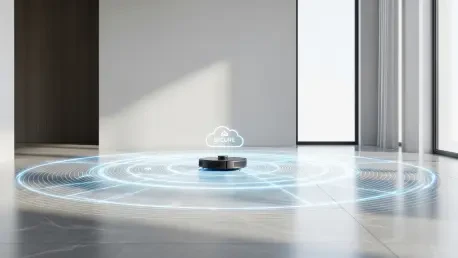

Imagine the unsettling reality of a sophisticated household cleaning device silently mapping the inner layout of a private residence while unknowingly transmitting that sensitive data to an unsecured cloud environment accessible by unauthorized actors. This scenario transitioned from a theoretical nightmare into a practical concern in mid-2026 when a major security vulnerability was discovered within the SharkNinja ecosystem, exposing over a million devices to potential manipulation. As the smart home market matures, the intersection of technological convenience and digital safety has become increasingly fraught with risk, necessitating a closer look at how these machines operate behind the scenes. This specific incident coincided with a broader push by federal regulators to tighten the oversight of foreign-made technology, creating a perfect storm of corporate accountability and government intervention. The fallout from this breach not only impacted consumer confidence but also signaled a fundamental shift in the regulatory landscape.
The Technical Mechanics: Why AWS Vulnerabilities Matter
The heart of the security failure lay in an overly permissive Amazon Web Services (AWS) IoT policy that fundamentally mishandled the distribution and verification of device certificates. Security researchers identified that the authentication process for Shark robot vacuums utilized a single, shared certificate structure that could be exploited to grant a user control over nearly every other device within the same geographical region. By leveraging this configuration error, an attacker could have successfully identified more than 1.5 million unique devices, with nearly half of that population remaining vulnerable to remote commands or unauthorized data access. This flaw illustrates the immense danger of centralized cloud architectures where a single oversight in permission settings can cascade across an entire product line. It serves as a reminder that the convenience of cloud-based management often comes at the cost of creating a single point of failure for millions of users.
Beyond the technical specifics of the AWS policy, the potential for privacy infringement was staggering because these vacuums are equipped with high-resolution cameras and advanced lidar sensors. Malicious actors could have theoretically intercepted live camera feeds, providing an unvetted window into the private lives and daily routines of families across the country. Furthermore, the detailed floor plans generated by the robots during their cleaning cycles represent a significant intelligence asset that could be used for illicit purposes if leaked or stolen. The risk was not limited to visual data alone; the vulnerability also put sensitive digital information, such as home Wi-Fi credentials and account metadata, at risk of harvest. While there is currently no evidence that this flaw was exploited by bad actors before the patch, the mere possibility of such a massive data breach highlights the critical need for more robust encryption and isolation protocols within the Internet of Things ecosystem.
Corporate Action: The Move Toward Cloud-Side Fixes
SharkNinja’s response to the discovery of this vulnerability was marked by a notable delay that raised questions about the standard procedures for disclosure within the consumer electronics industry. The initial alert regarding the AWS policy was sent to the company as early as March, yet it took until July for a public acknowledgment and a confirmed resolution to be finalized. During this several-month interval, millions of devices remained exposed to the flaw, highlighting a significant gap between the speed of modern cybersecurity threats and the slow pace of corporate bureaucracy. This lack of immediate transparency often leaves consumers in the dark, unable to take defensive measures or decide whether to keep the affected devices connected to their home networks. The situation underscores the necessity for companies to implement faster triage processes for security reports, ensuring that critical patches are prioritized over standard product feature updates to protect the end-user effectively.
One of the most fascinating aspects of the resolution process was that it did not require the deployment of new firmware or manual updates by the consumers themselves. Because the core issue was located within the AWS IoT cloud infrastructure rather than the physical hardware, SharkNinja was able to implement a comprehensive fix on the backend. This cloud-side approach allowed the company to silently and efficiently correct the permission structures for the entire fleet of vulnerable vacuums without needing user intervention or complex OTA update cycles. This highlights a double-edged sword in modern technology where the same centralized control that creates a vulnerability also provides the means for a swift and invisible repair. While this capability is undeniably efficient for addressing large-scale security flaws, it also reinforces the extent to which private companies maintain control over the functional and digital state of devices sitting inside the homes of millions of unsuspecting people.
Federal Oversight: How the FCC Is Redefining Standards
Following the public revelation of the Shark vulnerability, the Federal Communications Commission took decisive action by expanding the Covered List to include a wider range of advanced robotic devices produced by foreign entities. This regulatory expansion targets the underlying sensors, semiconductors, and software stacks that power the latest generation of autonomous household cleaners. The government’s move is part of a broader strategy to secure the domestic supply chain against potential data exfiltration and foreign surveillance through seemingly benign consumer products. By categorizing these devices as potential national security risks, the commission is signaling that the era of hands-off regulation for smart home technology is effectively over. This shift places a new burden on manufacturers to prove the integrity of their data handling practices and the origins of their hardware components before they can receive certification for sale in the United States.
These new federal rules create significant hurdles for international manufacturers who have historically dominated the robot vacuum market with competitive pricing and rapid innovation cycles. Upcoming product releases will now face much stricter scrutiny regarding where the devices are assembled and how the data collected by their onboard sensors is processed and stored. This could potentially drive a resurgence in domestic manufacturing or, at the very least, force companies to relocate their data centers to American soil to comply with new federal safety standards. For consumers, this regulatory pivot may lead to higher prices in the short term, but it promises a higher level of baseline security and a more transparent understanding of where their private information is being sent. The focus on hardware-level security and component provenance ensures that the physical foundations of these devices are as secure as the software that controls them, reducing the risk of hidden vulnerabilities.
Strategic Directions: The Path Forward for Smart Home Safety
The evolution of the cleaning industry toward more complex machines, such as those released by Narwal and Roborock, has drastically increased the amount of intimate data collected by home robots. These modern devices now feature self-cleaning docks, advanced obstacle avoidance using artificial intelligence, and dual-camera systems that provide a level of visual detail previously reserved for security systems. As these capabilities became standard, the potential impact of a security failure grew proportionally, making the lessons learned from the Shark incident an essential blueprint for future development. Companies began to recognize that features alone would no longer drive sales if the underlying platform was perceived as a privacy liability by a more tech-savvy public. This realization sparked a competitive race not just for the best cleaning performance, but for the most secure and private user experience, fundamentally altering the marketing and design priorities of major players in the smart home space.
To navigate this newly regulated landscape, manufacturers shifted their focus toward a security by design philosophy that integrated protection at the earliest stages of product development. Engineers moved away from monolithic cloud architectures in favor of edge computing, where sensitive processing and mapping data remained on the local device rather than being transmitted to remote servers. This transition effectively mitigated the risks associated with centralized certificate mismanagement and ensured that even if a cloud breach occurred, individual home data stayed private. Furthermore, industry leaders established new transparency protocols that allowed third-party auditors to verify security claims, providing a level of accountability that was previously absent. By prioritizing these structural changes, the industry took the necessary steps to restore consumer trust and align with the stringent requirements of federal regulators. These actions ensured that the next generation of autonomous devices contributed to a safer and more private home environment.