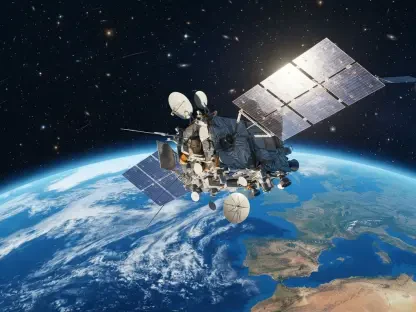

To bypass the high costs of traditional cell towers, SpaceX is proposing a hybrid model that uses small cellular base stations installed at residential and business locations. This strategy represents a significant escalation in the ongoing struggle between orbital satellite services and the established terrestrial telecommunications infrastructure. As of 2026, the global industry is no longer viewing Starlink as a mere experimental project for remote users, but rather as a genuine contender for the mainstream mobile market. This transition has forced companies like AT&T and T-Mobile to defend their long-standing dominance by highlighting the physical and economic barriers that a space-based network must overcome. The shift toward a hybrid connectivity model suggests that the boundary between ground-based and satellite communication is rapidly blurring. This competition is defining the new parameters of global accessibility, where the convenience of a satellite link must be weighed against the massive data throughput that only fiber can provide.
Industry Resistance to Orbital Integration
Major American carriers have initiated a coordinated rhetorical defense against the expansion of satellite-to-cellular services. Leadership at these companies continues to argue that while the engineering behind Starlink is impressive, it does not possess the inherent capacity to serve as a comprehensive replacement for terrestrial networks. The prevailing sentiment among industry incumbents is that satellite technology is fundamentally a specialized tool rather than a mass-market solution. They believe that the hype surrounding direct-to-cell capabilities often ignores the massive architectural differences between a high-capacity urban network and an orbital relay. By framing Starlink as a “gap-filler” for emergencies and remote locations, terrestrial giants are attempting to protect their core revenue streams in densely populated areas. This skepticism is not just about market share; it reflects a deep-seated belief that the technical infrastructure required for modern life must remain grounded.
The debate has also focused on the financial logic of maintaining massive terrestrial assets versus launching thousands of satellites. Financial officers at traditional telecom firms have pointed out that the investment required to maintain a national mobile network is continuous and localized. They suggest that the “direct-to-cell” strategy promoted by SpaceX may be overpromising on what can actually be delivered to the average smartphone user. While satellite connectivity is excellent for low-bandwidth applications like text messaging or emergency calls, these executives remain unconvinced that it can handle the high-concurrency demands of a modern metropolis. The industry leadership is betting that customers will prioritize the consistent performance of a cell tower over the novelty of a satellite connection. This clash of viewpoints underscores the uncertainty surrounding how much of the market a satellite provider can realistically capture without building its own physical towers.
Atmospheric Barriers and Signal Degradation
The laws of physics present a formidable challenge to Starlink’s goal of matching terrestrial network performance. Unlike traditional cell towers that are positioned just a few miles from the consumer, satellites in low Earth orbit must transmit signals through hundreds of miles of the Earth’s atmosphere. This distance introduces several variables that can easily degrade signal quality and increase latency compared to a direct ground connection. Even though SpaceX has optimized its satellite technology, the sheer distance that a packet of data must travel remains a constant hurdle. Furthermore, the signal strength of a satellite-to-phone link is significantly lower than that of a localized terrestrial tower. This disparity means that the network is inherently more fragile, especially when environmental conditions change. Critics argue that these technical constraints are immutable, and no amount of engineering can bypass the basic limitations of transmitting data across such vast vertical distances.
In addition to the distance challenge, satellite signals are highly vulnerable to physical obstructions that are common in everyday life. In dense urban environments, buildings, walls, and even natural features like heavy foliage can block or severely distort the path of a satellite transmission. Terrestrial carriers often point out that everyday barriers, such as car windshields or reinforced concrete structures, are significant obstacles to seamless satellite connectivity. For a mobile user who expects a reliable connection inside their home or while driving through a city, these obstructions represent a major flaw in the satellite-only model. The “obstruction problem” limits the effectiveness of the service to “open-sky” scenarios, such as maritime activities or rural farming. Consequently, the incumbent providers argue that Starlink’s architecture is fundamentally ill-suited for the very locations where the majority of mobile data is consumed, leaving the advantage firmly with terrestrial systems.
Infrastructure Stability in a Data-Heavy Era
As the demand for high-speed data reaches new heights in 2026, AT&T and its peers have doubled down on their commitment to fiber-optic infrastructure. The explosive growth of artificial intelligence applications and ultra-high-definition streaming has made bandwidth the most valuable commodity in the industry. Terrestrial giants argue that only fiber-optic cables have the capacity and stability to handle these massive data loads without congestion. By investing billions into expanding their physical footprints, these companies are positioning themselves as the only reliable choice for high-demand users. They maintain that as consumer expectations for speed continue to rise, the performance gap between a direct fiber-linked tower and an orbital satellite will only become more apparent. The strategy is to create a performance ceiling that satellite technology simply cannot reach, ensuring that terrestrial networks remain the primary backbone of the digital economy while satellites are relegated to providing backup.
The performance of a terrestrial network is further bolstered by its ability to integrate with localized hardware and edge computing. Fiber-optic networks allow for extremely low latency, which is essential for real-time applications like autonomous driving, gaming, and remote surgery. Traditional carriers are leveraging their existing assets to build a dense grid of infrastructure that brings the network closer to the end user. This proximity is something that an orbital constellation, regardless of its size, struggles to replicate. By reinforcing their physical presence, terrestrial companies are creating a barrier to entry for any competitor that relies solely on space-based assets. The belief is that the stability of a physical connection is the gold standard that consumers and businesses will never truly abandon. This focus on physical infrastructure serves as a strategic moat, protecting the telecom giants from the disruptive potential of satellite services by offering a level of reliability that is physically impossible to achieve from space.
Market Disruption and Scaling Potential
Despite the technical and economic criticisms, the rapid scaling of Starlink has already fundamentally altered the global market landscape. By early 2026, the service has secured millions of active subscribers across more than a hundred countries, demonstrating a massive global appetite for alternative connectivity. Starlink has become a primary revenue driver for SpaceX, proving that the satellite model is financially viable even if it remains a specialized service for now. This growth has not only disrupted the rural broadband market but has also begun to influence investor sentiment regarding the long-term dominance of traditional telecom players. The ability of a single company to deploy thousands of satellites and provide near-instant coverage to a global audience is an unprecedented feat of engineering. While the incumbents focus on protecting their dense urban markets, Starlink is capturing the vast and often overlooked rural and international markets that have been underserved by terrestrial companies.
Leadership at SpaceX remains highly confident that their orbital network will eventually offer performance that rivals or even exceeds current cellular standards. This bold assertion has occasionally caused significant ripples in the financial markets, as investors weigh the possibility of a disruptive player eroding the market share of established telecommunications giants. The engineering culture at SpaceX, characterized by rapid iteration and massive scale, presents a different kind of challenge than traditional carriers are used to facing. While the terrestrial giants are burdened by the maintenance of aging physical assets and complex local regulations, the satellite model allows for a more centralized and agile operational strategy. This agility has enabled Starlink to respond to global crises and changing demand much faster than any ground-based competitor. Consequently, the perception of Starlink is shifting from a technical curiosity to a significant strategic threat that requires a sophisticated response from the entire telecom industry.
Navigating the New Connectivity Paradigm
The intense competition between orbital and terrestrial networks finally reached a turning point that changed the nature of global communication. Industry leaders eventually recognized that neither satellite nor fiber could solve the connectivity puzzle in isolation. The market shifted toward a collaborative approach where space-based systems acted as a vital extension of the physical grid, providing a safety net for areas where ground-based infrastructure was compromised or unavailable. This period of rivalry forced companies to innovate faster than they had in previous decades, leading to more resilient networks and lower costs for consumers. Governments had to redesign their regulatory frameworks to accommodate the hybrid reality of the digital age, moving past the rigid definitions of the past. Ultimately, the clash between Starlink and the telecom giants ensured that the digital divide was significantly narrowed, providing a blueprint for the next century of universal and high-speed internet access.
Moving forward, the telecommunications industry shifted its focus toward integrated spectrum management and cross-platform compatibility. Stakeholders began to prioritize the development of hardware that could switch seamlessly between satellite and terrestrial signals, ensuring that users remained connected regardless of their location or environment. This transition required a fundamental change in how network security and data privacy were handled across different types of transmission media. The success of the hybrid model proved that the most effective way to provide global connectivity was to leverage the strengths of both space and ground assets. As digital ecosystems continued to evolve, the distinction between “satellite companies” and “telecom giants” faded into a single, unified connectivity sector. This evolution provided the necessary stability for emerging technologies to thrive, creating a robust foundation for the global digital economy that flourished in the years that followed the great orbital expansion.