
The rapid proliferation of autonomous systems in modern logistics and manufacturing environments has pushed legacy network infrastructures to their breaking point, necessitating a total redesign of enterprise connectivity. By integrating SIM-based identity and micro-segmentation, Celona Orion provides a more robust security layer for operational technology compared to traditional password-protected wireless access points. This platform represents a significant departure from the fragmented architectures that have plagued industrial sites for years, instead offering a unified fabric that treats wireless as a single, coherent utility. As physical AI systems begin to dominate the floor, the margin for latency or packet loss has effectively vanished, making the deterministic nature of private 5G a baseline requirement rather than a luxury. By merging this high-reliability cellular backbone with the massive throughput of Wi-Fi 7, Orion creates an environment where data flows seamlessly between humans and machines.
Converged Fabrics: Bridging the Gap Between IT and OT
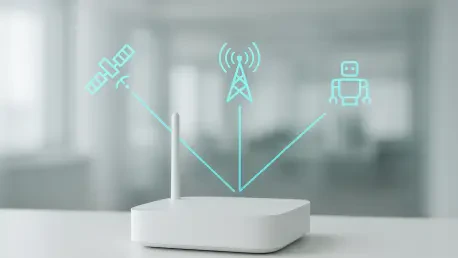
Historically, organizations were forced to navigate the complexities of managing Wi-Fi and private cellular networks as entirely separate entities, which often led to significant operational friction and inconsistent performance metrics. This siloed approach is no longer viable in an era where autonomous mobile robots and high-precision sensors must operate within the same physical space without interference. Celona Orion addresses this challenge by implementing a four-tiered connectivity model that assigns specific, optimized roles to different wireless technologies within a single management plane. While private 5G serves as the primary backbone for mission-critical automation where predictability is paramount, Wi-Fi 7 is utilized to handle high-capacity data traffic for general IT applications. This strategic division ensures that a sudden surge in corporate video traffic does not disrupt the low-latency signals required for robotic safety systems or remote-controlled machinery.
Furthermore, the integration of public cellular and satellite options, such as Starlink, provides essential fallback capabilities and extended reach for remote or geographically isolated industrial sites. This multi-access edge computing approach allows a campus network to expand beyond the limitations of physical cabling or local radio interference, ensuring that assets remain connected even in the most challenging terrains. The orchestration layer intelligently manages these various links, automatically rerouting traffic based on real-time signal quality and application priority. Consequently, a facility located in a rural area can leverage satellite backhaul for non-critical telemetry while maintaining local 5G for its automated assembly line. This convergence simplifies the life cycle of network management, allowing administrators to set global policies that apply across all radio types, thereby reducing the risk of configuration errors and ensuring a uniform security posture throughout the enterprise.
AI Orchestration: The Role of the Celona Brain
Central to the efficiency of the Orion ecosystem is Orchestrator AI, an agentic operating system driven by the Celona Brain that transforms traditional network management into an automated, self-healing process. This custom AI model was developed using extensive deployment data and engineering expertise to handle complex operations that would typically require specialized human intervention and hours of troubleshooting. By providing an intelligent hub, the system enables enterprises to deploy autonomous AI agents capable of monitoring network health and adjusting radio resources in real-time. These agents can detect subtle patterns in interference or congestion before they impact operations, proactively shifting workloads to more stable frequency bands or adjusting power levels on access points. This level of automation significantly reduces the administrative burden on IT departments, allowing them to focus on high-level strategy rather than the constant struggle of manual signal optimization.
To bridge the gap between network infrastructure and the hardware it supports, Celona introduced AerConnect, an open-source wireless agent designed for manufacturers of robotics and sophisticated AI devices. This tool enables hardware developers to integrate complex multi-network connectivity directly into their products without needing deep internal expertise in cellular or Wi-Fi protocols. AerConnect allows a robotic platform to intelligently switch between 5G, Wi-Fi, or satellite connections based on the immediate needs of its running applications, ensuring that the device always utilizes the most efficient data path available. For instance, a drone might use Wi-Fi for bulk firmware updates while docked but switch to private 5G for low-latency navigation during flight. This creates a more agile ecosystem where devices are not tethered to a single technology, but are instead “network aware,” maximizing uptime and performance across diverse and often unpredictable operating environments.
Strategic Implementation: Security and Future Readiness
The successful integration of the Orion platform across various sectors demonstrated that the complexities of multi-network management could be successfully abstracted. By moving away from legacy password-based authentication, which was notoriously easy to compromise in large-scale industrial settings, the platform provided a unique, cryptographically secure credential for every piece of hardware via SIM-based identity. This zero-trust architecture maintained the integrity of high-stakes physical AI systems that interacted directly with the real world. Furthermore, the use of granular micro-segmentation ensured that a breach on a standard office laptop could not propagate to the robotic assembly line. This paradigm shift was complemented by a disruptive subscription model that consolidated the costs of private 5G and Wi-Fi management into a single plan. By including Wi-Fi 7 access points at no additional cost, the strategy effectively lowered the total cost of ownership for enterprises.
Going forward, decision-makers should prioritize a comprehensive evaluation of their current radio environments to identify areas where connectivity gaps might hinder automation projects. It is essential to conduct thorough site audits that account for the diverse requirements of both high-bandwidth IT applications and low-latency OT systems. Organizations are encouraged to leverage the open-source AerConnect agent to standardize how their mobile assets interact with the network, ensuring long-term compatibility and ease of device onboarding. Furthermore, IT leaders must refine their security protocols by shifting toward SIM-based authentication to future-proof their operations against increasingly sophisticated cyber threats. By embracing a converged subscription model, companies can bypass the limitations of traditional hardware procurement cycles and maintain a state-of-the-art wireless environment that evolves alongside software-defined standards, ultimately securing a more resilient and scalable digital future.