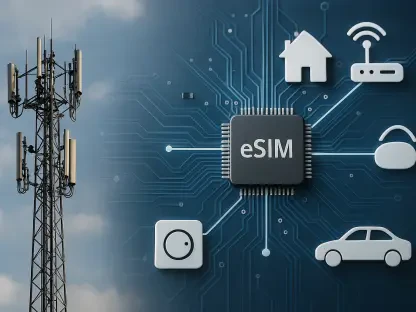

The persistent gap between urban high-speed connectivity and rural digital isolation remains one of the most significant hurdles for the global telecommunications industry as it seeks to universalize 5G access. Addressing this disparity requires more than just terrestrial expansion; it demands a radical reimagining of how orbital infrastructure interacts with consumer hardware already in the pockets of billions. UNIVITY, a prominent global operator in space-based connectivity, recently reached a pivotal milestone by securing €27 million in a Series A funding round to propel its vision of a seamless non-terrestrial network. This substantial investment was led by prominent backers including Blast, Expansion, and the Deeptech 2030 fund, which is managed by Bpifrance as part of the France 2030 initiative. With the addition of capital from two specialized family offices, the company is now positioned to complete its ambitious “uniShape” VLEO 5G demonstration program while expanding its workforce to prepare for a full-scale commercial rollout by 2028.
Technical Advantages: Very Low Earth Orbit
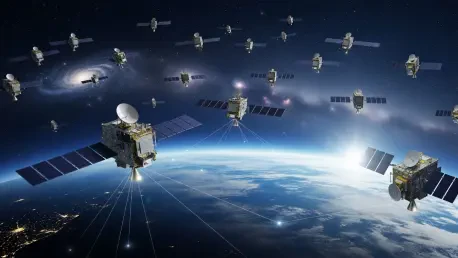
The technological core of this initiative centers on the utilization of Very Low Earth Orbit (VLEO), a region of space that offers distinct physical advantages over traditional geostationary or even standard low-orbit environments. By positioning satellites at much lower altitudes, the system drastically reduces signal travel time, achieving the low-latency performance essential for real-time 5G applications such as autonomous driving and interactive cloud computing. Furthermore, UNIVITY leverages existing 5G spectrums, which allows for direct communication with standard smartphones and connected vehicles without requiring expensive modifications or specialized hardware. This approach effectively removes the hardware barriers that have historically limited satellite telephony to niche markets. By integrating these non-terrestrial network services directly into the current mobile ecosystem, the company ensures that high-bandwidth connectivity can be extended to the most remote regions without the need for additional terrestrial towers.
Beyond performance metrics, the move toward VLEO addresses the growing concern regarding orbital congestion and the long-term sustainability of space activities. Satellites operating at these lower altitudes are subject to higher atmospheric drag, which serves as a natural disposal mechanism; once a satellite reaches the end of its operational life, it disintegrates rapidly in the atmosphere rather than remaining as hazardous debris. This environmental consideration is becoming increasingly critical as more constellations enter the atmosphere, making VLEO a responsible choice for future-proofing global infrastructure. Moreover, the use of existing telecom spectrums mitigates the regulatory hurdles often associated with frequency allocation in an already crowded electromagnetic landscape. By avoiding the need for proprietary or congested frequency bands, the network can be deployed more efficiently, providing mobile operators with a clear path to offer enhanced services. This synergy between terrestrial and space-based systems marks a significant shift toward a unified global communications web.
Strategic Positioning: Market Sovereignty
Strategically, the company distinguishes itself by adopting a neutral, shared space infrastructure model, which provides a stark alternative to the vertically integrated providers currently dominating the satellite market. Rather than competing directly with terrestrial carriers, this business model empowers telecom operators to maintain control over their branding and service delivery while extending their geographic reach. This cooperative stance positions space-based connectivity as a natural extension of the terrestrial 5G grid rather than a disruptive competitor. As the market for non-terrestrial services is projected to reach tens of billions of euros by the end of the decade, providing a platform that respects the existing mobile operator ecosystem is a key differentiator. This model also allows for a more rapid adoption rate among global carriers who are eager to eliminate coverage “dead zones” without building out costly land-based infrastructure in difficult or sparsely populated terrain.
The geopolitical implications of this project are equally significant, particularly concerning European telecommunications sovereignty and regional independence in critical infrastructure. By developing a homegrown VLEO constellation, the project ensures that Europe remains a competitive force in the global race for space-based internet dominance. This initiative is closely aligned with the France 2030 objectives, emphasizing the need for resilient and secure communication channels that are not entirely dependent on foreign providers. The next major milestone involves the uniShape program, conducted in partnership with CNES, which focuses on validating high-throughput, direct-to-smartphone connectivity through the launch of two demonstration satellites. Success in this phase is expected to serve as the blueprint for the subsequent uniSky commercial constellation. As the project moves into its industrialization phase, the focus shifts toward aggressive hiring in the engineering and business development sectors to build a sustainable and high-speed network.
Implementation Path: Scalability and Future Infrastructure
The transition from conceptual demonstration to industrial-scale implementation represented the primary objective for the newly acquired capital reserves. Stakeholders recognized that establishing a resilient global internet architecture required not only cutting-edge satellite design but also a robust supply chain capable of producing constellations at scale. By focusing on the 2026 to 2028 development window, the organization prioritized the creation of a manufacturing framework that supported rapid deployment cycles. This proactive approach allowed the company to bridge the digital divide in rural areas while maintaining the high-throughput standards expected by modern consumers. The integration of 5G capabilities within a VLEO framework proved to be a viable solution for sectors requiring ubiquitous coverage, including maritime logistics and emergency response services. These efforts solidified the role of non-terrestrial networks as a fundamental pillar of the global digital economy, ensuring that connectivity remained uninterrupted regardless of geographic location.
To ensure long-term success, the industry must now focus on harmonizing international standards for non-terrestrial networks to facilitate global roaming and interoperability. Telecom operators should consider integrating satellite-based extensions into their core service offerings to enhance network resilience against terrestrial disruptions. Furthermore, investment in VLEO technology should be coupled with advancements in automated satellite management and AI-driven traffic optimization to handle the increasing data loads. Moving forward, the emphasis should remain on sustainable space practices, such as the implementation of active debris removal protocols and the use of biodegradable materials in satellite construction. By prioritizing these actionable steps, the telecommunications sector can create a truly inclusive and reliable communication grid that serves the needs of every individual, regardless of their proximity to urban centers. The success of the uniShape program serves as a critical indicator that the convergence of space and terrestrial 5G is no longer a distant possibility but a present reality.