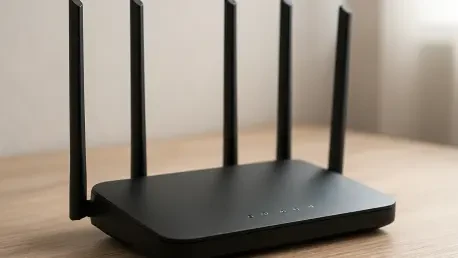

A fleeting flicker of the lights is all it takes to sever the digital lifeline that underpins the modern household, plunging a home from a state of seamless connectivity into a frustrating cycle of rebooting devices and dropped connections. In an age where everything from professional obligations to home security relies on a persistent internet signal, the Wi-Fi router stands as the central, yet incredibly fragile, hub of our daily lives. This entire intricate ecosystem of smart speakers, thermostats, and remote work sessions balances precariously on a single point of failure: its complete and utter dependence on an uninterrupted supply of power from the wall outlet. This glaring vulnerability, often overlooked until it’s too late, can be comprehensively addressed with a surprisingly simple and affordable piece of hardware that ensures your digital world remains online, even when the lights go out.
The Unseen Threat to Your Connected Life
The modern home’s reliance on a stable internet connection has transformed the Wi-Fi router from a simple convenience into a piece of critical infrastructure, yet its Achilles’ heel remains its power cord. A momentary power outage, a common occurrence during adverse weather or routine grid maintenance, immediately severs the home’s link to the outside world, creating a cascade of disruptions. For the rapidly growing remote workforce, this translates directly into lost productivity, interrupted video conferences, and the professional headache of explaining a sudden disappearance from a crucial meeting. For the smart home, the consequences are just as severe; security cameras go blind, automated routines for lighting and climate control fail, and the very intelligence of the home is disabled. This single point of failure underscores a fundamental weakness in most home network setups. The definitive and surprisingly elegant solution is a mini DC uninterruptible power source (UPS), a device that acts as a dedicated battery backup specifically engineered for low-power electronics like routers and modems.
The primary advantage of a mini DC UPS is its ability to function as a seamless and autonomous guardian of your internet connection, operating on a “set it and forget it” principle. Unlike a standard portable power bank that requires manual intervention during an outage, this specialized device is installed inline between your router’s power adapter and the wall outlet. During normal operation, it allows AC power to pass through to the router while simultaneously keeping its own internal lithium-ion battery fully charged and ready. The instant it detects a loss of mains electricity, its internal circuitry makes an instantaneous switch to its DC battery output. This transition is engineered to be so rapid and flawless that the connected router experiences no interruption in power whatsoever. It continues to operate without a single dropped packet of data, ensuring that your Wi–Fi network, and all the devices dependent on it, remain fully operational. This zero-downtime capability effectively makes short-term power flickers and outages a complete non-event for your digital life.
A Guardian for Your Digital Ecosystem
Beyond its core function of providing uninterrupted power, a mini DC UPS is designed with a high degree of versatility and user-friendliness to accommodate a wide range of home electronics. Most units are equipped with multiple DC output ports that offer a selection of common voltages, typically including 5V, 9V, and 12V. This flexibility allows a single UPS to be compatible with various devices, from Wi-Fi routers and modems to optical network terminals and security cameras. It is crucial for users to verify the specific voltage and amperage requirements of their equipment to ensure a proper match. Furthermore, many models include a standard 5V USB-A port, adding the convenient capability to charge a smartphone or another small device during an extended outage. To help manage power consumption, these units often feature a series of integrated LED lights that provide a clear, at-a-glance indication of the internal battery’s remaining charge level, enabling users to prioritize which devices stay powered on when every minute of runtime counts.
The utility of a mini DC UPS extends well beyond just keeping the Wi-Fi signal alive; it serves as a robust power solution for a host of other critical low-voltage devices that form the backbone of a connected and secure home. By connecting both a modem and a router to a capable UPS, the entire internet delivery chain is fortified against power loss. This is especially vital for home security systems, where continuous operation is paramount. A power outage, whether accidental or intentional, can create a significant security vulnerability by disabling surveillance cameras. A dedicated mini DC UPS ensures that these cameras continue to record and transmit footage, safeguarding the property when it is potentially most at risk. Moreover, these devices offer a valuable secondary benefit: surge protection. In addition to preventing shutdowns from power loss, the UPS acts as a buffer that can absorb voltage spikes, protecting the sensitive and often expensive electronics plugged into it from potentially catastrophic damage. This dual-purpose protection makes it an exceptionally practical investment.
The Value of Uninterrupted Connectivity
The decision to integrate this small, inexpensive accessory into a home network setup ultimately delivered a level of reliability and peace of mind that was disproportionate to its modest cost. It effectively eliminated a significant and previously accepted vulnerability in the modern smart home, transforming the chaos of a power flicker into an unnoticeable event. This simple piece of hardware proved to be more than just a backup battery; it became an essential component that fortified the digital foundation upon which work, communication, and home automation were built. For remote workers, it prevented the stress of dropped calls and lost productivity, and for the household, it ensured that critical systems like security cameras remained vigilant. The device provided a dual benefit, serving as a silent guardian that not only shielded against power loss but also protected valuable electronics from damaging power surges. This strategic addition brought a newfound stability to the home’s digital infrastructure, making continuous connectivity an accessible and reliable reality.