
The global shift toward fifth-generation wireless technology has fundamentally rewritten the rules of telecommunications, moving far beyond the simple pursuit of faster mobile downloads. This transition represents a structural overhaul of the digital nervous system that connects our modern world, replacing aging, hardware-dependent systems with a highly agile, software-defined environment. As of 2026, the proliferation of this technology has enabled unprecedented levels of connectivity, yet this very openness introduces a complex array of vulnerabilities that did not exist in the isolated, physical circuits of the past. The stakes have shifted from ensuring basic signal clarity to safeguarding the entire operational integrity of smart cities, automated logistics, and real-time medical interventions that now depend entirely on this invisible fabric.
Structural Foundations of the 5G Network
Virtualization and Cloud-Native Infrastructure
The migration to a Service-Based Architecture (SBA) marks a departure from the legacy model where specific hardware boxes performed dedicated network tasks. In the current 5G landscape, Network Functions Virtualization (NFV) allows operators to run critical operations as software instances on standardized commercial servers, which significantly lowers overhead but complicates the security perimeter. Because these functions are essentially code running in a virtualized environment, they are susceptible to the same exploits that plague the broader cloud computing industry, such as container escapes and insecure Application Programming Interfaces (APIs). A vulnerability in a single management API could theoretically allow an attacker to gain unauthorized access to multiple network functions simultaneously, bypassing the physical barriers that once protected telecommunications equipment.
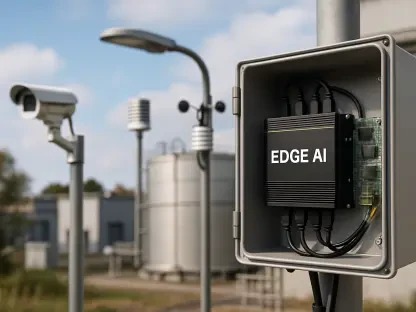
Building on the flexibility of virtualization, Multi-access Edge Computing (MEC) has become indispensable for achieving the ultra-low latency required for modern applications like augmented reality and industrial robotics. By pushing processing power away from a centralized data center and into thousands of distributed edge nodes located closer to the end-user, 5G reduces the distance data must travel. However, this decentralized approach creates a massive physical and digital expansion of the attack surface, as each edge node represents a potential entry point for hackers. Securing these numerous, often remote, locations requires a sophisticated orchestration of automated security policies, as manual oversight of such a vast and fragmented infrastructure is no longer feasible for network administrators.
Network Slicing and Logical Segmentation
Network slicing stands as one of the most transformative capabilities of 5G, enabling a single physical infrastructure to be partitioned into multiple independent virtual networks tailored to specific performance requirements. For example, a dedicated slice can be optimized for the high-reliability needs of autonomous vehicle fleets while another remains optimized for the massive bandwidth demands of 8K video streaming. This logical isolation is intended to keep traffic from different sectors completely separate; yet, the underlying shared hardware remains a point of concern. If the isolation protocols between these slices are not perfectly implemented, a security breach in a low-priority slice—such as one hosting public sensors—could potentially leak sensitive data into a high-security slice used by emergency services or financial institutions.
The technical challenge of maintaining these virtual boundaries is compounded by the dynamic nature of slice management, where slices are created, modified, and decommissioned on demand. This fluidity requires a robust implementation of “inter-slice” security to prevent lateral movement, where an intruder moves through the network’s logical layers after an initial compromise. Effective segmentation in 2026 involves not just software rules, but continuous cryptographic verification to ensure that data packets from one slice never cross into the memory space of another. Without these rigorous checks, the very efficiency provided by slicing could become a liability, allowing a single point of failure to cascade across what were supposed to be isolated and secure digital environments.
Technical Pillars and Enhanced Protections
Advanced Encryption and Subscriber Privacy
One of the most significant upgrades in the 5G security framework is the shift toward 256-bit cryptographic algorithms, which provide a exponentially higher level of protection than the 128-bit standards used in 4G LTE. This transition was necessitated by the growing sophistication of cyber-criminal organizations and the looming threat posed by advances in specialized computing hardware that could theoretically crack older encryption methods. By doubling the bit length, 5G ensures that data remains unreadable to unauthorized parties even if it is intercepted during transmission. This robust encryption applies not only to the data users send and receive but also to the signaling information that coordinates the connection between the device and the network, providing a comprehensive shield against eavesdropping.
Beyond data encryption, 5G addresses a long-standing privacy flaw by introducing the Subscriber Concealed Identifier (SUCI) to mask the identity of the user. In previous generations, a device’s permanent identifier was often transmitted in the clear during the initial handshake with a cell tower, allowing malicious actors to use “IMSI catchers” or fake base stations to track a person’s movements and habits. With 5G, the device encrypts its identity before it even attempts to connect, ensuring that only the authorized core network can decrypt and verify the user. This advancement effectively neutralizes the threat of unauthorized location tracking and identity theft at the radio level, representing a massive victory for individual privacy in an era where mobile devices are constant companions.
Integrity Protection and Unified Authentication
Integrity protection has been expanded in the 5G era to cover the user plane, which is the actual path that carrying a person’s web traffic, video calls, and application data. While previous standards focused mostly on protecting the control plane—the commands that tell the network how to behave—5G allows for the verification of every packet sent by the user to ensure it has not been altered in transit. This prevents “man-in-the-middle” attacks where a hacker might intercept a message and subtly change its contents, such as modifying the destination of a financial transfer or injecting malicious code into a software update. By verifying the integrity of the data stream, 5G provides a level of trust that is essential for the high-stakes industrial and commercial transactions occurring on the network today.
The authentication process itself has also been reimagined through the 5G Authentication and Key Agreement (5G AKA) framework, which offers a more flexible and unified approach to identity management. Unlike older systems that were strictly tied to physical SIM cards, the modern 5G framework supports a variety of authentication methods, including digital certificates and pre-shared keys. This flexibility is critical for the massive ecosystem of Internet of Things (IoT) devices, many of which are too small or too specialized to utilize a traditional SIM card. By standardizing how these diverse devices prove their identity to the network, 5G creates a more cohesive security environment where every connected object, from a smart streetlight to a wearable heart monitor, can be properly vetted before gaining access.
Modern Threats and Operational Risks
IoT Proliferation and Supply Chain Vulnerabilities
The massive connectivity promised by 5G allows for up to a million devices to be connected within a single square kilometer, but this density introduces a terrifying scale of vulnerability due to the inherent weaknesses of many IoT products. Many of these devices, such as smart appliances or environmental sensors, are built with cost-efficiency in mind rather than security, often shipping with hardcoded passwords or outdated firmware that is never patched. When these millions of insecure endpoints are connected to a high-speed 5G network, they can be easily compromised and organized into massive botnets. These botnets can then be used to launch Distributed Denial of Service (DDoS) attacks with enough volume to overwhelm even the most robust national infrastructures or corporate data centers.
Furthermore, the software-centric nature of 5G has made the global supply chain a primary theater for cyber warfare and corporate espionage. Because the network functions are defined by millions of lines of code provided by various international vendors, there is a constant risk that malicious backdoors or vulnerabilities could be hidden within a software update. As of 2026, the complexity of these software stacks makes it nearly impossible to manually audit every component, leading to a reliance on automated scanning and rigorous vendor vetting processes. A single compromised supplier in the 5G ecosystem could potentially grant an adversary “god-mode” access to a nation’s communication traffic, making supply chain integrity a central concern for both government regulators and private telecommunications operators.
Signaling Storms and Legacy Downgrade Attacks
The sheer volume of traffic and the high frequency of device interactions in 5G networks have given rise to a phenomenon known as signaling storms, which can cripple a network from the inside. These storms occur when a massive number of devices attempt to authenticate or reconnect simultaneously, often triggered by a minor network glitch or a coordinated attack by a botnet. The resulting flood of signaling requests can overwhelm the core network’s processing capacity, leading to a total loss of service for legitimate users even if the actual data pipes are not full. Managing this risk requires advanced traffic-shaping techniques and rate-limiting protocols that can distinguish between a legitimate surge in activity and a malicious attempt to saturate the network’s signaling plane.
An additional, often overlooked risk is the “weakest link” problem created by the necessary backward compatibility with 4G LTE and even 3G systems. Because 5G networks are not yet entirely standalone in all regions, devices are often designed to fall back to older protocols if a 5G signal is lost or jammed. Attackers can exploit this by using radio-frequency jamming to disrupt the 5G signal, forcing a targeted device to “downgrade” its connection to a much less secure 4G or 3G link. Once the device is operating on an older protocol, the attacker can then utilize well-documented vulnerabilities that 5G was specifically designed to fix. This tactical downgrade highlights the fact that 5G security is only as strong as the network’s ability to maintain a high-quality, uninterrupted connection.
Strategic Approaches to Network Defense
Zero Trust and Micro-segmentation
As the traditional network perimeter has effectively vanished in the wake of cloud-native 5G deployments, the industry has widely adopted a “Zero Trust” architecture to maintain security. This philosophy operates on the assumption that every user, device, and network function is a potential threat, regardless of whether it is located inside or outside the physical network infrastructure. Under Zero Trust, no connection is automatically granted access; instead, every single request for data or resources must be continuously authenticated, authorized, and validated based on real-time context. This includes checking the health of the requesting device, the geographic location of the user, and the sensitivity of the data being accessed, ensuring that trust is never assumed and must be earned at every step.
Complementing this approach is the use of micro-segmentation, which takes the concept of network slicing even further by creating granular security zones within the virtualized environment. By isolating individual applications or specific data workloads from one another, micro-segmentation ensures that if an attacker does manage to compromise one part of the network, they are trapped within a very small, restricted area. This prevents the “lateral movement” that is typical of sophisticated cyberattacks, where an intruder jumps from one server to another to find valuable information. In 2026, these segments are often managed by automated security policies that can instantly shut down a specific zone at the first sign of suspicious behavior, effectively quarantining the threat before it can spread to the rest of the ecosystem.
AI-Driven Analytics and Quantum Readiness
The velocity and volume of data flowing through 5G networks have reached a point where human analysts can no longer monitor for threats in real-time without the assistance of Artificial Intelligence (AI). Modern network operators now deploy advanced machine learning algorithms that constantly scan traffic patterns for anomalies that might indicate a breach or a developing DDoS attack. These AI systems are capable of identifying “low and slow” attacks—where an intruder tries to remain undetected by moving very gradually—by recognizing subtle deviations from established baseline behaviors. This proactive defense allows the network to respond to threats in milliseconds, automatically reconfiguring firewalls or rerouting traffic to mitigate an attack before it can cause significant damage or downtime.
Simultaneously, the telecommunications industry is actively preparing for the future threat of quantum computing, which could potentially break many of the encryption standards currently in use. Research initiatives are already piloting post-quantum cryptographic (PQC) standards within 5G core networks to ensure that long-term data remains secure. This “quantum-safe” approach involves implementing mathematical algorithms that are thought to be resistant to the immense processing power of future quantum computers. By beginning this transition now, operators are ensuring that sensitive information transmitted today cannot be harvested by attackers and decrypted years from later when quantum technology becomes more accessible. This forward-thinking strategy is a critical component of maintaining the long-term viability and trustworthiness of the 5G infrastructure.
Implementation Hurdles and Future Trajectories
Financial Costs and the Professional Skills Gap
The massive capital expenditure required to deploy and secure a 5G network remains a significant hurdle for operators worldwide, as the sheer density of “small cell” transmitters needed for high-frequency bands is staggering. Unlike 4G, which could cover large areas with a few massive towers, 5G requires thousands of smaller access points installed on streetlights, buildings, and utility poles to maintain consistent high-speed coverage. Each of these points must be physically secured and digitally integrated into the centralized security framework, adding layers of cost for hardware, installation, and ongoing maintenance. For many providers, balancing these immense infrastructure costs with the need for high-level security features is a constant financial challenge that dictates the speed of 5G rollouts in less densely populated areas.
Compounding the financial burden is a severe global shortage of cybersecurity professionals who possess the specialized knowledge required to manage 5G environments. A modern network engineer must now be an expert in traditional telecommunications, cloud-native computing, and sophisticated cybersecurity defense all at once. This skills gap has created a highly competitive job market, making it difficult for many organizations to recruit and retain the talent necessary to defend their networks against state-sponsored actors and professional cybercrime syndicates. To address this, many operators are turning to heavy automation and AI-managed security tools to compensate for the lack of human experts, but the need for high-level strategic oversight remains a critical bottleneck for the industry as it strives to keep pace with evolving threats.
Emergence of Self-Healing Networks and Governance
The future of 5G security is increasingly defined by the rise of “Self-Healing Networks,” where AI and automation take center stage in both performance optimization and threat mitigation. These systems are being designed to autonomously detect hardware failures or security breaches and then immediately initiate corrective actions, such as rerouting traffic or spinning up new virtual instances of compromised network functions. In 2026, the goal is to move toward a network that requires minimal human intervention for day-to-day security operations, allowing the system to defend itself against lightning-fast automated attacks. This transition not only increases the resilience of critical infrastructure but also allows human experts to focus on the high-level architectural improvements and complex forensic analysis that machines cannot yet perform.
Regulatory governance is also expected to become more stringent as 5G becomes more deeply integrated into the vital functions of society. Governments are increasingly viewing 5G security as a matter of national sovereignty, leading to new mandates for transparency in the software supply chain and stricter requirements for the geographic location of data processing. We are likely to see the implementation of “security certifications” for 5G equipment and software, ensuring that all components meet a baseline of rigorous safety standards before they can be deployed in public networks. Ultimately, the successful evolution of 5G will depend on a combination of these technical advancements and a global commitment to establishing clear, enforceable rules for how these powerful networks are built, managed, and protected for the benefit of all users.
The implementation of 5G has moved from the early stages of deployment into a mature phase where its security architecture is being tested daily by sophisticated and diverse threats. Moving forward, the most effective strategy for enterprises and network operators involves a shift from reactive defense to a proactive, identity-centric model where the concept of a “trusted” network is replaced by continuous verification. Organizations should prioritize the integration of AI-driven monitoring and Zero Trust frameworks while simultaneously investing in the upskilling of their technical teams to handle the complexities of virtualized environments. As the network continues to evolve toward even greater autonomy and integration with critical systems, the focus must remain on building a resilient foundation that can adapt to new vulnerabilities as quickly as they emerge. The path to a truly secure 5G future was paved by the transition to software-defined logic, and it will be maintained through the constant, automated vigilance of the systems themselves.