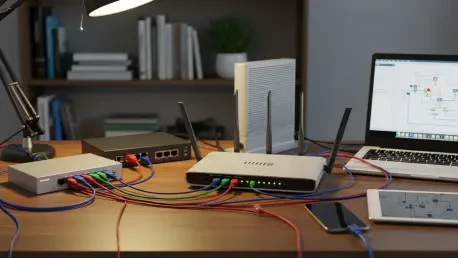

The rapid proliferation of interconnected devices within the modern household has transformed the local area network from a simple utility into a complex infrastructure that requires precise management to maintain peak performance. Most consumers rely on the default settings provided by their internet service providers, which typically employ a dynamic approach to assigning internal identity tags to every phone, tablet, and smart appliance. While this automated system is designed for convenience, it often leads to unpredictable behavior where devices lose track of one another after a simple power cycle or a routine firmware update. When a media server or a networked storage drive suddenly changes its internal location, the resulting downtime can frustrate even the most patient users who expect their digital ecosystem to remain constant. Understanding how to anchor these specific devices to a permanent spot is not merely a technical luxury but a fundamental step toward achieving a truly resilient and low-maintenance home environment in 2026.
The Foundation of Reliable Local Communication
Addressing Strategy: Solving the Connectivity Paradox
One of the primary advantages of utilizing specific address allocations is the elimination of common resolution errors that plague sophisticated home automation setups. Many smart home controllers and specialized software applications are configured to look for hardware at a specific numerical destination, and any deviation from this path results in a total loss of functionality. By establishing a fixed point of contact through the router’s administrative interface, a user ensures that critical infrastructure, such as security cameras or centralized lighting hubs, always remains reachable. This consistency allows for more aggressive power-saving modes on mobile devices, as they no longer need to broadcast discovery packets across the entire network just to find a local service that should have been stationary. Furthermore, it simplifies the process of port forwarding for external access, as the underlying rules never need to be updated to account for a shifting internal landscape that would otherwise break remote connections.
System Optimization: Visualizing the Digital Landscape
Moving beyond basic connectivity, the use of reserved identifiers provides a layer of organizational clarity that is often missing from cluttered, high-density wireless environments. When every piece of permanent hardware is assigned a logical and sequential spot within the available pool, troubleshooting becomes a significantly more efficient process for the network administrator. Instead of scanning a list of cryptic hexadecimal strings to identify which device is consuming excessive bandwidth or experiencing packet loss, one can immediately recognize the culprit based on its pre-assigned slot. This methodical approach to management helps in identifying unauthorized intruders more quickly, as any unfamiliar address will stand out against the backdrop of a well-organized and documented internal map. The transition from a chaotic system to a structured one allows for better traffic shaping, ensuring that high-priority activities receive the dedicated resources they require without interference from low-priority background updates.
Technical Strategies for Scalable Environments
Workflow Integration: Balancing Flexibility and Control
While the concept of fixed addressing is often associated with the manual entry of data on individual pieces of hardware, the centralized reservation method offers a much more elegant and scalable solution. Unlike traditional static assignments, which require a user to log into every single appliance and modify its internal settings, reservations are managed entirely through the primary gateway. This centralized control ensures that there are never any address conflicts caused by two different devices claiming the same identity, a common pitfall in environments where manual and automatic systems overlap. If a router needs to be replaced or the entire network requires a reconfiguration, the administrator can simply migrate the list of reserved associations rather than visiting every room in the house to reset hardware. This approach maintains the ease of the Dynamic Host Configuration Protocol while providing the reliability usually reserved for enterprise-grade environments where consistent uptime is the standard for success.
Network Evolution: Establishing a Permanent Digital Backbone
In summary, the transition toward a more intentional method of address management proved to be the most effective way to stabilize the increasingly complex digital households of the current era. By prioritizing the stability of core infrastructure over the convenience of purely automated assignments, users successfully minimized the frequency of unexpected disconnects and simplified their long-term maintenance routines. The implementation of these strategic reservations allowed for a more seamless integration of diverse hardware brands and communication protocols that previously struggled to coexist. Technicians and hobbyists alike recognized that the small initial time investment required to organize their local traffic yielded significant dividends in terms of overall system uptime and security. Ultimately, moving toward a structured internal environment provided the necessary foundation for the next generation of high-bandwidth applications and automated services. This shift in management strategy finally moved the home network away from being a source of constant frustration.