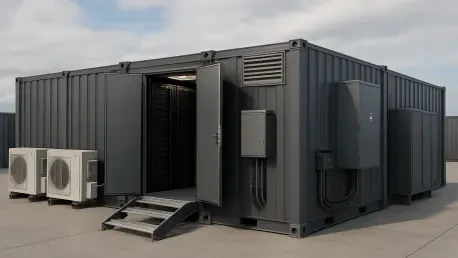

The global digital economy now demands an unprecedented level of agility that traditional brick-and-mortar data center construction simply cannot provide in a market defined by rapid AI expansion and shifting compute requirements. As enterprises and hyperscale providers seek to maintain their competitive edge, the limitations of fixed-capacity facilities have become increasingly apparent, leading to a critical need for infrastructure that evolves alongside technological advancements. Datalec Precision Installations has responded to this challenge by unveiling its next-generation Data Centre Modularization Solution, a strategic framework designed to redefine how scalable digital capacity is delivered globally. By moving away from rigid, long-term construction projects, this modular approach utilizes prefabricated, expandable units that act as architectural building blocks. These units allow organizations to initiate operations with a smaller initial footprint while retaining the ability to scale capacity incrementally as data demands increase, effectively eliminating the risk of over-provisioning.
Streamlining Construction: The Shift to Rapid Deployment Models
The most immediate advantage of this modular methodology is the drastic reduction in deployment timelines, which has historically been a significant bottleneck for companies attempting to launch new digital services. While conventional data center projects often require a lead time of approximately 16 months from conception to completion, Datalec’s specialized design process allows for a fully operational facility in just 10 months. This efficiency is achieved primarily by condensing the initial design phase from a typical six-month duration down to just two months through pre-engineered structural and electrical templates. Such a significant time saving enables colocation providers and AI teams to capture market opportunities that would otherwise be lost during a lengthy construction cycle. By utilizing a standardized yet flexible design framework, the engineering teams can ensure that every component is fully compatible before a single piece of hardware arrives on the site, thereby preventing the common integration delays found in traditional builds.
Beyond the speed of initial design, the relocation of construction activities from the active site to a controlled manufacturing environment represents a fundamental shift in operational safety and quality assurance. Offsite fabrication allows structural, mechanical, and electrical systems to be assembled under rigorous factory conditions, where environmental variables are managed far more effectively than on a traditional outdoor construction site. This strategy significantly minimizes the physical disruption typically associated with onsite work, which is particularly beneficial for existing facilities that must maintain uptime while expanding their capacity. Workers are able to perform installations in a safer, more ergonomic setting, leading to higher precision in the assembly of complex cooling and power distribution systems. Furthermore, the modular units undergo comprehensive testing at the factory before being transported, ensuring that the final integration at the destination is a matter of assembly rather than troubleshooting, which further stabilizes the project’s risk profile.
Technical Integration: Supporting High-Density Workloads and Lifecycle Management
As the industry moves deeper into the era of high-density computing, the requirement for infrastructure that can handle the intense power and cooling demands of AI clusters has become non-negotiable. Datalec’s modular solution is specifically engineered to support a diverse range of technologies, moving seamlessly from standard rack configurations to the highly specialized requirements of liquid-cooled AI compute clusters. This flexibility ensures that the modular units do not become obsolete as hardware requirements evolve, providing a future-ready platform that can adapt to the next generation of processing units. The internal architecture of these modules is designed for optimized airflow and thermal management, allowing operators to maximize the efficiency of their hardware without the constraints of traditional floor layouts. By integrating these high-density capabilities into a scalable format, the solution provides a pathway for enterprises to transition from legacy systems to advanced computing environments without needing to undergo a complete facility overhaul.
To further distinguish its offering from standardized products available in the market, Datalec has introduced what is described as a “digital wrapper” around its physical infrastructure components. This comprehensive service suite includes sophisticated digital twinning technology, which provides a virtual representation of the modular facility to assist in predictive maintenance and operational optimization. Lifecycle management becomes a streamlined process when every component is tracked and managed through a centralized digital interface, allowing for better resource allocation and long-term planning. This data-driven approach is complemented by global support services, ensuring that organizations can deploy these modular solutions across different geographic regions while maintaining a consistent operational standard. The combination of hardware precision and digital intelligence transforms the data center from a passive asset into an active, manageable system that provides real-time insights into energy consumption, thermal performance, and overall health, thereby reducing the total cost of ownership.
Strategic Implementation: Achieving Efficiency Through Modular Design
The adoption of a modular “just-in-time” capacity strategy represents a broader shift in how capital expenditure is managed within the data center industry. Instead of committing massive amounts of capital to large-scale, underutilized facilities, organizations can now align their infrastructure investments more closely with their actual revenue-generating workloads. This granular approach to growth reduces the financial strain on enterprises, allowing them to reinvest savings into software development or other core business areas. The ability to add discrete blocks of capacity as needed also simplifies the regulatory and planning permission processes, as smaller, incremental additions are often easier to manage than massive new constructions. Consequently, the modular design serves as a strategic tool for risk mitigation, shielding companies from the volatility of long-term market forecasts. By treating the data center as a flexible asset rather than a permanent monument, providers can pivot their technical strategies in response to new trends without being weighed down by legacy infrastructure.
The transition toward modularization demonstrated that the industry recognized the limitations of traditional construction methods when faced with the relentless pace of digital transformation. Operators realized that the ability to deploy infrastructure in months rather than years became the primary differentiator for success in a competitive landscape. Those who moved toward scalable, prefabricated solutions found that they could manage resources with much higher precision while maintaining the flexibility required for modern AI workloads. Moving forward, the focus must shift toward integrating these modular units into broader sustainability and energy efficiency goals to ensure long-term viability. Organizations should prioritize the implementation of advanced monitoring tools and standardized mechanical designs to maximize the benefits of this agile architecture. By viewing modularity as a continuous strategy rather than a one-time project, the industry established a foundation for a more resilient and responsive digital future that prioritized operational efficiency and rapid scalability.