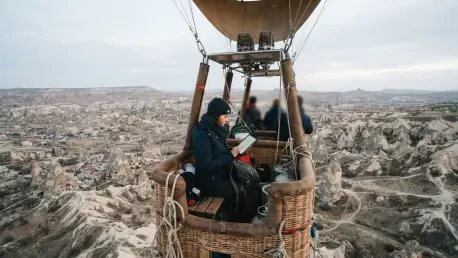

Specialized priority policies keep users on the high-capacity C-band spectrum longer to prevent premature handovers to lower frequency bands during aerial travel. This technological breakthrough, pioneered by Turkcell and Huawei in partnership with the GSMA Foundry, has culminated in the activation of the world’s first commercial 5G-Advanced (5G-A) low-altitude network in Cappadocia, Turkey. Historically, telecommunications infrastructure followed a rigid ground-first philosophy, optimizing for devices at street level while neglecting the vertical dimension. The Cappadocia initiative fundamentally reorients this approach by providing a robust three-dimensional coverage model specifically designed for hot-air balloons. Operating at altitudes of up to 2,000 feet, these vessels now experience high-capacity connectivity that was previously deemed impossible due to the inherent limitations of terrestrial signal propagation. This deployment serves as a definitive blueprint for the emerging low-altitude economy, proving that modern network engineering can effectively saturate the sky with data throughput sufficient for the most demanding real-time digital applications.
Technical Innovations in Aerial Coverage
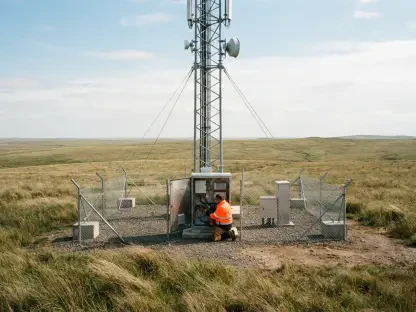
The deployment leverages Huawei’s MetaAAU technology, which utilizes an Extremely Large Antenna Array (ELAA) to provide a significant gain in coverage over traditional Massive MIMO sites. Unlike standard ground-based antennas that are tilted downward to focus on dense urban foot traffic, these specialized sites are configured to project signals upward into the aerial corridors used by tourists. This hardware achieves a 3 dB gain, which is crucial for maintaining a link with a moving vessel at high altitudes. The MetaAAU system features narrow, high-precision beams that scan the sky with enough speed to track the drifting movement of hot-air balloons. By widening both the vertical and horizontal signal planes, the network ensures that the airspace remains saturated with high-speed data. This optimization prevents the signal degradation typically found at the edges of standard terrestrial cells, providing a consistent and powerful connection for passengers as they float above the valley floor.
To support the heavy data demands of modern travelers, the infrastructure utilizes a 5G Standalone (SA) architecture paired with four-carrier aggregation (4CC). This combination of spectrum resources allows the network to reach peak download speeds of 2.6 Gbps, a level of performance that fundamentally changes the possibilities for in-flight entertainment. Passengers can now engage in high-definition video conferencing or 360-degree live streaming, activities that were previously hindered by the high latency and low bandwidth of older network generations. By utilizing the C-band spectrum more effectively, the system overcomes the traditional dead zones encountered by aerial vehicles. This technical setup ensures that the transition between different cell sites is seamless, maintaining a steady flow of data even as the balloon traverses complex geographical features. The integration of 4CC technology provides the capacity to handle multiple high-bandwidth users simultaneously, ensuring that every person in the basket enjoys a premium digital experience.
Optimizing Mobility and Uplink Stability
Maintaining a stable connection for a moving aerial vehicle requires more than just raw power; it necessitates sophisticated mobility management to handle the unique physics of flight. The Cappadocia network implements specific priority policies that prevent user devices from switching to lower frequency bands prematurely, which would otherwise lead to a sharp drop in performance. Technical teams meticulously adjusted the uplink handover thresholds to account for the signal fluctuations caused by the swaying of balloon baskets and changing atmospheric conditions. To ensure that video feeds remain crisp and uninterrupted, the network incorporates higher-order modulation and latency-optimized assurance. These features are critical for maintaining high upload speeds, which are often the bottleneck for live broadcasting and social media interaction. By mitigating the effects of interference and signal noise at high altitudes, the system provides a level of stability that rivals fixed-line connections, allowing for a reliable data link even in the most challenging flight paths.
The user experience is further enhanced by the installation of dedicated 5G Customer Premises Equipment (CPE) on the demonstration balloons. This hardware acts as a bridge, converting the powerful 5G-A signal into a local Wi-Fi network that is accessible to all passengers on board. This approach ensures that individuals using older smartphones or tablets that lack native 5G-Advanced compatibility can still benefit from the high-speed infrastructure. By centralizing the connection through a high-gain CPE antenna, the system achieves a more stable link to the ground towers than individual handheld devices could manage on their own. This setup also allows the network to implement resource compensation techniques, which prioritize bandwidth for critical applications during peak usage times. The result is a consistent, high-speed internet environment that surrounds the balloon, enabling a seamless digital lifestyle where tourists can share their memories in real time. This practical hardware solution effectively democratizes access to the latest technology.
Economic Models and Social Impact
This project signals a major evolution in the commercial strategies of telecommunications operators, marking a shift away from selling data by volume toward offering a guaranteed user experience. Turkcell is utilizing the Cappadocia deployment to test premium service models where high-speed uplink plans are marketed as an essential component of the luxury tourism package. By providing reliable connectivity in a location where terrestrial signals were previously nonexistent, the operator has created a new revenue stream centered on specialized aerial access. This strategy targets high-value users such as professional influencers, media crews, and corporate groups who require uninterrupted bandwidth for their operations. This shift suggests that 5G-A is being positioned as a niche, high-performance tool rather than a generic commodity. As the low-altitude economy matures, the ability to monetize specific experience tiers will likely become a standard practice, allowing operators to justify the significant capital investment required for such sophisticated three-dimensional infrastructure.
Beyond technical and financial success, the 5G-A network served a profound social purpose through the Digital Spring initiative. This program successfully bridged the physical divide for elderly residents in local care facilities, who experienced the majesty of Cappadocia through real-time 360-degree video and VR headsets. This application demonstrated that advanced connectivity is a tool for inclusivity, bringing the world to those whose mobility is limited. Looking forward, the industry analyzed these results as a proof of concept for broader applications including drone logistics, emergency response, and infrastructure inspection. Stakeholders concluded that the next steps must involve the standardization of these low-altitude configurations across global markets to support the scaling of the drone economy. By applying the lessons learned from the balloon corridors, operators gained a reliable framework for enhancing signal penetration in urban high-rises and remote geographic regions. The project ultimately established a new standard for how mobile networks can transcend the ground to unlock the potential of the skies.