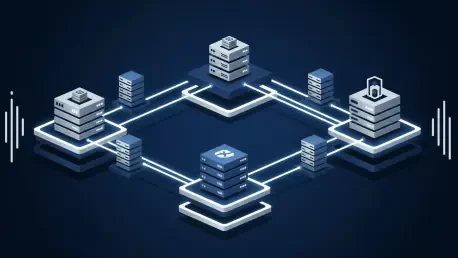

The silent hum of a data center floor often belies the massive currents of sensitive information flowing through the high-speed conduits of a storage area network. Storage area networks (SANs) serve as the high-speed backbone for modern data management, facilitating the seamless transfer of block-level data between servers and storage arrays. Because these networks house an organization’s most critical information, securing them is not just a technical box to check—it is a vital component of business continuity. This guide explores the multi-layered approach required to protect the confidentiality, integrity, and availability of data within a SAN environment. By integrating advanced encryption, rigorous access controls, and real-time monitoring, IT leaders can transform their storage infrastructure into a resilient fortress against evolving cyber threats.
Effective storage security requires a deep understanding of the protocols and hardware that facilitate these massive data transfers. Unlike traditional networking, which prioritizes general connectivity, a SAN focuses on low-latency, high-volume block storage that demands specialized protection. As organizations move toward 2027 and beyond, the integration of security directly into the fabric of the network becomes paramount for maintaining operational speed without compromising the safety of intellectual property. The goal is to move beyond reactionary measures and establish a proactive posture that anticipates vulnerabilities before they can be exploited by malicious actors.
Why SAN Vulnerabilities Pose a Critical Threat to Modern Organizations
The architecture of a SAN is inherently different from a standard local area network (LAN), presenting unique security challenges that require specialized attention. While a LAN focuses on end-user connectivity, a SAN manages the massive flow of data across interconnected switches and storage devices. This distinction is critical because the density and value of the data being moved are significantly higher in a storage environment. A single breach in this environment can have a devastating ripple effect, potentially compromising every server and storage array on the fabric. The interconnected nature of these systems means that once an intruder gains access, they may find few internal barriers to prevent them from accessing the entire data vault.
As threat actors move beyond simple phishing to more aggressive ransomware and Distributed Denial-of-Service (DDoS) attacks, the “set it and forget it” mentality toward storage is no longer viable. Modern attackers are increasingly aware of the value of block-level data and the potential for total business paralysis if that data is encrypted or deleted. Organizations must recognize that systemic vulnerabilities within storage protocols like iSCSI and Fibre Channel can provide an open door for malware if not properly hardened. This shifts the focus from perimeter security to a strategy that assumes the perimeter may be breached, requiring internal storage networks to be independently resilient.
Furthermore, the complexity of modern SAN environments, often spanning multiple physical sites or hybrid cloud architectures, increases the potential attack surface. Misconfigurations are a common entry point, as the focus is frequently on performance over security during the initial setup phase. Without dedicated security oversight, minor errors in zoning or masking can lead to massive data exposure. The threat is not just external; internal actors with elevated privileges can cause catastrophic damage if their access is not strictly managed and monitored. This environment demands a comprehensive strategy that addresses human, logical, and physical security layers.
Essential Strategies for Hardening Your SAN Infrastructure
Building a secure storage environment necessitates a systematic approach that addresses every layer of the network. Each strategy must be carefully integrated to ensure that there are no gaps between the various technical controls and administrative policies.
Step 1: Enforcing Robust Access Control and Multi-Factor Authentication
The first line of defense involves ensuring that only authorized personnel and processes can interact with the storage environment. Moving beyond legacy password systems is essential for preventing credential-based breaches that frequently lead to deep penetration of the network. A modern access control strategy relies on identity verification that is both continuous and context-aware.
Applying the Principle of Least Privilege
Limit access rights to the bare minimum required for a user or application to perform its specific task, reducing the potential blast radius of a compromised account. This involves regular audits of user roles to ensure that permissions have not crept over time as employees change positions or projects. By restricting administrative capabilities to a select few and using automated tools to grant temporary access for specific maintenance tasks, the organization minimizes the time an account is at high risk. This granular control ensures that even if an account is compromised, the attacker cannot navigate freely across the entire storage ecosystem.
Integrating Multi-Factor Authentication (MFA)
Implement MFA for all management interfaces to ensure that a stolen password alone is insufficient for an attacker to gain control over the storage fabric. This requirement should extend beyond the primary administrative consoles to include out-of-band management ports and secondary configuration tools. Utilizing biometric factors or hardware-based security keys provides a much higher level of assurance than traditional SMS-based codes, which are susceptible to interception. MFA acts as a critical speed bump that can stop an automated attack in its tracks, providing administrators with the time needed to detect and respond to unauthorized login attempts.
Step 2: Mapping the SAN Fabric and Managing Component Visibility
A fundamental truth of cybersecurity is that you cannot secure what you do not know exists. Comprehensive visibility into every switch, host, and storage device is a prerequisite for a secure network. This level of clarity allows administrators to detect unauthorized changes and identify potential weak spots in the network topology.
Maintaining an Accurate Asset Inventory
Regularly audit and map all physical and virtual components within the SAN to identify rogue devices or unauthorized connections. In a dynamic data center environment, it is easy for retired hardware to remain connected or for new, unverified devices to be added by well-meaning but unauthorized staff. An automated discovery tool can maintain a real-time ledger of all active nodes, ensuring that the actual state of the network matches the intended design. This inventory should include not just the storage arrays themselves, but also the host bus adapters, cabling paths, and switch configurations that facilitate data movement.
Securing Management Ports and Interfaces
Ensure that physical access points and console ports are restricted and that any unused ports on switches are administratively disabled. Management interfaces are often overlooked because they sit outside the main data path, yet they provide the highest level of control over the network configuration. By isolating these ports on a dedicated management network and using encrypted protocols like SSH or HTTPS for all configuration traffic, the organization prevents eavesdropping on administrative sessions. Physical locks on rack doors and port blockers for unused Ethernet or Fibre Channel sockets provide an additional layer of defense against physical tampering by on-site actors.
Step 3: Isolating Storage Traffic via Network Segmentation
Mingling storage traffic with general corporate data is a significant security risk that can lead to congestion and increased vulnerability. Isolation ensures that a compromise in a non-critical department, such as marketing or accounting, does not lead directly to the core data vault where the company’s lifeblood is stored.
Utilizing VLANs and Firewalls for Logic Separation
Create dedicated Virtual LANs (VLANs) for SAN traffic and use high-performance firewalls to inspect and filter data moving between segments. This logical separation prevents standard office traffic from ever interacting with the high-speed storage paths. Firewalls should be configured with a default-deny policy, only allowing traffic between specific IP addresses and over designated ports. By inspecting the headers of the packets passing between segments, the network can detect and block attempts to scan the storage environment or exploit known protocol vulnerabilities. This structure forces an attacker to break through multiple layers of network security before they can even see the storage infrastructure.
Restricting Lateral Movement with Micro-segmentation
Divide the storage network into smaller, isolated zones so that if one area is compromised, the threat remains contained and cannot spread to other storage arrays. Micro-segmentation goes a step further than traditional VLANs by applying security policies to individual workloads or storage units. If a specific application server is infected with malware, micro-segmentation prevents that malware from reaching the storage allocated to other applications. This technique is particularly effective in multi-tenant environments where different business units or clients share the same physical hardware but require absolute data isolation. It effectively turns a single large target into a series of small, well-defended islands.
Step 4: Implementing End-to-End Encryption for Data Protection
Encryption acts as the ultimate safeguard, ensuring that even if data is intercepted or a physical disk is stolen, the information remains unreadable. A holistic encryption strategy addresses data at every stage of its lifecycle, from the moment it leaves the server to the moment it is written to the physical platter or flash cell.
Securing Data in Motion across Fibre Channel and iSCSI
Use protocol-level encryption to protect data as it travels between servers and storage, preventing man-in-the-middle attacks. While older Fibre Channel implementations relied on physical isolation for security, modern standards support hardware-accelerated encryption that maintains high performance. For iSCSI environments, utilizing IPsec ensures that all data packets are encrypted as they move across the Ethernet fabric. This is especially vital in environments where storage traffic must traverse shared network infrastructure. Encryption ensures that even if an attacker successfully taps into a physical cable or compromises a switch, they will only see a stream of unintelligible cipher text.
Hardening Data at Rest with Self-Encrypting Drives
Deploy storage arrays that support hardware-based encryption for data sitting on disks, providing a final layer of defense against physical theft or improper decommissioning. Self-encrypting drives (SEDs) perform the encryption process within the drive controller itself, ensuring that there is no performance penalty for the host system. This protection is essential during the end-of-life process for storage hardware, as it ensures that sensitive data cannot be recovered from discarded disks. Managing the encryption keys centrally through a secure Key Management Server (KMS) ensures that the keys themselves are protected and that access can be revoked instantly if a drive or array is compromised.
Step 5: Deploying AI-Driven Monitoring and Threat Identification
Modern SAN security requires proactive, real-time analysis to catch subtle signs of an intrusion before it escalates into a full-scale crisis. As the volume of logs generated by high-speed networks exceeds the capacity of human review, automated tools become a necessity.
Leveraging Detailed Audit Trails and Event Logging
Maintain comprehensive logs of all administrative actions and data access requests to facilitate rapid forensic analysis during an incident. Every change to a LUN mapping, every firmware update, and every login attempt should be recorded and forwarded to a centralized security information and event management (SIEM) system. These logs provide the historical context needed to understand how an attack began and what data may have been accessed. Detailed auditing also helps organizations meet regulatory requirements for data privacy by providing a clear record of who interacted with sensitive information and when the interaction occurred.
Utilizing Artificial Intelligence for Anomaly Detection
Implement AI-based tools that learn normal traffic patterns and trigger immediate alerts when suspicious behavior occurs. Traditional signature-based detection is often too slow to catch zero-day exploits or sophisticated lateral movement. AI can identify subtle deviations, such as an unusual increase in data egress during off-hours or a series of unauthorized LUN masking changes that follow a specific pattern. These tools provide a proactive defense by identifying the early stages of a ransomware attack, such as rapid file encryption attempts, and automatically isolating the affected storage segments to prevent further damage. This real-time response capability is critical in maintaining the availability of the SAN.
Step 6: Adopting a Zero-Trust Architecture and Physical Security
Transitioning to a zero-trust model shifts the security philosophy from trusting the perimeter to verifying every single request. This approach acknowledges that threats can originate from anywhere, and no device or user should be granted access simply because of their location on the network.
Validating Every Transaction Request
Regardless of whether a request originates inside or outside the network, it must be authenticated, authorized, and encrypted before access is granted. In a zero-trust SAN, every storage command is treated as a potential threat until its identity and intent are verified. This requires tight integration between the storage fabric and the organization’s identity provider. By continuously re-verifying the security posture of the requesting device—checking for up-to-date patches and active security software—the SAN can ensure that only healthy systems are allowed to connect to sensitive data volumes. This dynamic authorization model significantly reduces the risk of malware spreading from a compromised host to the storage core.
Implementing Physical Data Center Safeguards
Protect the actual hardware using biometric locks, CCTV surveillance, and motion sensors to prevent unauthorized physical tampering with the SAN fabric. Digital security is rendered useless if an intruder can simply walk into a server room and unplug a storage array or insert a malicious USB device into a management port. Physical security should include strict visitor logs and two-person authentication for high-risk maintenance activities. Environmental sensors can also alert staff to unauthorized access attempts or unusual physical conditions, such as the opening of a rack door during an unscheduled time. These physical barriers represent the final, indispensable layer of a truly comprehensive SAN security strategy.
Key Takeaways for Building a Resilient Storage Environment
The complexity of securing a SAN can be distilled into a few core principles that guide all technical decisions. Prioritizing identity is the most critical factor; using MFA and the principle of least privilege ensures that access is always controlled. Isolation is the next priority, as storage data should never share paths with general corporate traffic to prevent lateral movement of threats. Encryption is a non-negotiable requirement that protects data both while it moves across the network and while it sits on disks.
Continuous monitoring is the only way to maintain a secure state in a changing environment. By using AI and detailed event logging, organizations can catch anomalies in real-time before they escalate. Finally, the move toward a zero-trust posture ensures that no transaction is trusted by default, requiring validation for every single request. These pillars work together to create a storage infrastructure that is not only secure but also resilient enough to withstand the sophisticated attacks common in the modern digital landscape.
Navigating Future Challenges and Evolving Industry Standards
As storage technology evolves, so do the methods used to attack it. The rise of NVMe over Fabrics (NVMe-oF) offers incredible performance but introduces new security considerations that IT leaders must address. These new protocols require specialized security implementations that can keep pace with their extreme speeds without introducing unacceptable latency. Additionally, regulatory landscapes like GDPR and ISO 27001 are becoming more stringent, making documented SAN security a requirement for legal compliance rather than just a best practice. Organizations must find a way to balance the need for high-speed data access with the overhead of deep packet inspection and heavy encryption.
Looking toward the next few years, the integration of security directly into the storage hardware will become the standard. This shift toward hardware-root-of-trust and built-in security features will help maintain performance levels that software-based solutions struggle to match. IT leaders must stay informed about these emerging standards and be prepared to update their infrastructure to support newer, more secure protocols. The goal is to build an environment that is not only safe today but is flexible enough to adapt to the threats of tomorrow.
Securing Your Digital Future through Persistent SAN Vigilance
The journey toward a fully secured storage area network was marked by a fundamental shift in how organizations viewed their most precious data assets. In the past, many teams relied on simple physical isolation or basic passwords, but as cyber threats grew in sophistication, those legacy methods proved insufficient. Forward-thinking IT leaders recognized the necessity of a multi-layered defense and systematically implemented the technical controls described in this guide. They transformed their storage environments from passive repositories into active, self-defending networks that could identify and neutralize threats in milliseconds.
By embracing the principles of zero-trust and end-to-end encryption, these organizations successfully mitigated the risks associated with both internal errors and external attacks. They invested in AI-driven monitoring that moved the burden of security from overstretched administrators to intelligent, automated systems. This proactive approach did more than just protect data; it provided a foundation of trust that allowed the business to innovate and scale with confidence. Ultimately, the successful securing of the SAN demonstrated that while the challenges were significant, the rewards of operational resilience and data integrity were well worth the effort.