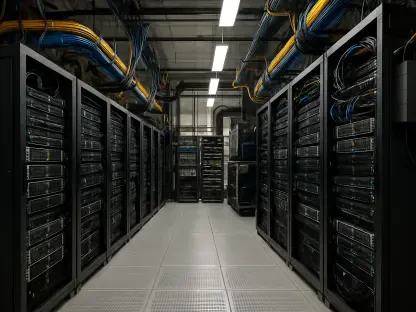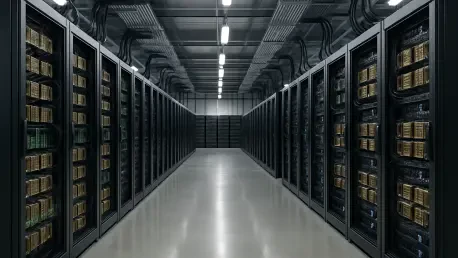

The sheer intensity of electrical demand within a modern high-density server farm has reached a point where traditional distribution methods are struggling to keep the lights on and the processors cool. As artificial intelligence models grow exponentially in complexity, the hardware required to train them has transformed from standard rack units into massive, power-hungry GPU clusters that defy conventional utility planning. This surge in energy consumption is pushing engineers toward a radical departure from the status quo, favoring a high-voltage direct current architecture that can handle the load without the inherent inefficiencies of alternating current.
Moving Beyond the Power Limits of Traditional Infrastructure
The massive energy appetite of modern artificial intelligence is pushing traditional electrical grids to a breaking point, forcing engineers to rethink how electricity moves within a building. While alternating current has powered our world for over a century, the density of GPU-heavy workloads makes the case for a high-voltage direct current revolution. As data centers evolve into massive AI factories, the transition to 800V DC is no longer a theoretical debate but a practical necessity for staying ahead of soaring operational costs.
Current infrastructure often hits a physical ceiling where the sheer volume of copper cabling required for AC distribution becomes unmanageable. By shifting to a higher voltage DC standard, facilities can deliver more power through smaller conduits. This shift is critical as developers move toward clusters that consume several hundred kilowatts per rack, a level of density that was virtually unheard of just a few years ago.
The Resurgence of the Edison-Tesla Debate in the Age of AI
Historically, alternating current won the “War of Currents” because it could be easily stepped up or down for long-distance travel, whereas direct current struggled with localized voltage regulation. However, the rise of modern solid-state converters has flipped this dynamic on its head, allowing for precise control of DC power without the energy-sapping conversion steps required by AC systems. In the localized, high-demand environment of a modern data center, the old advantages of AC are becoming liabilities, paving the way for 800V DC to emerge as the superior standard for high-density computing.
Modern power electronics now allow for the seamless management of DC loads at scale, eliminating the need for bulky transformers and multiple stages of rectification. Because computers and batteries natively operate on direct current, maintaining a DC bus throughout the facility removes unnecessary “conversion tax” that typically dissipates as wasted heat. This evolution represents a full-circle moment where Edison’s original vision finally finds its perfect application in the heart of the digital economy.
Quantifying the Technical and Economic Gains of 800V DC Systems
The shift to 800V DC delivers immediate material benefits by streamlining the physical infrastructure of a facility. By utilizing two cables instead of the four required for AC, operators can reduce copper usage by 50% to 80%, which translates to millions of pounds of metal saved in large-scale installations. Furthermore, higher voltage allows for lower current, which generates significantly less heat waste and contributes to an 8% to 12% reduction in annual energy-related operational expenses. These efficiencies ensure that more power goes directly into the chips rather than being lost to heat and distribution inefficiencies.
Beyond the raw energy savings, the reduction in thermal output lowers the burden on cooling systems, creating a compounding effect on efficiency. When current decreases, the resistive heating in cables drops exponentially, allowing for tighter equipment packing and smaller footprint designs. This optimization is essential for urban data centers where space is at a premium and every square foot must be utilized for maximum compute capacity.
Research Findings and the Shifting Industry Landscape
Recent studies by power solution developers like Enteligent indicate that the financial incentives for adopting DC power are staggering, particularly for new “greenfield” projects. For a 10 MW AI-first facility, capital expenditure savings can range from $4 million to $8 million by eliminating redundant upstream AC equipment. This economic reality has sparked a race among industry leaders like Siemens, Eaton, and Vertiv, who are all developing specialized hardware to capture the growing DC power supply market. Expert consensus suggests that as one-gigawatt installations become more common, the infrastructure savings in copper and equipment alone will dictate the future of data center architecture.
The market is currently seeing a rapid expansion of the 800V ecosystem, with new pilot programs testing ultra-efficient converters that bridge the gap between high-voltage distribution and server-level requirements. These innovations are not just theoretical; they are being integrated into the designs of the world’s largest cloud providers. As the supply chain for DC-compatible switchgear and breakers matures, the barrier to entry continues to fall, making 800V DC the logical choice for any operator looking at long-term viability.
Strategies for Integrating High-Voltage DC into Modern Facilities
Successfully implementing an 800V DC architecture requires a strategic approach tailored to the specific needs of high-power computing. For new builds, a “DC-first” philosophy maximizes ROI by simplifying the entire power chain from the grid to the server rack. Existing facilities can adopt a hybrid approach by performing DC retrofits specifically for clusters transitioning to GPU-intensive workloads. Utilizing high-efficiency converters that step down 800V to the 50V required by servers allows operators to maintain high distribution efficiency while ensuring compatibility with standard computing hardware.
Looking ahead, organizations began prioritizing modular power units that could be swapped or upgraded without a total overhaul of the facility. Engineers worked toward standardizing the 800V bus to ensure interoperability between different hardware vendors, which stabilized the market. This transition moved from a niche experiment to a foundational requirement for any facility aiming to achieve a Power Usage Effectiveness (PUE) near 1.0. As these systems matured, the industry turned its attention toward integrating renewable energy sources directly into the DC bus, further reducing the carbon footprint of global AI operations.