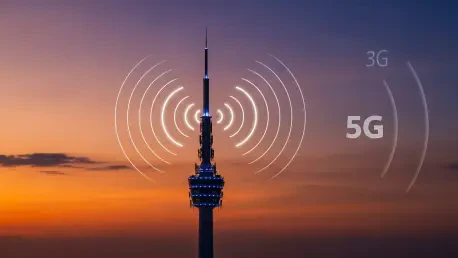

The complete decommissioning of third-generation mobile networks in the Philippines marks a pivotal moment for the nation’s telecommunications sector, signaling an era where data-driven voice services become the universal standard for millions of residents in the capital and beyond. This monumental transition is currently coming to a head as the deadline for the final 3G sunset approaches, forcing a massive migration of voice traffic toward 4G LTE and 5G standalone architectures. For the residents of Metro Manila, this shift represents more than just a technical upgrade; it is a fundamental reimagining of how mobile communication functions in one of the world’s most densely populated urban environments. The three primary mobile network operators—Smart Communications, Globe Telecom, and DITO Telecommunity—are currently navigating the complex logistical and technical challenges of ensuring that voice connectivity remains uninterrupted for their diverse subscriber bases. As legacy systems are phased out, the industry is witnessing a concerted effort to optimize modern protocols like Voice over LTE and Voice over New Radio to provide the high-definition audio quality that contemporary users expect. This period of change is characterized by intense network testing, spectrum refarming, and a nationwide push to update consumer hardware, all aimed at creating a more efficient and resilient digital infrastructure that can support the burgeoning demands of a modern economy.
The Regulatory Mandate: Navigating the Spectrum Shift
The National Telecommunications Commission has established a firm directive that requires all mobile service providers to fully decommission their legacy 3G services by the end of December. This regulatory move is a strategic attempt to reclaim valuable frequency bands, such as the 900 MHz and 2100 MHz ranges, which have historically been occupied by older, less efficient technologies. By transitioning away from 3G, the government and telecommunications companies aim to repurpose these airwaves for 4G and 5G services, which offer significantly higher capacity and lower latency for both data and voice applications. However, this mandate has placed an immense amount of pressure on operators to ensure that their Voice over LTE coverage is sufficiently robust to handle the influx of traffic that was previously carried by circuit-switched networks. The transition is not merely about turning off old equipment but involves a sophisticated rebalancing of the entire network ecosystem to prevent coverage gaps that could lead to dropped calls or failed connections in critical areas.
Currently, the Philippines is working to align itself with regional neighbors such as Singapore and Thailand, where 3G services were retired much earlier to facilitate the rapid expansion of high-speed digital services. While the adoption of modern voice standards has historically been slower in the local market, the current year has seen an unprecedented acceleration in network tuning and optimization. Operators are investing heavily in software upgrades that allow for better management of voice packets, ensuring that they receive priority over general internet traffic to maintain clarity and reliability. The regulatory environment has also evolved to include stricter monitoring of quality of service metrics, forcing carriers to be more transparent about their progress in upgrading infrastructure. This combination of government oversight and competitive pressure is driving a total transformation of the mobile landscape, ensuring that the retirement of legacy technology results in a measurable improvement for the average consumer rather than a degradation of service.
Performance Benchmarking: Real-World Testing across the Metropolis
Extensive drive testing conducted throughout the first half of the year has provided a detailed look at how these network upgrades are performing across the fourteen cities and municipalities of Metro Manila. Researchers utilized high-end smartphones to capture thousands of voice samples while traveling over 1,200 kilometers of urban roads, encompassing everything from the high-rise corridors of Makati to the crowded residential streets of Tondo. These tests focused on the Mean Opinion Score, a standardized metric that evaluates audio clarity on a scale where four and above indicates high-definition quality. The data reveals that cellular voice services are currently delivering a level of fidelity that far exceeds the capabilities of the old 3G systems, with all major providers achieving impressive marks in audio consistency. This comprehensive evaluation serves as a vital tool for engineers, allowing them to identify specific geographic zones where the handoff between cell towers might cause a temporary dip in quality or an increase in call setup times.
Beyond simple audio clarity, the testing also measured the reliability of call connections in environments with high levels of physical interference, such as inside large shopping malls or beneath elevated railway tracks. Call setup times, which reflect the duration between pressing the “call” button and the first ring, have become a key differentiator between the competing networks. In the current environment, users expect near-instantaneous connections, and any delay can be perceived as a sign of network instability. The findings show that the established operators have made significant strides in reducing these delays by optimizing their core network routing. Furthermore, the testing included a direct comparison between standard cellular calls and internet-based messaging applications to determine which provides a more dependable user experience. This empirical approach to network evaluation is essential for building public trust, as it demonstrates that the transition to more advanced technologies is yielding tangible benefits in daily communication.
Architectural Approaches: Balancing Mature and Emerging Technologies
The strategies employed by Smart and Globe reflect their positions as established players with massive legacy infrastructures that required careful modernization over several years. Both carriers have successfully integrated Voice over LTE into their primary 4G frameworks, allowing them to route voice traffic through dedicated high-speed pathways that are isolated from the congestion of the general data network. This mature architecture ensures that voice calls connect almost instantly and maintain a consistent level of quality even when the surrounding data network is under heavy load. Their focus has been on fine-tuning the handover process between different frequency bands, ensuring that a user moving through the city does not experience a dropped call as their device switches from one tower to another. This long-term investment in 4G-based voice services has provided a stable foundation for the eventual transition to fully 5G-integrated voice solutions in the coming years.
In contrast, DITO Telecommunity has navigated the current landscape using a more modern but younger network architecture that relies heavily on 5G Standalone technology. While DITO’s core network is designed for the future, the relative immaturity of native voice over 5G protocols has led the carrier to utilize a fallback mechanism that shifts devices to 4G during the call initialization process. This technical maneuver, while effective for maintaining high audio quality, introduces a slight but noticeable delay in call setup times compared to its more established competitors. However, the use of a clean-slate 5G core allows for a more streamlined data path once the call is established, potentially offering a more efficient use of network resources. The competition between these different architectural philosophies is pushing the entire industry forward, as each provider seeks to overcome its specific technical hurdles to offer the most seamless and reliable voice experience possible for the Manila market.
Audio Fidelity: The Superiority of Managed Voice Services
The current testing data confirms that mobile-to-mobile calls on managed cellular networks provide a vastly superior audio experience compared to third-party internet applications like WhatsApp or Telegram. All three major operators are utilizing advanced audio codecs, such as Enhanced Voice Services and Adaptive Multi-Rate Wideband, which are specifically designed to transmit the full spectrum of the human voice with minimal compression. These codecs allow for a much richer sound, capturing the nuances of tone and volume that are often lost on older systems or over-the-top apps. In the Manila metropolitan area, cellular voice services consistently achieve “HD-grade” ratings because the carriers can prioritize this traffic at a hardware level. This means that even during peak hours when millions of people are simultaneously using social media or streaming video, the voice packets are given a “fast lane” through the network to ensure they arrive without distortion or delay.
Conversely, voice calls made through over-the-top internet applications are often rated as merely “fair” or “acceptable” because they operate on a best-effort delivery basis. These apps must compete with all other data traffic on the phone and the network, making them susceptible to jitter and packet loss when bandwidth is constrained. When the network becomes congested in a busy district like Bonifacio Global City, an internet-based call might suffer from robotic-sounding voices, dropped audio segments, or a total disconnect, whereas a cellular-managed call remains clear. The technical advantage of cellular voice lies in its integration with the network’s signaling layer, allowing the system to dynamically adjust the bitrate to maintain a stable connection. This disparity in quality highlights why the continued development of robust cellular voice standards is so critical, even as internet-based communication becomes more prevalent in other aspects of digital life.
Resilience in Crowded Spaces: Maintaining Voice Integrity
The density of Manila’s urban landscape presents unique challenges for maintaining signal integrity, particularly in areas where thousands of users are concentrated within a single square kilometer. Cellular-managed voice services have proven to be remarkably resilient in these high-pressure environments, maintaining stable connections even when the signal strength indicated on a device is relatively low. This is a direct result of the Quality of Service protocols that allow the network to reserve specific radio resources for voice communication, ensuring that a call remains active even if data speeds for other apps drop significantly. In “cell-edge” conditions—where a user is at the very limit of a tower’s range—cellular voice often remains usable long after an internet-based call has failed. This reliability is a cornerstone of the 3G sunset strategy, as the carriers must prove that the new 4G and 5G systems are at least as dependable as the legacy 3G networks they are replacing.
Furthermore, the sophisticated interference management systems implemented by Manila’s carriers are currently working to mitigate the effects of the city’s complex topography. The presence of numerous concrete structures, metal-clad buildings, and overhead power lines creates a difficult environment for radio waves to penetrate. Modern voice protocols are better equipped to handle the multi-path interference caused by signals bouncing off these surfaces, using advanced error correction to reconstruct the audio stream in real-time. This level of technical sophistication is generally absent in internet apps, which rely on the underlying data connection to be stable and clear. By prioritizing the robustness of the voice signal, the mobile industry ensures that residents can maintain essential communication during their daily commutes or while navigating the city’s more challenging indoor environments. This commitment to resilience is particularly vital for emergency communications, where the failure of a call could have serious real-world consequences.
The Hardware Transition: Solving the Device Compatibility Problem
One of the most significant obstacles to a successful 3G sunset is the continued use of older mobile devices that do not support Voice over LTE or modern 5G standards. Despite the rapid rollout of new technology, a significant portion of the population still relies on legacy handsets that are only capable of making calls over 2G or 3G networks. To address this, carriers and government agencies have launched a massive coordination effort to encourage subscribers to upgrade their hardware before the year-end deadline. This involves not only marketing campaigns but also financial incentives, such as discounted 4G-capable phones and trade-in programs designed to make the transition more affordable for lower-income users. The goal is to ensure that no one is left without a means of communication once the 3G signal is finally turned off, making device inclusivity a top priority for the industry’s leadership.
The challenge is further complicated by the variety of different VoLTE implementations across different phone manufacturers, which can sometimes lead to compatibility issues even on newer devices. To solve this, operators are working closely with global smartphone brands to ensure that their network settings are correctly configured and updated via over-the-air software patches. This technical collaboration is essential for a seamless user experience, as it ensures that the “HD Voice” feature is automatically activated whenever a compatible call is made. The current year has seen a marked increase in the percentage of VoLTE-active devices on local networks, but the final push to reach 100% adoption remains a monumental task. By focusing on both the affordability and the technical compatibility of consumer hardware, the telecommunications sector is attempting to bridge the digital divide and ensure that the benefits of the 3G sunset are felt by every segment of society, regardless of their economic status.
Spectrum Refarming: Building the Foundation for Future Growth
The process of spectrum refarming is a critical component of the 3G sunset, as it allows operators to take the radio frequencies previously used for older services and dedicate them to more efficient 4G and 5G technologies. This is currently happening in stages across Metro Manila, with engineers carefully monitoring the impact of each frequency shift to avoid service interruptions. By moving 3G traffic off the 2100 MHz band, for example, carriers can significantly increase the bandwidth available for 5G, leading to faster download speeds and more capacity for voice calls during peak hours. This reallocation of resources is akin to widening a highway; by removing the slow-moving “legacy” vehicles, the entire system can move more quickly and handle a much higher volume of traffic. The efficiency gains from this process are essential for supporting the next generation of digital services, from augmented reality to high-definition video conferencing.
In addition to capacity improvements, the refarming of lower-frequency bands like 900 MHz provides better indoor coverage and longer-range signals, which are vital for reaching users in basement parking lots or the interiors of dense residential blocks. These frequencies act as the backbone of the mobile network, providing the wide-area coverage that ensures people stay connected as they move between towers. As these bands are transitioned to 4G and 5G standards, the overall quality of the voice network in Manila is expected to see a significant boost in reliability and reach. This strategic management of the airwaves is a continuous process, requiring constant adjustment as usage patterns evolve and new technologies emerge. The current efforts to optimize this spectrum represent a long-term investment in the country’s digital future, ensuring that the infrastructure can keep pace with the ever-increasing demands for connectivity in a hyper-connected urban environment.
Strategic Infrastructure Management: Finalizing the Transition Protocols
The industry successfully identified critical gaps in the hardware supply chain and established more robust trade-in programs to facilitate the rapid replacement of legacy 3G handsets throughout the metropolitan area. Major carriers expanded their public awareness campaigns to ensure that even the most remote subscribers understood the technical requirements for maintaining their voice services beyond the decommissioning date. These initiatives paved the way for a more integrated telecommunications ecosystem where high-capacity 5G and 4G infrastructures operated without the interference of legacy signals. Decision-makers prioritized the transition of government emergency services to modernized protocols, ensuring that critical communications remained resilient throughout the sunset period. This comprehensive approach effectively minimized service disruptions and provided a clear blueprint for subsequent spectrum auctions and technology upgrades. By focusing on device inclusivity and network optimization, the metropolitan area solidified its position as a hub for advanced digital services.
Network engineers implemented automated monitoring systems that tracked the performance of VoLTE handovers in real-time, allowing for immediate adjustments to tower configurations in high-traffic zones. The collaboration between the National Telecommunications Commission and private operators resulted in a synchronized shutdown schedule that prevented regional coverage imbalances. Subscribers who previously experienced inconsistent audio quality reported a significant improvement in clarity as the refarmed spectrum became active across the 4G and 5G layers. The lessons learned during this final phase of the 3G sunset provided valuable data for the eventual deployment of even more advanced communication standards. Looking ahead, the focus shifted toward expanding the density of 5G small cells to further enhance the voice and data capacity in Manila’s most congested business districts. The successful management of this transition demonstrated that a proactive approach to legacy technology retirement could yield immediate and widespread benefits for the entire digital economy.